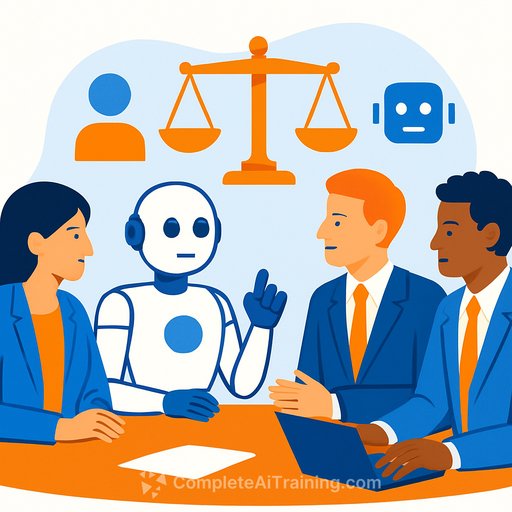
The Middle Ground: Why AI Needs Humans, and Humans Need AI
Companies are swinging between two extremes with AI adoption-cutting staff aggressively or hoarding talent-when the answer lies in the middle. At Cornerstone Connect 2026 in New York, HR leaders and learning professionals grappled with a pace of change that's outpacing business outcomes.
The problem is real. Sleep deprivation among executives was mentioned repeatedly at the conference. Organizations are moving faster but not necessarily getting better results, especially on the metrics that matter.
The Burnout Risk
One overlooked consequence of AI acceleration: burnout among human workers. Cornerstone's Workforce AI now tracks attrition and burnout signals, acknowledging that speed without restraint breaks people.
Lenore Lang, Executive Vice President at Salesforce, said successful leaders aren't bolting AI onto broken workflows. They're asking hard questions first: What workflow are we changing? What productivity do we want? What outcomes matter?
"We're also watching the trends and behaviors and making sure that people don't burn out," Lang said.
Where AI Augments Humans-And Vice Versa
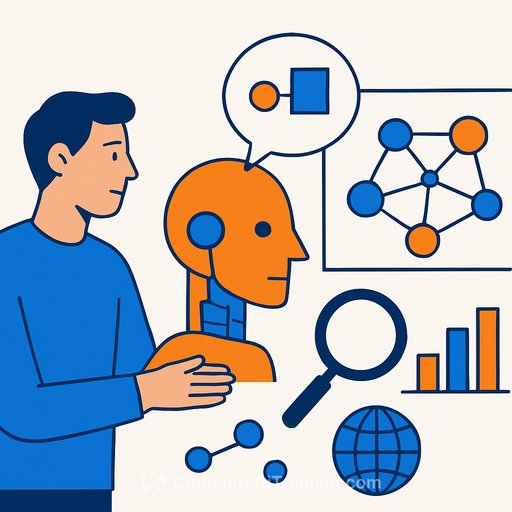
The real skill is knowing when to use AI and when to insert a human back into the process. Ray Wang, CEO of Constellation Research, framed it clearly: the question isn't where to automate. It's when and where to add human judgment.
Companies insert humans when accuracy drops below acceptable thresholds. They insert humans for regulatory compliance. They insert humans for experiences that require a personal touch.
Wang pointed to a counterintuitive pattern: companies using AI effectively aren't cutting jobs. They're adding them. Work happens faster, which means human decision-making becomes the bottleneck-and the most valuable part.
"AI is about giving you more at-bats, more chances to do something," Wang said. "But one of the most important things we have to think about is how do you achieve machine scale with humans."
What's Actually Changing
Himanshu Palsule, CEO of Cornerstone, was direct: roles aren't disappearing. Tasks are changing. HR fluency with AI is now essential, but the human function remains critical.
Mini Peiris, Cornerstone's CMO, summed up the philosophy: "AI brings incredible intelligence, but lacks the wisdom that's human. Agents deliver unprecedented coordination, but they don't replace connection."
The future belongs to organizations that use AI to make people better, not to replace them.
The Missing Piece: Intentionality
What's absent from most AI deployments is forethought. Companies are chasing token efficiency and vendor promises without asking whether the speed is sustainable or the outcomes are real.
Inference costs are rising. Workflows are chaotic. Developers managing AI agents describe the work as "like managing a bunch of cats."
The antidote is intentionality. Before deploying an AI agent, know what problem it solves and what human work it should eliminate-not just what it can do.
Learn more about AI Agents & Automation and how to integrate them into existing workflows, or explore AI for Human Resources to understand workforce transformation in practice.
Your membership also unlocks: