AI Job Cuts Without Equal Human Investment Could Create a Talent Crisis, Experts Warn
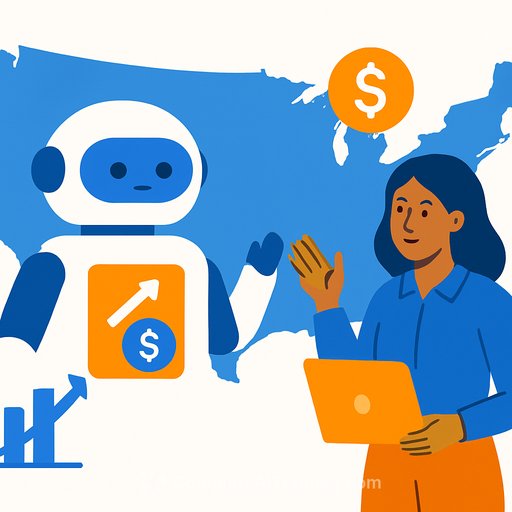
Atlassian's decision to cut 1,600 jobs-about 10 percent of its workforce-to redirect spending toward artificial intelligence has become a flashpoint in a larger debate about how companies should manage the transition to AI-driven work. The cuts, following similar moves across the tech sector, are already affecting Australia's startup ecosystem, with venture-backed firms trimming headcount and non-AI startups facing funding pressure.
But workforce experts say companies pursuing this strategy risk creating what one consultant calls a "chaos tsunami"-a disorderly transition marked by hollowed-out talent pipelines, lost institutional knowledge, and missed innovation opportunities.
The math doesn't add up yet
Steven McConnell, chief customer officer at Arielle Executive, argues that the narrative around AI-driven job cuts ignores basic financial realities. OpenAI's estimated long-term spending commitment of $1.4 trillion contrasts sharply with its 2025 revenue of $20 billion.
Current AI costs are deceptively low. A ChatGPT subscription runs $20-$200 per user monthly, making it seem cheaper than junior staff. But if subscription costs jumped to $1,000-$5,000 per user per month-a plausible scenario given infrastructure demands-the economics of cutting roles would look very different.
"Decisions like Atlassian's start to look less like inevitable automation and more like a high-risk bet on where AI costs and capabilities will land," McConnell said.
Middle management is the first target
The structural pressure from AI is concentrating on middle management roles. These positions involve coordination work-reducing friction between teams, tracking milestones, moving information across the organization. Agentic AI is becoming increasingly effective at handling predictable coordination tasks.
However, McConnell noted there is little hard data yet showing companies are directly eliminating middle managers because of AI. The more immediate effect is a silent hiring freeze, as leadership teams ask: "How much of this role can AI do?" before adding headcount.
Cutting staff without building capability is a false economy
Melissa Jenner, founder and CEO of Actvo, argues that companies framing job cuts as a pivot to AI are ignoring the true cost of replacing people with automation promises. Re-hiring externally costs three to five times more than the salary of the person replaced, after accounting for recruitment, onboarding, and lost institutional knowledge.
"Institutional knowledge-customer relationships, product history, cultural context-lives in people, not systems," Jenner said. "When you displace experienced employees for lacking a few skills, you're deleting years of pattern recognition that no model has been trained on."
Many organizations are also damaging their employer brand through the cuts. Companies that use euphemisms like "rebalancing" while offering generic outplacement support are signaling to remaining staff and external candidates that they don't value people.
A workforce already disengaged enters an AI shock
Organizations are entering the AI era carrying a decade-long disengagement crisis, Jenner said. Without immediately authorizing self-directed learning and building a genuine learning culture, most workforces cannot adapt at the pace AI demands.
Atlassian-style cuts risk becoming the default response because cutting staff is simpler than rewiring culture. But the long-term cost will be far higher than the short-term savings.
"The mindset shift has to come from a leadership shift first-towards building a sustainable culture centered around self-determined learning enabled for everyone," Jenner said.
AI kills tasks, not jobs-but roles need redesign
Both experts reject the binary "AI kills jobs" narrative. AI replaces specific tasks, not entire positions. The real question leaders should ask is: have we mapped what our people can do against what our AI-augmented roles will need?
Most organizations are getting the sequence backwards. They invest heavily in AI tools first but almost nothing in human readiness. "It's the equivalent of fitting out a world-class gym and expecting your team to be athletes by osmosis," Jenner said.
McConnell stressed that workers should lean into redesign rather than hope the disruption passes. "The most in-demand leaders of the next decade won't just manage people-they'll manage hybrid teams of humans and AI agents," he said.
Entry-level hiring freezes threaten future leadership
The Big Four consulting firms have cut graduate hiring by almost 50 percent. While economic conditions play a role, the effect is the same: entry-level roles are being squeezed just as AI tools become embedded in white-collar work.
This creates a structural problem. AI systems hallucinate confidently, and spotting mistakes requires someone to know what AI doesn't know-knowledge that only comes from experience. If junior roles disappear, fewer people will accumulate that experience, making the entire system more brittle.
The innovation risk
Companies that automate routine work without investing in human capability risk discovering they have thinned out the very capabilities that make them competitive. AI can accelerate execution, but it cannot generate contextual judgment, customer empathy, or collaborative problem-solving that drives genuine innovation.
"If you under-invest in your people's capability to work alongside AI, you don't get 10x output-you get faster mediocrity," Jenner said.
The 1:1 spending rule
Jenner's prescription is direct: for every dollar spent on AI technology in 2026, organizations should commit an equal dollar to human capability development. Anything less is planning to fail slowly.
Atlassian's job cuts may become a defining test-not just of one company's strategy, but of whether the tech sector can resist cutting first and instead build the human systems needed to prevent automation from becoming a self-inflicted talent crisis.
For HR leaders, this means the conversation about AI cannot be separate from the conversation about workforce development, career design, and culture. They are the same conversation.
Your membership also unlocks: