
AI news ·
Explainable AI is insufficient for homeland security operations
Homeland security AI requires structural warning to detect changing system relationships. This provides operators replayable evidence instead of anomaly alerts.
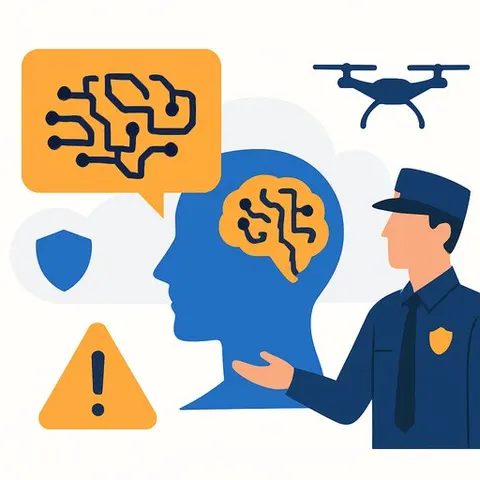
Homeland security warning rarely arrives as a clean signal. At a major public event, cyber defenders, local officials, public-safety teams, transportation operators, and analysts all see different ambiguous signals. The more important question may be whether the relationships among those signals are changing, not whether one data point is strange. As homeland security organizations adopt AI for threat detection and decision support, they are finding that explainable AI is necessary but not sufficient. Operations teams need systems that detect structural changes and provide evidence, not just explanations.
The Department of Homeland Security has emphasized responsible AI adoption, AI maturity, and transparency as part of its AI strategy. For government agencies moving from experimentation to operations, AI for Government resources can help teams understand the limits of current AI tools.
The limits of anomaly detection
Much of the public discussion around AI-enabled warning focuses on anomaly detection. That approach helps prioritize attention when data volumes are high and analytic time is short. But not every mission-relevant warning is a point anomaly. Cyber defense depends on relationships among identities, devices, privileges, and routes. Counter-UAS operations involve airspace, sensors, radio-frequency conditions, and crowd dynamics. Biosurveillance relies on connections among symptoms, geography, mobility, and lab reporting. Critical infrastructure resilience hinges on dependencies across physical, cyber, supply-chain, and human systems. Traditional anomaly detection asks whether one observation looks unusual. Homeland security operations often need a broader question: are the relationships among observations changing in a mission-relevant way?
Explainability is not evidence
The explainable AI debate is often framed as a model problem-can the system tell us which features influenced a prediction, provide a confidence score, or generate a plain-language rationale? Those questions matter, but in high-consequence settings an explanation is not enough if it cannot be tied back to evidence. NIST's AI Risk Management Framework treats explainability and interpretability as part of a broader set of trustworthy AI characteristics that also includes validity, reliability, safety, and accountability. NIST distinguishes transparency (what happened), explainability (how a decision was made), and interpretability (why the output matters in context). For homeland security, that distinction is critical.
"A system can explain why it assigned a high score and still fail to answer the operational question that matters most: what changed, when did it change, and what evidence supports the warning?" the analysis notes. An operator, supervisor, civil-liberties reviewer, or after-action team may need the data relationships that changed, the time window, the sources, and whether the same inputs would produce the same result again. "Operational trust requires more than simply a plausible explanation. It also requires evidence that can be reviewed, replayed, and challenged."
The case for structural warning
Homeland security agencies should begin thinking in terms of structural warning-the detection of meaningful changes in how a system is connected, organized, or coordinated. It is less concerned with whether one data point is unusual and more concerned with whether the pattern of relationships has shifted. Did previously separate clusters become connected? Did a feedback loop emerge? Did confidence relationships among fused data sources change?
One family of methods comes from topology, the mathematics of shape and connection. The underlying idea is intuitive: some patterns are fragile and disappear when viewed at a different scale; others persist and may represent more robust structure. For homeland security, the value is not mathematical novelty but a different way of seeing warning. Some threats do not appear as unexpected data points. They appear as changes in system shape.
Data fusion is where structural warning may be especially valuable. Fusion is not simply accumulating more feeds in a common operating picture; it is the analytic process of relating observations from different sources so they can become actionable knowledge. A structural-warning layer could help analysts evaluate the fusion process itself. Are independent sources corroborating one another, or is the picture driven by a small number of fragile links? Did a coverage hole appear because a sensor failed or a reporting channel went quiet? Used this way, structural methods would not replace analyst judgment. They would give fusion teams a way to inspect, replay, and explain how a fused picture came together-and whether the structure behind it is strong enough to support action.
Where this matters
Counter-UAS and public events offer a clear example. A single drone sighting may be a nuisance, an accident, or something more serious. The larger warning may come from the pattern: multiple reports, shifting sensor coverage, radio-frequency interference, airspace constraints, and crowd density beginning to interact in a new way. Structural warning would help operators ask whether the operational environment itself is reorganizing.
Cyber and critical infrastructure present another case. CISA's mission already recognizes that infrastructure risk crosses sectors and dependencies. Cyber defenders routinely work with graphs-users, devices, credentials, services, privileges, network paths, and cloud resources. A structural approach asks whether hidden loops, unexpected bridges, or fragmentation are emerging across those graphs. It complements traditional alerts by showing how the shape of the network may be changing.
Fusion centers, biosurveillance teams, and border-security organizations face a similar challenge. They are designed to bring together information from multiple sources, but fusion can create as much uncertainty as clarity when sources duplicate, conflict, or drift in quality over time. Structural warning can help identify when weak signals are becoming coherently connected, when a fused picture is fragile, or when a coverage gap is shaping the result.
What leaders should ask
The homeland security enterprise does not need to turn every operator into a mathematician, but it should ask better questions of AI-enabled warning systems.
- Does the system detect relationship change, or only point anomalies?
- Does the system produce evidence, or only alerts?
- Can the result be replayed? If the same data and analytic settings are used later, the organization should be able to reproduce the output or understand why it changed.
- Can the explanation travel across audiences? Operators, engineers, program managers, oversight officials, and legal reviewers do not need the same level of detail.
- Does the tool support human judgment rather than bypass it?
- Does the system help assess the quality of the fused picture?
Why this matters for operations
Operations teams do not need AI systems that simply sound more confident. They need systems that help people reason under uncertainty. Structural warning is not a replacement for conventional anomaly detection, intelligence analysis, cyber defense, or public-safety judgment. Its value appears when the mission problem is relational, dynamic, and high-consequence-and when the analytic output must be defended after the fact.
For operations professionals, the practical takeaway is clear: demand tools that provide evidence, not just alerts. Training in AI for Operations can help teams evaluate whether a system meets the structural-warning criteria. An alert that cannot be reconstructed later is a weak foundation for trust. A warning that preserves its evidence chain is stronger, even when the final decision remains a human one. Better models will matter, but better evidence will matter just as much.