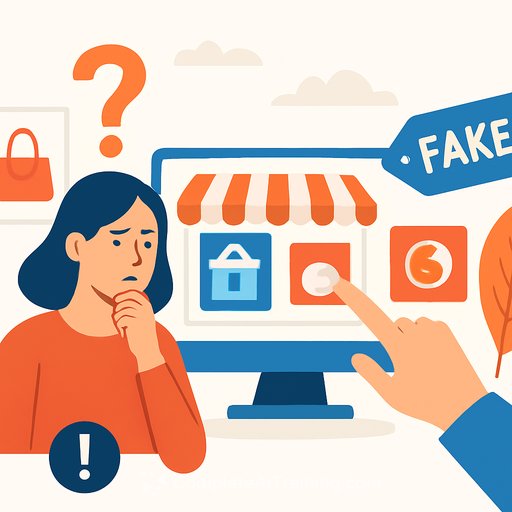
AI-crafted storefronts are faking artisanship - what Morgan County sales pros need to know
Across Morgan County, shoppers are being pulled into faux "handmade" storefronts that look local but operate overseas or vanish after checkout. These sites pair emotional small-business backstories with AI-generated images to build trust fast-and convert faster.
For sales teams, that erosion of trust shows up as lower walk-in confidence, tougher objections, and stalled conversions. The fix isn't louder promotion. It's proof, clarity, and a repeatable process that helps buyers feel safe.
How the scam sells the story
Scammers use sympathetic founder narratives, polished product photos, and limited-time discounts to create urgency. Many reuse the same AI or stock images across multiple domains and hide behind vague contact info and weak policies.
Once payment clears, customers face non-delivery, low-quality goods, or a refund maze. Complaints follow, but the domain often disappears just as quickly as it appeared.
Red flags your customers should check
- Identical product photos seen on multiple sites (often AI or stock).
- Recently registered domain with no history.
- Thin or confusing return/refund policy.
- Unclear contact info, no physical address, disposable email.
- Emotional backstory used to justify steep discounts or rushed sales.
Coach buyers to verify contact details, skim domain registration history, and check third-party reviews. The Better Business Bureau is a solid start, alongside platforms like Trustpilot.
Why this hits your quota
Locals lose money or receive poor-quality goods-that pain makes future purchases harder, even from honest sellers. At the same time, Main Street retailers and true artisans face unfair online competition that copies the "handmade" identity without the accountability.
Net effect: more objections, longer decision cycles, and extra education required at the point of sale.
Sales playbook: turn trust into an advantage
- Publish the receipts: real photos of your team, workshop, packaging, and inventory. Short behind-the-scenes clips help.
- Make local proof obvious: full address, locally answered phone number, posted hours, and a verified Google Business Profile.
- Show reviews with dates and names, plus clear response history. If you have a BBB profile, feature it in-store and online.
- Reduce risk: simple returns, posted processing/ship times, and no-gotcha terms. Put the policy where buyers can't miss it.
- Train staff to spot AI/stock patterns so they can teach customers calmly and credibly.
Quick script for customer conversations
"A lot of sites are copying 'handmade' stories with AI images. Here's how we're different: our address, phone, and people are right here in Morgan County. Our return policy is simple and posted. Want to see how we make and ship your order?"
"Before you buy anywhere, check their domain age and reviews. If you'd like, we can show you how to do that in under a minute."
Supplier due diligence for B2B sales
- Check domain age via WHOIS, verify legal entity/tax IDs, and match contract names to website ownership.
- Confirm a physical address and phone; use map and street view to sanity-check the location.
- Place a small test order and time fulfillment; require clear SLAs on refunds and chargeback-safe payment terms.
- Reject vendors whose catalogs reuse the same lifestyle images across brands or feel AI-generated.
Platform and policy outlook
As shoppers struggle to tell real from fabricated, marketplaces and payment processors will face pressure to tighten verification. Cross-border operators complicate enforcement, so keep invoices, emails, and delivery logs handy for disputes.
Locally, doubling down on transparency and customer education is your fastest lever. The goal: make proof so visible that scams feel obvious by comparison.
Action checklist for this week
- Add a prominent, plain-English returns and refunds page. Link it from product pages and checkout.
- Post 6-10 authentic photos: team, workstation, packing table, storefront, and a dated order going out.
- Publish full contact details and response times. Test the phone and email from a customer's perspective.
- Create a one-sheet "How to spot fake storefronts" for your staff and customers.
- Collect and display 5 recent reviews with permission. Respond to each publicly.
- If a deal looks too perfect, pause. Verify before you promote or buy.
If your team needs a quick primer on AI literacy for sales, explore practical training by role here: Complete AI Training - Courses by Job.
Your membership also unlocks: