
AI news ·
Federal judge rules AI chatbots are not protected by attorney-client privilege
A federal judge ruled AI chatbots cannot protect user conversations under attorney-client privilege. Anything shared with Claude, ChatGPT, or similar tools has no legal shield from government access.
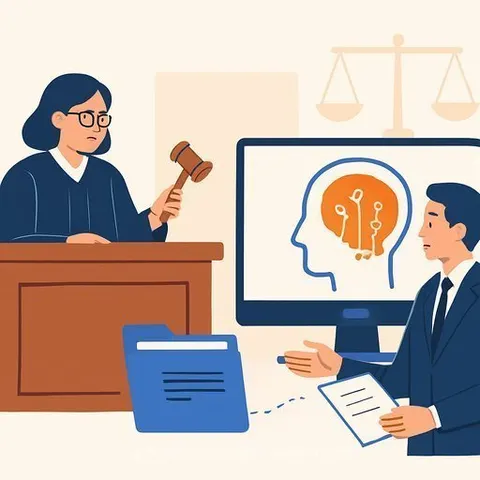
Federal Judge Rules AI Chatbots Lack Attorney-Client Privilege
A New York federal judge has determined that conversations with AI chatbots like Claude cannot be protected by attorney-client privilege, opening the door for government access to documents users share with these platforms.
US District Judge Jed Rakoff made the ruling in a case involving Brad Heppner, former chair of financial services company GWG Holdings. Heppner fed confidential reports into Claude while preparing materials for his defense team in a securities and wire fraud case. The court ordered him to hand over 31 documents generated by the chatbot.
Rakoff wrote that no attorney-client relationship exists "or could exist, between an AI user and a platform such as Claude." The judge noted that Claude explicitly disclaims providing legal advice, citing the chatbot's own response that it is "not a lawyer and can't provide formal legal advice."
What This Means for Government Workers
The ruling affects anyone who has shared sensitive information with AI chatbots, including government employees. If you've used Claude, ChatGPT, or similar tools to process work materials, that information is not legally protected from disclosure.
This is consistent with how other tech companies handle government requests. Ring Doorbells have provided law enforcement warrantless access to customer footage. Google complies with Department of Homeland Security subpoenas. The FBI extracts metadata from iPhones. AI chatbots now join this list of platforms with direct government access.
Industry Response
Law firms are already adjusting their practices. White-collar defense firm Sher Tremonte updated its contracts to warn that sharing privileged communications with third-party AI platforms may waive attorney-client privilege.
For government professionals, the practical implication is straightforward: treat information entered into AI chatbots as if it will become public. These platforms offer no legal protection for confidential materials, regardless of how sensitive the content is.
Learn more about AI for Legal and AI for Government applications and compliance considerations.