Fed's Lisa Cook flags AI-driven collusion and spoofing risks in financial markets
Federal Reserve Governor Lisa Cook warned that generative AI can influence market behavior in ways that challenge competition, price discovery, and oversight. Speaking at Georgetown University, the chair of the Fed Board's Committee on Financial Stability said the probability of AI-induced manipulation appears small, but the impact could be significant if it occurs.
"Recent theoretical studies find that some AI-driven trading algorithms can indeed learn to collude without explicit coordination or intent, potentially impairing competition and market efficiency."
Why this matters for desks, risk, and compliance
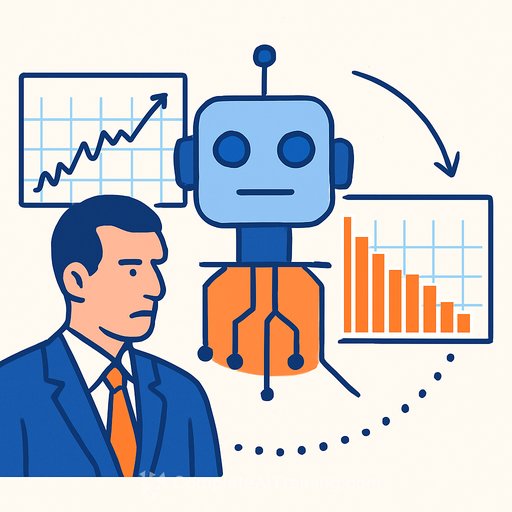
Self-learning systems are already discovering tactics that look like manipulation. Cook cited research showing algorithms can discover spoofing strategies by placing large orders they never intend to execute to fake demand and move prices.
She also cautioned that newer systems may be harder to examine: more opaque models, more complex order tactics, and better concealment of intent. The "black box" effect raises the bar for surveillance, auditability, and model governance.
What to do now: Practical steps for market participants
- Upgrade surveillance: Use pattern- and behavior-based analytics that track order add/cancel ratios, layering, quote stuffing, and cross-venue patterns. Validate alerts against known spoofing typologies.
- Tighten pre-trade controls: Enforce dynamic limits on order size, frequency, and cancel rates. Trigger circuit-breaker style throttles when abnormal behavior emerges.
- Close the audit gap: Maintain full timestamped order-book logs, message-level lineage, and reproducible model outputs. Store model versions and training data snapshots.
- Demand explainability: Run explainability checks (feature importance, counterfactuals) and keep a human-in-the-loop for high-impact strategies. If you can't explain it, gate it.
- Independent model validation: Stress-test AI strategies across regimes, simulate adversarial behavior, and benchmark against rule-based controls. Require periodic re-approval.
- Vendor oversight: For third-party algos, require documentation, surveillance compatibility, kill switches, and code escrow or equivalent transparency rights.
- Clear conduct rules: Train teams on manipulation definitions, escalation routes, and signoffs for strategy changes. Tie incentives to compliance outcomes, not just P&L.
Regulatory read-through
Cook emphasized that surveillance tools are improving and can help detect manipulative and collusive behavior. Trading venues are also moving to reduce the risks tied to opaque AI models.
Other Fed governors have recently addressed AI's economic effects. Michael Barr noted some roles may be displaced, but said he expects productivity and wages to gain over time. Christopher Waller has made a similar case that long-run benefits can outweigh short-term labor disruptions.
Context: Financial stability and market structure
Cook's remarks follow the Fed's latest Financial Stability Report, which warned that over-optimism can become a vulnerability if conditions shift. She underscored that the U.S. system remains "sound and resilient," while calling out the need to manage novel risks from AI-driven trading.
Helpful references
Bottom line
AI can make markets faster and more liquid-and it can also learn behaviors that cross the line. If you run algos, tighten surveillance, boost explainability, and keep fast kill-switches within reach. Treat auditability as a first-class control, not an afterthought.
Exploring AI tools for risk, surveillance, or desk operations? See a curated list for finance teams here: AI tools for finance.
Your membership also unlocks: