AI In Wealth Management 2026: Adoption Accelerates, New Use Cases Emerge, and Compliance Tightens
AI is moving from experiments to execution across wealth management. Industry leaders expect 2026 to mark a shift from note-taking and blog drafting to real operational lift: prospecting, planning, and advisor support.
The Financial Planning Association (FPA) is leaning in with a new educational initiative, FPAi Authority, offering curated AI content and demos. "We want to provide members with the resources they need to evaluate AI tools and incorporate what they feel is appropriate for their practice and clients," FPA CEO Dennis Moore said. Initial access will be public, then member-only.
What's Changing in 2026
Until now, most RIAs dabbled with AI through meeting summaries and basic generative writing. That's set to shift. "You're going to see adoption across the board," said Joel Bruckenstein, president of Technology Tools for Today (T3).
Advisors are ready. "We now have this amazing tool that allows us the ability to rethink how we serve our clients every day," said Matt Reiner of Capital Investment Advisors, which is partnering with FPA on FPAi Authority. He believes firms will go beyond note-takers this year.
Key Use Cases Worth Testing Now
- Lead generation and prospecting, with AI scoring, outreach drafts, and follow-up orchestration.
- Financial plan creation and updates, including scenario modeling and document assembly.
- Estate planning workflows and entity summaries from structured/unstructured data.
- Portfolio construction support: screening, drift checks, and proposal drafts.
- AI agents for meeting prep: data pulls, agenda drafts, talking points, and post-meeting tasks.
Reiner expects AI agents to prepare meeting packages and draft plans a day ahead of time. "We will spend our time applying our expertise to the output of our AI agents," he said. John O'Connell of Oasis Group expects AI prospecting to be "front and center" in 2026.
Regulatory Signals Managers Should Track
Regulatory clarity has lagged. "There has been a ton of uncertainty around how AI utilization will be regulated," Reiner said. He expects clearer direction before true scale.
Bruckenstein doesn't see heavy-handed rules slowing adoption. "The SEC wants the US to be a world leader in AI," he said. Expect encouragement for experimentation with oversight.
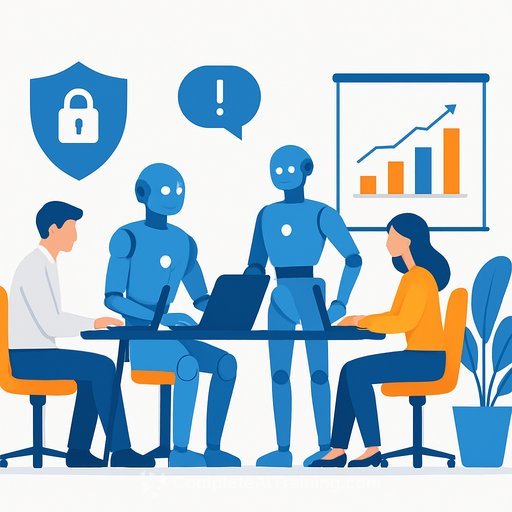
FINRA has flagged concrete controls: test for accuracy and bias, log prompts and outputs, and ensure supervision, communications, recordkeeping, and fair dealing rules are applied to AI use. AI agents require close monitoring to prevent overreach, poor auditability, and data mishandling.
Known Roadblocks (Plan For These)
- Hallucinations and factual errors still occur; human review is mandatory.
- Bias risks require testing and documented mitigation.
- Advisor education gaps slow effective rollout.
- ROI skepticism persists without clear metrics and scoped pilots.
- AI agents can act beyond intent without guardrails and audit trails.
Merrill Lynch recently warned that AI may be flawed, biased, or harmful without proper oversight. That aligns with FINRA's caution to supervise, test, log, and restrict sensitive data exposure.
A 90-Day AI Adoption Plan For Firm Leaders
- Days 0-30: Stand up governance
- Form an AI working group (ops, compliance, IT, advisors).
- Draft an AI use policy: approved tools, data access, review requirements, logging, incident response.
- Define "human-in-the-loop" points for any client-facing output.
- Days 30-60: Pilot 2-3 use cases
- Meeting prep agent (internal only) with strict data scopes.
- Prospecting assistant for list building and outreach drafts.
- Plan document generator for standard scenarios (advisor-reviewed).
- Days 60-90: Measure and harden
- Track time saved, error rates, conversion lift, and client satisfaction.
- Add guardrails: prompt libraries, red-teaming, input/output logging, bias tests, and PII controls.
- Decide scale-up or sunset. Update policy and training.
Governance Checklist For AI And Agents
- Access control: least privilege; separate environments for testing vs. production.
- Data handling: mask PII where possible; vendor DPAs; encryption in transit and at rest.
- Prompt/output logging with retention policies and audit trails.
- Accuracy/bias testing on representative datasets; document results.
- Human review before client delivery; sampling on internal work.
- Clear agent scopes, timeouts, spending caps, and approval checkpoints.
- Vendor evaluation: model sources, provenance, uptime, SOC 2/ISO, incident history.
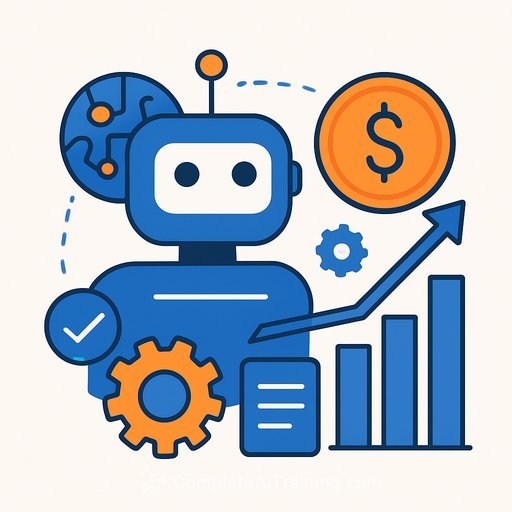
KPIs To Prove ROI
- Advisor time saved per client review and plan update.
- Prospecting conversion rate and cycle time.
- Error rate of AI drafts vs. human baseline.
- Client NPS/CSAT tied to turnaround times and personalization.
- Cost-to-serve by segment pre/post pilot.
Training And Talent
Close the skills gap early. Standardize prompts, teach review methods, and align on usage patterns that reduce risk. Provide short, role-based training for advisors, ops, and compliance.
If you need structured options, explore role-specific programs and tool guides: AI Learning Path for Sales Representatives, AI courses by job and AI tools for finance.
Events: Hands-On Learning At T3
The T3 Advisor & Enterprise Conference in New Orleans (Mar 9-12) will open with a full day of AI tutorials billed as "AI University." "We're going to build a prospecting app that you can bring back to the office and use in your business," Bruckenstein said.
O'Connell will oversee a session that creates an AI proposal based on financial planning live on stage. The goal: show how firms can apply AI to day-to-day operations now.
Bottom Line For Management
AI is ready to reduce cycle times, sharpen prospecting, and standardize prep work-if you pair it with policy, testing, and review. Start with narrow, high-frequency tasks, measure rigorously, and scale what proves out.
As O'Connell put it, "The key is to get a policy in place now." Then let results-not hype-guide your roadmap.
Useful Resource
Learn more about FPA initiatives here: Financial Planning Association.
Your membership also unlocks: