
AI news ·
Financial institutions weigh artificial intelligence efficiency against customer trust and transparency
Banks use AI to cut costs, but automation is sparking customer backlash. KB Kookmin Bank faced public outcry over plans to replace 240 call center workers with AI systems.
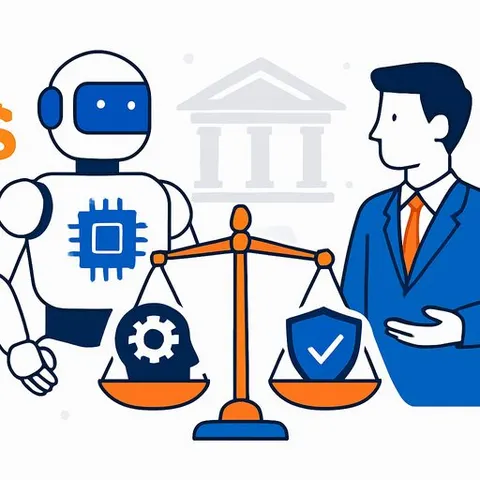
Financial institutions worldwide are pouring resources into artificial intelligence to speed up services and cut costs, but a wave of customer frustration is exposing the limits of automation. In South Korea, KB Kookmin Bank faced public outcry last year after announcing plans to replace 240 call center workers with AI systems, while customers across the country report being stuck in 40-minute chatbot loops that never resolve their issues. The backlash underscores a critical risk for the industry: efficiency gains that undermine trust can ultimately hurt the bottom line.
The empathy gap in automated service
AI has driven real improvements in financial services. Vietnam's MoMo app uses AI to categorize consumer spending and process facial-recognition payments in three seconds. Bank of America's virtual assistant Erica has handled more than 1.5 billion interactions and proactively alerts customers when their spending patterns signal a risk of overextension. These applications show that AI can boost processing speed, personalization, and convenience.
Problems arise when banks chase full automation as a cost-cutting strategy. Operational metrics may improve while service quality declines. Korean customers have described being trapped in repetitive chatbot conversations for up to 40 minutes without a resolution. The criticism intensified when KB Kookmin Bank moved to replace call center staff-a decision that triggered public backlash.
While AI handles routine inquiries quickly, AI for Customer Support often fails when problems require empathy or critical thinking. AI can simulate conversation, but it cannot replicate the genuine empathy that underpins financial trust. A more sustainable model uses AI for basic tasks like data processing and simple inquiries, while human advisers step in for situations involving stress, confusion, or financial vulnerability. Selective integration preserves the relational foundation that financial institutions depend on.
Credit scoring: More access, less transparency
In lending, AI for Finance is broadening credit access for groups traditionally disadvantaged by conventional evaluation models. U.S.-based Upstart analyzes roughly 2,500 variables instead of relying solely on credit scores, leading to a 35-46% increase in loan approval rates for Black and Hispanic applicants. Digital banks in Korea are using similar AI tools to improve financing access for freelance workers.
Yet the "black box" nature of many algorithms creates a transparency gap. When a customer is denied credit and receives only a vague response like "declined due to internal scoring parameters," it breeds perceptions of unfairness. Without clear feedback, users cannot challenge decisions or improve future outcomes.
A necessary fix is explainable AI (XAI). Instead of delivering only a final outcome, the system should identify the specific factors behind each decision. For example, a customer could receive an explanation such as, "Your loan application was not approved because your income has been unstable over the past three months and your current credit card balance remains high." Transparent, data-based communication helps customers understand the process and builds trust in the technology.
Fraud prevention: A digital arms race
AI is becoming a strategic shield in financial security. Mastercard analyzes one trillion data points in milliseconds to block fraud, while Korea's ASAP system connects 130 organizations for real-time information sharing. Vietnamese banks also use AI to detect unusual transactions from unfamiliar devices.
Cybercriminals are using the same technology to develop more convincing scams. Deepfake tools now enable fraudsters to impersonate voices or identities, making impersonation of relatives or authorities increasingly common in Vietnam. Biased training data can also lead to incorrect risk assessments, potentially penalizing legitimate customers.
Effective defenses require governance, not just faster algorithms. Several measures are gaining traction:
- A cooling-off mechanism for high-risk transactions temporarily delays payments when unusual behavior is detected, giving users time to cancel if fraud is suspected.
- A human-in-the-loop approach ensures that high-risk cases-large transfers, rapid transactions, or high-value loan decisions-are reviewed by a human expert before final approval.
- Context-based multi-factor authentication combines biometrics, device recognition, and location tracking to strengthen identity verification.
- Real-time fraud alerts via mobile apps help users recognize common scams, including impersonation tactics.
Why this matters for finance professionals
The institutions that lead the next phase of AI adoption will not be those with the most powerful computing systems. They will be the ones that apply technology in the most human-centered way-turning AI complexity into simple, empathetic customer experiences, expanding credit access while keeping decision-making transparent, and placing technology within strict ethical boundaries. For finance professionals, the mandate is clear: design AI systems that complement human judgment rather than replace it, prioritize explainability in every customer-facing model, and build fraud defenses that assume adversaries are using the same tools. If innovation gradually diminishes the human element, it stops being progress and becomes a step backward in systems meant to serve people.