
AI news ·
Founders who treat AI as an operational layer gain a scaling advantage over those who don't
Startups relying on disconnected tools and manual processes face a scaling problem that more staff won't fix. Founders integrating AI as an operational layer are cutting through data silos and building systems that grow without added complexity.
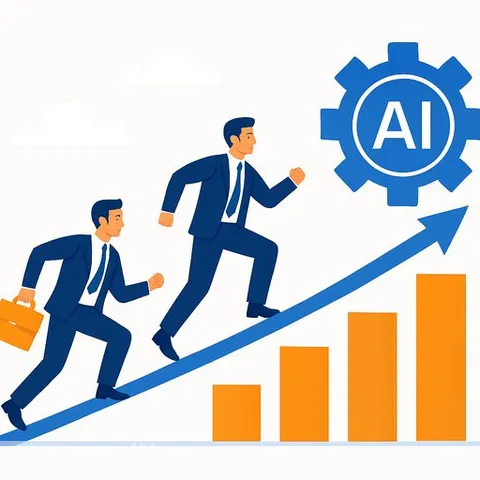
The Future of Work Isn't Human vs. AI. It's Human With AI
Founders are moving away from manual workflows toward AI-integrated systems. Those taking a strategic approach are building competitive advantages while others remain stuck in operational chaos.
The problem is familiar: startups rely on too many disconnected tools and manual processes. Constant context switching drains productivity. Knowledge gets trapped in silos. Scaling becomes nearly impossible.
The numbers bear this out. Seventy-one percent of advertisers describe their data environments as chaotic. Forty-six percent of agencies cite internal data silos as a top driver of wasteful spending in digital media. Adding more people doesn't fix fragmented systems-it just creates more silos.
What the new approach looks like
Founders adopting an AI Agents & Automation strategy start by identifying high-impact areas. They treat AI as an operational layer that connects tools and acts on data across the organization. The goal is continuous optimization, not one-time automation.
This differs from treating AI as a replacement for people. Instead, founders position AI as a co-worker that handles repetitive tasks, surfaces insights, and keeps workflows moving without manual intervention.
The shift requires rethinking how work flows. Rather than maintaining separate systems for different departments, AI for Operations creates a unified approach where data moves freely and decisions can be made faster.
Founders who build systems this way don't just reduce friction. They create room to scale without proportionally increasing headcount or complexity.