
AI news ·
France, Spain, the U.S. and China drive AI biometric and smart hospitality adoption across 350 million annual travelers
France, Spain, the U.S., and China are rolling out AI check-ins and biometric boarding across 350 million travelers annually. What started as pilots is now standard at major airports and hotels worldwide.
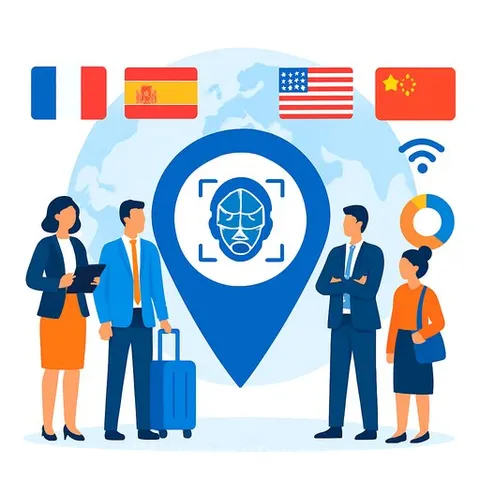
Four Nations Shape Global Travel Tech With AI and Biometrics
France, Spain, the United States, and China are spreading AI-driven check-ins, biometric boarding, and smart-room hospitality across 350 million annual travelers through coordinated airline and hotel partnerships. The shift is moving these technologies from pilot programs into everyday operations at airports and hotels worldwide.
The scale of international tourism creates the economic pressure driving this change. France welcomes over 100 million visitors annually. Spain receives approximately 90 million. The U.S. processes more than 70 million international arrivals. China has become one of the world's largest outbound-tourist markets. Combined, these four nations handle more than 350 million travelers each year.
Technology spreads through interconnected global networks linking airlines, tech firms, and hospitality groups across continents. When one carrier adopts a solution, it ripples outward through shared platforms and supplier relationships-reaching airports and hotels worldwide within months.
How Airlines Are Driving the Shift
Modern carriers no longer build isolated, proprietary systems. Instead, they purchase integrated technology modules and co-develop solutions with specialized firms. This buyer-supplier model accelerates how fast innovation spreads across borders.
Air France has implemented biometric self-boarding at major French airports. Passengers board using a facial scan linked to passport data, eliminating paper tickets. The operational gains are immediate: reduced wait times at gates, faster boarding, and freed staff resources for passengers needing assistance.
The airline also deployed AI-assisted customer-service tools on its website and app. These systems answer passenger questions in real time, reducing counter queues and cutting miscommunication about bookings and baggage.
Iberia uses advanced AI to personalize offers and streamline the passenger journey. The airline's systems track real-time demand patterns, analyze passenger preferences from booking history, monitor operational disruptions, and suggest optimal rebookings when delays occur.
This creates a technology feedback loop. Iberia's systems train AI models on real-world Spanish airport data, which improves the same software for other global airline partners. A solution perfected in Madrid becomes available to carriers in London, Frankfurt, or Singapore within weeks.
United Airlines works side-by-side with technology vendors in joint innovation labs rather than simply purchasing off-the-shelf solutions. This co-development model produces AI-powered upselling systems, dynamic pricing engines, and post-booking support tools.
These innovations do not stay confined to United's U.S. operations. Through global partnerships, the same AI-driven tools ripple to travel agencies and corporate-travel managers in Europe, Asia, and Latin America. A booking optimization feature tested in Chicago becomes available to travel agencies in Paris, Tokyo, and Sydney through shared technology platforms.
Chinese technology firms have driven rapid adoption of AI-powered biometric e-gates at domestic airports. These systems integrate facial recognition, passport verification linked to government databases, and payment integration for currency exchange.
When Chinese firms license this infrastructure to overseas airports or partner with foreign airlines, the same biometric workflows appear at European hubs, Middle Eastern gateways, and Southeast Asian airports. A passenger accustomed to biometric processing in Beijing encounters identical systems in Paris or Dubai.
Hotels Mirror Airline Innovation Models
Leading hospitality groups are active buyers and innovation partners in global networks spanning dozens of countries, following the strategic approach pioneered by major airlines.
Premium hotels in Paris and along the French Riviera now feature smart rooms with AI-assisted lighting that adjusts color temperature based on time of day and guest preference. Climate control responds to voice commands and learns temperature preferences. Entertainment systems offer personalized content recommendations. Service interfaces enable voice-activated room service and housekeeping.
Behind the scenes, AI systems profile guest preferences across stays, suggesting room upgrades, local experiences, and dining options. A guest who requested a high-floor room receives automatic upgrades on return visits.
Hotels in Madrid, Barcelona, and coastal resort cities deploy AI-driven personalization engines that tailor offers based on guest history, real-time weather data, and local events calendars. These systems operate on software developed by global technology firms. The Spanish hotel group functions as both buyer and innovation partner, testing new features in joint pilots. Once a tool proves effective in Spain, the same vendor offers it to hotel chains in the United States, Southeast Asia, the Middle East, and Africa.
Major U.S. hotel chains integrate mobile check-in, keyless room entry, and AI-powered concierge services. These systems are designed from inception for global deployment. A mobile check-in system tested at a New York property becomes available to properties in London, Singapore, and Dubai within months.
Chinese hospitality groups are rapidly scaling smart-room and AI-personalization technologies across Asia, with increasing presence in Europe and North America. Chinese-backed hotels implement facial-recognition check-in systems, mobile payment integration supporting WeChat Pay and Alipay, AI concierge services in multiple languages, and smart-room automation controlled via mobile app or voice command.
What This Means for Your Operations
The convergence of airline and hospitality technology creates tangible operational and guest-experience benefits:
- Faster Processing: Biometric systems and AI-powered check-in reduce queues. Facial-recognition boarding processes passengers in seconds rather than minutes.
- Smoother Disruptions: AI systems proactively rebook guests on alternative options during delays or cancellations, often before they are aware of the problem.
- Personalized Experiences: AI learns individual preferences across multiple properties, delivering customized recommendations and service options.
- Consistent Standards: Technology consistency across countries means guests encounter familiar interfaces and comparable service levels whether traveling domestically or internationally.
- Enhanced Security: Biometric systems provide stronger identity verification than traditional documents, reducing fraud risks.
- Real-Time Support: AI-powered customer service tools provide instant answers about bookings, loyalty programs, and local services.
The Speed of Global Adoption
Technology now follows the same routes as passengers: from one airline's hub to a hotel chain in another country via shared platforms and joint development projects. This creates a powerful feedback loop where innovation spreads at unprecedented speed.
A technology breakthrough can reach global deployment within 12-18 months, compared to 3-5 years in earlier eras.
Germany, Japan, Singapore, the United Arab Emirates, and Brazil are rapidly developing similar innovation ecosystems. The core dynamic remains unchanged: technology spreads through global buyer-innovation networks faster than through any other mechanism. Airlines and hotels that participate in these networks gain competitive advantages in speed, cost, and guest satisfaction. Those that remain isolated face increasing pressure to adopt solutions developed elsewhere.
For hospitality professionals, this means the next five years will bring even more efficient operations, better guest data, and more consistent service standards across properties. The technology shift that France, Spain, the United States, and China are leading today will become the global standard tomorrow.
To stay current on how AI is reshaping hospitality operations, explore resources on AI for Hospitality & Events and learn more about AI Agents & Automation that power these systems.