CX Dominates G2's Agentic AI List - Proof Buyers Want Resolution, Not Just Deflection
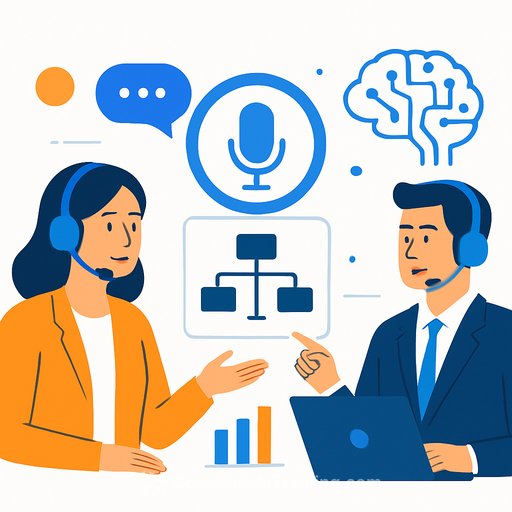
G2's Best Agentic AI Software Products for 2026 sends a clear signal: customer support teams are moving past "handle fewer contacts" and into "finish more issues." Six of the top ten products are CX or conversation-first tools.
- Fin by Intercom (#2)
- Zendesk for Customer Service (#3)
- Retell AI (#4)
- Qualified (#7)
- Genesys Cloud CX (#8)
- JustCall (#9)
That pattern holds further down the list as well.
- Tidio (#14)
- Talkdesk (#20)
- Freshdesk (#34)
- LivePerson (#39)
- Gladly (#41)
- Ada (#46)
- Forethought (#50)
What G2 Rankings Do - And Don't - Prove
G2 uses normalized Satisfaction and Market Presence scores pulled from verified reviews and public market data. Eligibility depends on review volume, and only reviews within the evaluation window count. You can read how they score products in G2's methodology here: G2 Methodology.
That makes this list a solid signal for buyer sentiment and momentum. It doesn't settle market share, revenue leadership, or absolute technical performance across vendors.
From Deflection To Resolution
Chatbots taught us to chase one metric: how many contacts we avoided. Useful in spikes, sure, but incomplete. Agentic support raises the bar: how many issues we finished. That shift requires better knowledge, tighter workflows, and stronger governance because the system takes actions, not just replies.
A Staged Model Of Adoption: Assist To End-To-End Resolution
Stage One: Assist (Agent as Copilot)
The agent helps humans do the job faster and cleaner. It drafts replies, summarizes history, and suggests next steps while a person controls the final response. Early value shows up as operational relief - as one Fin by Intercom reviewer put it, a "reliable AI teammate that takes the pressure off customer support."
Stage Two: Triage (Agent as Router)
The agent classifies, prioritizes, and routes. This reduces misroutes and shortens queues, but it also exposes gaps in your taxonomy and reports. Reviewers often emphasize automation plus measurement; a Zendesk for Customer Service snippet frames it as "streamlines support with flexible automation and clear reporting."
Stage Three: Partial Fulfillment (Agent as Task Runner)
Autonomy becomes real. The agent handles bounded actions like updating account details, starting a return, or scheduling. This raises the stakes on integrations, permissions, and reliability - echoed by a Genesys Cloud CX reviewer highlighting a "flexible cloud-native platform with strong APIs and analytics."
Stage Four: End-To-End Resolution (Agent as Owner)
The agent carries a case from intent to outcome and knows when to escalate. It's the most compelling promise - and where teams can over-claim. Continuity matters here; context loss gets expensive. A Gladly snippet nails the expectation: "intuitive, conversation-based support that keeps full context across channels."
Why CX Is The First Place Buyers Trust Agents
Support and contact centers already measure containment, resolution time, CSAT, and cost per contact. That makes change easy to spot and prove. CX also runs on repeatable workflows, so you can set safe boundaries for autonomy, test in production with guardrails, and catch failures early.
What To Be Careful Not To Over-Claim
A high rank reflects satisfaction and presence signals, not a guarantee you'll see the same results. Fit, data quality, and workflow design still decide outcomes. And agents don't erase the need for people; they shift work. Automation handles the repeatable middle, while humans own exceptions and high-stakes moments.
How To Put This To Work In Your Support Org
- Pick 2-3 high-volume, measurable workflows (e.g., password resets, returns, appointment scheduling). Define "done."
- Start at Assist. Improve response quality, reduce handle time, and build trust with agents who stay in control.
- Move to Triage. Tighten categories, priorities, and routing rules. Clean up your taxonomy and dashboards.
- Add Partial Fulfillment. Limit scope to low-risk tasks. Lock down permissions, add audit logs, and monitor error rates.
- Pilot End-To-End. Set clear escalation rules, test fail-safes, and watch continuity across channels and shifts.
- Stand up governance. Change control, prompt/version management, red-team tests, and real-time monitoring.
- Harden knowledge. Centralize policies and macros, close content gaps, and keep everything versioned.
- Track the right outcomes: resolution rate, AHT, CSAT, cost per contact, and containment by topic.
Useful Resources
Building an agent program and need a practical path? Start here: AI Learning Path for Call Center Supervisors.
Want more ideas, examples, and tooling for support leaders? Explore AI for Customer Support.
The Takeaway For Support Leaders
G2's Agentic AI list doesn't crown a winner. It does show where wins are sticking first: CX workflows with clear definitions of done. Start where resolution is easiest to measure and govern. Then build the knowledge, automation, and oversight that make autonomy safe at scale. Do that well and your team won't just deflect more contacts - you'll resolve more customer moments, which is where loyalty compounds.
Your membership also unlocks: