ElevenLabs and Deutsche Telekom Bet Big on AI Voice Agents for Customer Service
AI voice agents are moving from demos to live calls. That shift changes how support teams plan staffing, QA, and governance. If your voice channel carries the highest risk and reward, this matters right now.
What customers will experience
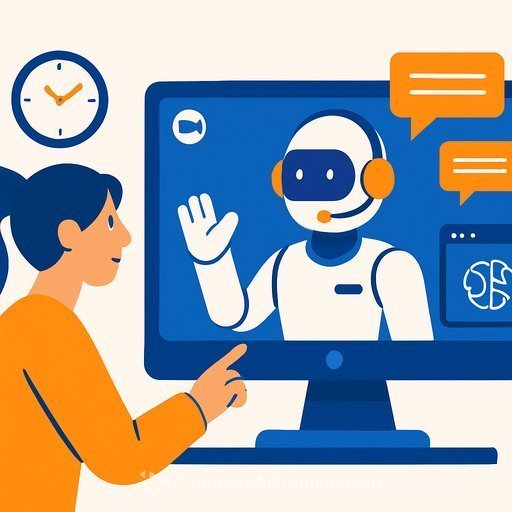
Deutsche Telekom is bringing ElevenLabs' AI voice agents into real support flows across app and phone. The promise: always available, no waiting, and more natural-sounding conversations that feel personal.
As Deutsche Telekom's Chief Product & Digital Officer Jonathan Abrahamson puts it: "Soon, DT customers will interact with AI voice agents that are always on, no waiting, and actually sound human. This is how customer service should feel."
Why this matters for support teams
Voice is where emotion, urgency, and complexity show up. That means the bar for trust and clarity is higher than for chat or email. Automation that works in voice needs tight containment on simple intents and a clean, fast handoff when the issue gets tricky.
Abrahamson frames the move as a production-first strategy: "At Deutsche Telekom, we are building and shipping AI that actually runs in production, inside real customer conversations." He's clear on the challenge too: "The final frontier is voice…where all the value exists and where the bar for 'good enough' is extremely high."
The operational reality: containment, escalation, and limits
According to context shared with the announcement, ElevenLabs reports its AI support agent can resolve about 80% of user queries. Most of those wins look like documentation-style questions. Troubleshooting and pricing queries are more likely to need a human.
That should sound familiar. Success comes down to the basics: clear intent Design, reliable knowledge, and a handoff that respects the customer's time. If the bot hesitates, it should escalate fast-without making the customer repeat themselves.
What to watch next
Voice bots aren't hypothetical anymore. The real question is maturity: Can they sound natural, resolve real intents, and fail gracefully-at scale? If Deutsche Telekom pairs high containment on routine intents with quick, human escalation on complex ones, that's a blueprint others can follow without risking trust.
There's another angle here: risk. As voice AI gets popular, teams need to protect themselves from new threat vectors-spoofing, social engineering, and prompt exploits that can misroute calls or expose data. Treat this as both opportunity and new attack surface.
Playbook: how to get ready
- Pick your first intents wisely: Start with high-volume, low-variance requests (PIN resets, plan details, billing dates). Define the "stop point" where the bot must escalate.
- Script for the ear, not the eye: Short sentences, simple choices, minimal jargon. Confirm key details back to the customer.
- Design the handoff: Pass context, transcripts, and authentication results to the agent. No repeats. Give customers a clear opt-out to a human at any point.
- Tight knowledge loop: Keep the KB current and scoped. Remove stale answers. Track which articles drive successful resolutions vs. callbacks.
- QA like you mean it: Daily call reviews, red flag alerts (silence, repeated asks, sentiment dips), and fast remediation. Treat the bot like a new hire: coach it.
- Guardrails and disclosure: Be upfront that the caller is speaking with an AI. Set refusal rules for pricing exceptions, legal topics, and anything compliance-sensitive.
- Security and fraud controls: Strong authentication, anomaly detection, and agent verification. Block sensitive actions until identity is confirmed.
- Agent enablement: Train humans to work with AI: reading AI summaries, correcting context quickly, and using suggested next steps without over-relying on them.
Metrics that matter
- Containment rate: End-to-end resolutions with no human touch-and whether those resolutions stick.
- CSAT and sentiment on bot-handled calls: Compare against human baselines. Look for friction points, not vanity averages.
- Escalation speed and quality: Time to human, context passed, and repeat rate after transfer.
- Resolution time and recontact: Short calls are good only if they stay solved. Watch next-7-day reopens.
- Compliance and safety: Consent rates, disclosure adherence, and blocks on restricted actions.
Staffing and governance implications
Expect call mix to shift. More simple issues handled by AI. More complex, emotional cases routed to skilled agents. That means fewer generalists and more specialists-and a bigger focus on coaching, QA, and tooling.
On governance, formalize ownership. Who approves new intents? Who signs off knowledge changes? What triggers a rollback? Document it. Make audit trails routine, not a fire drill.
Bottom line
Voice AI is moving to the front line. Teams that win will match model capability with strong intent design, crisp handoffs, and real QA discipline. If you're not planning for that now, you'll be reacting to it later.
Keep learning: Build skills across your support org with practical AI programs for customer-facing teams. Explore courses by job.
Join the conversation with 40,000+ peers in our LinkedIn community: Customer Experience Community
Your membership also unlocks: