AI is shaking up customer service. Here's what matters for support leaders
Customer service is in flux. Investors are skeptical of traditional BPO models while AI-first support startups like Decagon, Parloa, and Sierra gather fresh funding. The shift is real: hybrid operations that blend software and services are replacing static ticketing and offshore queues.
One of the newest entrants, 14.ai, is leaning hard into that direction. Instead of selling software, they function as an AI-native customer service agency and claim to replace legacy support teams outright.
Meet 14.ai: an AI-native customer service agency
Backed by Y Combinator, 14.ai raised $3 million in seed funding with participation from General Catalyst, Base Case Capital, SV Angel, and the founders of Dropbox, Slack, Replit, and Vercel.
The company was founded by Marie Schneegans and Michael Fester, a married duo who met in Paris more than a decade ago and later moved to the U.S. to build together. Schneegans previously co-founded Workwell (corporate intranets). Fester founded Snips, a local-first voice assistant company acquired by Sonos in 2019.
They didn't want to be another SaaS vendor. "We're not building software for customers. 14.ai is an AI-native customer service agency. We combine software and services in one package. For customers, operating software is hard, especially for customer service. We take over their entire operation, and we use our own purpose-built stack for customer service," Fester said.
What this looks like in practice
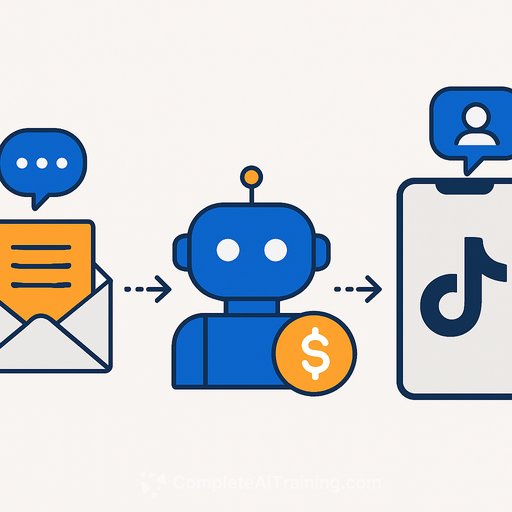
14.ai says it can integrate with a support stack in a day and start clearing backlog immediately. It monitors tickets across email, calls, chat, TikTok, Facebook, Telegram, WhatsApp, and more.
Schneegans shared an early case: a men's health supplement brand called Sperm Worms had an overwhelmed team in the Philippines. "We took over on Thursday morning, and by Thursday afternoon, we had cleared tickets from all channels like social media, SMS, email, chat, and voice."
Team and hiring
The company has six people today, rotating to cover clients around the clock. With new funding, they plan to expand headcount, hiring only AI engineers.
Beyond support: automation that touches revenue
14.ai learns workflows for support and adjacent functions like sales and revenue operations. The goal is to automate repetitive tasks so humans focus on edge cases and higher-value work.
"We are not just a support agency, but also a revenue growth engine because we capture all kinds of conversations early on for a client and get insights from them," Fester said. The company aims to pull three line items off a startup's balance sheet: ticketing systems, AI software add-ons, and human labor costs.
Clients span sectors, including luxury skincare brand Yon-KA, smart glasses maker Brilliant Labs, and lighting company Creative Lighting. To stress-test their stack, they also operate GloGlo, a glucose gummies brand for Type 1 diabetics, where they let AI handle most tasks.
The 60/40 model of AI + humans
Tom Blomfield, a partner at Y Combinator, argues the right integration can let AI handle roughly 60% of tasks, leaving 40% for humans. Over time, that balance shifts further toward automation. The twist with 14.ai: they become the support department-both AI and human-and can reassign agents between customers at different stages of AI adoption to smooth load and headcount changes.
AI-powered agencies are also on Y Combinator's radar for 2026, signaling this model won't be a blip.
What this means for support leaders
- Cost structure changes: Opex moves from fixed headcount and multiple tools to a single provider that bundles software + services.
- Speed to resolution: Backlog-clearing and 24/7 coverage across channels becomes baseline, not a special project.
- Multichannel as default: Voice, email, chat, social, and messaging in one flow reduces context-switching.
- Headcount smoothing: Providers can load-balance humans across clients as AI share increases, reducing painful reductions on your side.
- Richer insights: Unified conversation data feeds sales signals, churn risks, and product feedback.
- Vendor risk moves center stage: Security, data handling, and QA governance matter more than ever.
How to evaluate an AI-native agency
- Security and compliance: Data handling for PII, audit logs, retention/deletion controls, SSO, least-privilege access. Ask for third-party assessments.
- Coverage and fallbacks: Which channels are fully automated vs. assisted? What's the failover plan when confidence is low?
- Brand voice and policy: Style guides, restricted topics, and escalation rules encoded into prompts and workflows. Human-in-the-loop for sensitive cases.
- Measurement: AHT, FCR, CSAT, deflection rate, SLA adherence, refund/discount leakage, QA pass rate. Daily dashboards, not quarterly PDFs.
- Change management: Clear comms to agents, retraining for complex tickets, role redesign for proactive outreach and retention.
- Pricing structure: Per ticket, per conversation, or base + performance? Guardrails for volume spikes and seasonal traffic.
- Data ownership: Who owns conversation data, embeddings, and workflows? Exit plan with data export and model deprovisioning.
- Edge-case coverage: Regulatory, medical, or financial scenarios. Documented playbooks and approval paths.
- Experimentation: Staging environments, shadow mode, A/B testing, and rollback procedures.
A 30-day pilot plan
- Week 1: Pick one channel and one queue (e.g., order status + refunds). Define success metrics and guardrails.
- Week 2: Knowledge sync (macros, policies, tone). Run shadow mode on live traffic to compare answers and spot gaps.
- Week 3: Limited production (20-30% of volume). Daily QA sampling with red-team prompts for risky cases.
- Week 4: Expand to 60-80% if targets are hit. Review AHT, FCR, CSAT, and refund leakage. Decide go/no-go and next queues.
Skills your team will need
- Workflow and prompt design that encodes policy, tone, and escalation logic.
- Operational QA for AI responses: sampling, scorecards, and correction loops.
- Tooling integration across ticketing, order data, billing, and identity.
- Analytics fluency to track deflection, quality, and revenue attribution.
- Role shifts from repetitive handling to complex cases, retention, and proactive outreach. See the AI Learning Path for Call Center Supervisors for upskilling.
Bottom line
Support is moving from "buy software and hire" to "buy outcomes." 14.ai is betting that a bundled AI + human agency can clear backlogs fast, lift CSAT, and pull costs down while feeding sales insights back to the business.
If you lead support, start with a tight pilot, measure hard, and scale what works. The teams that lean into this shift-without losing brand voice or policy control-will set the new standard for service.
Your membership also unlocks: