Enterprise AI Briefing - Jan. 11, 4 p.m. ET
Fresh, manager-ready insights on enterprise AI. What's moving, what it means for your team, and where to place your next bet.
Today's Highlights
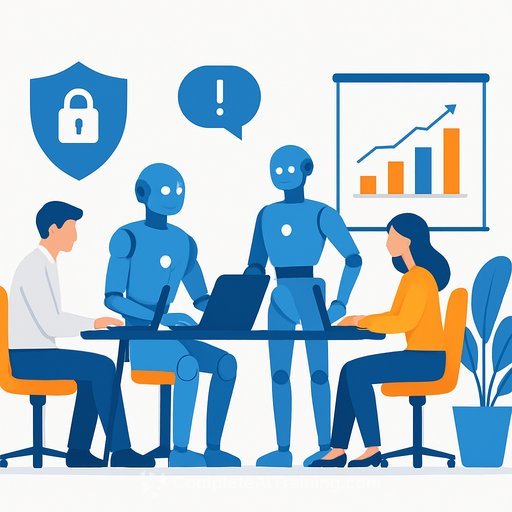
- BNY has 120 "digital employees" in production-AI agents with credentials, reporting lines, and clear scopes-automating tasks like vulnerability management and writing 50,000+ lines of code.
- AI data center buildouts are colliding with finite water supply. U.S. facilities are consuming billions of gallons for cooling, straining local systems and forcing tougher site decisions.
- Healthcare VCs are funding infrastructure and admin automation (scheduling, coding, compliance) over diagnosis. Faster ROI, fewer regulatory hurdles.
What You Need To Know
- AI is moving from pilots to core workflows. Governance, trust, and integration with existing systems are now the hard part.
- Regulation and org design are catching up. Expect pressure on data usage, IP, safety, and job design.
- The new stack spans chips, networks, vectors, agents, and policy. Vendor due diligence and clear interfaces matter more than ever.
Case Study: What BNY's "Digital Employees" Signal
BNY treats agents like staff. They have access credentials, managers, and measurable outputs. That framing kills the "toy" label and forces real accountability.
What to copy: define agent roles, guardrails, and KPIs. Use least-privilege access, human-in-the-loop for code and prod changes, and risk reviews tied to change tickets.
- Start with narrow, high-volume tasks (alerts triage, report drafts, ticket routing).
- Instrument everything: task success rate, cycle time, defect rate, cost per task.
- Keep a kill-switch and rollback plan for every agent action path.
Infrastructure Constraint: Water Is The New Bottleneck
Cooling needs are colliding with local water limits. This will influence site selection, partner choices, and even workload placement.
- Ask for water usage metrics in addition to PUE: WUE, recycling rates, and contingency plans during droughts.
- Favor sites with reclaimed water, free cooling seasons, or dry cooling options-accept slightly higher OpEx for resilience.
- Map AI workload tiers to facilities with suitable water and energy profiles.
Helpful resources: U.S. DOE guidance on data centers and the NIST AI Risk Management Framework.
Healthcare: The Money Is In Ops, Not Diagnosis
Investors are favoring billing, coding, scheduling, referrals, and compliance. These areas offer measurable savings without clinical risk.
- Set a 90-day target: prior auth automation, referral routing, or denials reduction.
- Standardize inputs (EHR templates, payer rules), then apply AI. Measure cost-to-collect and days in A/R.
- Bundle change management: frontline training, audit trails, and clear escalation paths.
The New Enterprise AI Stack (Manager's View)
- Hardware: GPUs/accelerators, interconnects, and capacity commitments that match workload forecasts.
- Data layer: vector databases, feature stores, clear lineage and retention policies.
- Model layer: mix of closed and open models, plus fine-tunes for your domains.
- Agent layer: orchestration, tool use, memory, and role-based access.
- Governance: model registry, prompts and policies in version control, red-team testing, incident playbooks.
People And Org: Performance Is A Leadership Choice
Productivity gains will vary by leader. Teams with clear standards, training, and redesigned workflows win. Tools without process change stall out.
- Make "AI-first drafts" the default for routine docs, analysis, and email. Preserve human approval.
- Promote your AI super-users into enablement roles. Many are mid-level managers driving adoption.
- Update job descriptions with AI responsibilities and metrics-do not tack them on as "extra work."
Market Watch: Strategic Notes
- Autonomous platforms are edging toward viable business models. If you rely on logistics or mobility, dust off those partnerships.
- AI agents can bootstrap simple products and ops. Treat them as interns: helpful, fast, and always reviewed.
- Some AI darlings may be overbid. Balance exposure with picks-and-shovels and cash-flow-positive vendors.
Risk, IP, And Accountability
- Copyright claims are in flux. Favor providers who can indemnify and offer "clean-room" training methods.
- High-stakes public sector use is under scrutiny. Keep a strong audit trail, clear consent, and human appeal paths.
- Retail and other consumer sectors need clear explainability and escalation for AI-driven decisions.
Your 90-Day Action Plan
- Pick 2 high-volume processes for agents (IT tickets, finance reconciliations, or customer responses). Set KPIs and a rollback plan.
- Stand up a lightweight AI governance board. Adopt NIST AI RMF controls and track incidents.
- Add water and energy criteria to your next data center RFP. Request WUE and recycling commitments.
- Run a red-team session on prompt leaks, data exfiltration, and automation misuse.
- Train managers on AI delegation: what to automate, how to review outputs, and how to measure gains.
Level Up Your Team
If you're rolling out AI across roles, focused training shortens the learning curve and keeps standards consistent.
- AI Learning Path for Project Managers for cross-functional rollouts
- AI Learning Path for CIOs for governance and strategy leads
- ChatGPT resources for managers who review and ship AI-assisted work
No silver bullets. Pick one real problem, ship an agent, measure the lift, and keep iterating. That's how you bank meaningful ROI this quarter.
Your membership also unlocks: