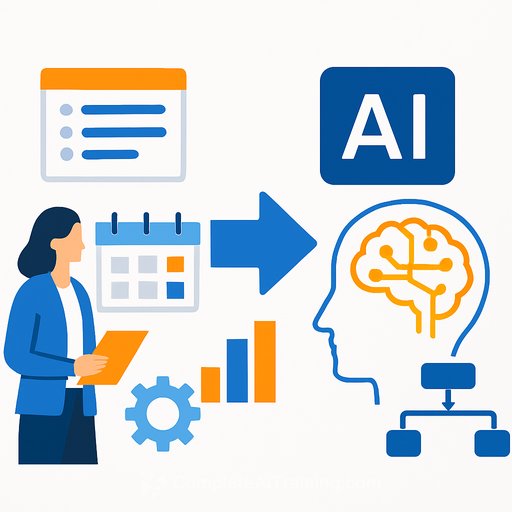
AI in Project Management: From Hype to Operating System
AI has moved from a buzzword to standard practice in operations. Nowhere is that shift more visible-or more debated-than in project management. What used to live in spreadsheets and status meetings now runs on models that flag risk, automate updates, and keep work moving while you sleep.
For CIOs, the question is no longer innovation for its own sake. It's orchestration. Project management is the proving ground for whether intelligent systems can shorten delivery cycles, reduce overhead, and bring real portfolio visibility. A Georgia Institute of Technology-sponsored study of 217 project professionals and tech leaders found that 73% have adopted AI in some part of project work.
The PM role is shifting, not shrinking
Early adopters report efficiency gains up to 30%. The pattern is clear: technology matters, but leadership and governance decide whether it sticks. Most respondents said AI improves efficiency, predictive planning, and decisions-if you guide it with intention.
How does the PM role change? About one-third expect a move toward strategic oversight. Around half see PMs becoming collaboration facilitators who translate AI outputs for cross-functional teams. The rest expect managers to supervise AI systems-checking accuracy, ethics, and alignment with goals. Different angles, same conclusion: PMs won't be replaced. They'll manage intelligence and turn signals into outcomes.
Why PMOs can't wait
The question isn't "Should we use AI?" It's "How do we make it pay off?" Many PMOs are testing predictive schedules, automated risk reporting, and gen AI for documentation. But treating AI as a bolt-on tool misses the point. This is about augmenting judgment and automating grunt work-inside your methods, governance, and metrics.
A five-point playbook for adoption
- 1) Begin with pilot projects: Start small, scale fast. Automate status reports, predict schedule slippage, or surface resource bottlenecks. Use pilots to create proof, expose integration gaps, and build momentum.
- 2) Measure value, not activity: Define clear KPIs: reduced manual reporting time, better risk forecast accuracy, shorter cycle times, higher stakeholder satisfaction. Publish the wins. Stories move culture.
- 3) Upskill PMs: PMs don't need to be data scientists, but they do need data literacy, AI fundamentals, and an eye for bias and data quality-paired with communication and emotional intelligence. For structured options, see practical AI learning paths for managers at Complete AI Training.
- 4) Strengthen governance and ethics: Put transparency, fairness, and human oversight into your PMO's charter. A clear framework builds trust and reduces risk. For reference, review the NIST AI Risk Management Framework.
- 5) Evolve from PMO to BTO: A PMO ensures projects are done right. A business transformation office ensures the right projects are done-and tied to strategic value. Pair that shift with an Agile mindset and hybrid delivery so teams can adjust based on feedback, not rigid plans.
From PMO to BTO and an Agile mindset
The classic PMO optimizes scope, schedule, and cost. A BTO optimizes outcomes. That means tighter linkage to strategy, process improvement running in parallel, and a common scorecard that leaders can trust.
Methodology matters. Move from fixed plans to iterative delivery and customer feedback. Most enterprises will run hybrid models-Agile where uncertainty is high, plan-driven where risk and compliance demand it. The constant is fast, clear decision-making backed by data.
The new PM career path
By 2030, AI will handle routine tasks: status updates, scheduling, risk flags. Human leaders will focus on vision, alignment, and ethics. That creates a premium on judgment, communication, and the ability to unite teams around outcomes.
AI can predict a delay. It can't motivate a team to beat it. The work has always been about people-aligning interests, reducing friction, and creating clarity. That doesn't change.
What CIOs should do next
- Pick two high-friction use cases and launch pilots within 90 days.
- Set 3-5 value metrics and report them monthly to the executive team.
- Fund PM upskilling as a formal program, not a side project. Consider curated paths at Complete AI Training.
- Adopt an AI governance policy with model oversight, auditability, and clear human-in-the-loop checkpoints.
- Reframe the PMO as a BTO with a portfolio view tied directly to strategic goals and benefits realization.
AI is the next step in enterprise delivery. Treat it as a management system, not a gadget. Lead with vision, govern with integrity, and equip your teams with tools-and the skills to use them. The organizations that do this well will move faster, waste less, and build teams that can adapt to whatever comes next.
Your membership also unlocks: