Artisan AI: The Most Controversial AI SDR in Tech - What Sales Leaders Need to Know
Artisan AI built its name fast by promising a fully autonomous SDR named Ava that researches, writes, and books meetings without much human help. Founded in 2023 by Jaspar Carmichael-Jack and Sam Stallings in San Francisco, the company pitched "AI employees" as a new way to scale outbound.
By 2025, Artisan reported $6M ARR, hundreds of customers (including Remote and Quora), and more than $35M raised, with a $25M Series A that year. Growth was real. So was the backlash.
What Ava Actually Does
Ava pulls from a B2B database of 300M+ contacts across 200+ countries. She uses intent signals, technographics, and personal data points to find and qualify prospects, then drafts emails in your voice and runs multi-channel outreach. Integrations cover Slack, HubSpot, and Salesforce, along with email warmup and deliverability features to help messages reach inboxes.
In short: fast research, high-volume personalization, and end-to-end execution. That's the appeal for any team under pressure to hit pipeline targets.
The Billboard Storm: Attention That Cuts Both Ways
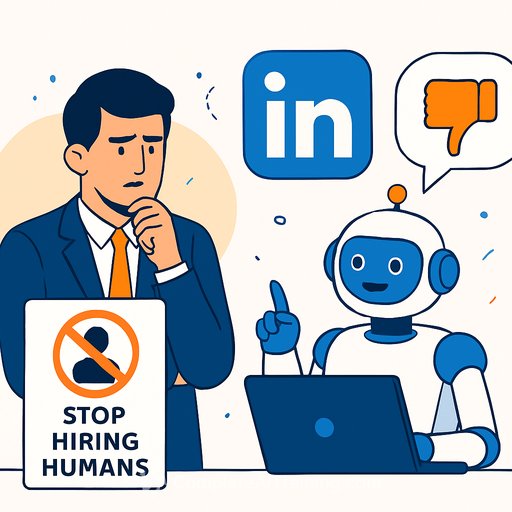
Artisan's late-2024 billboards blasted a simple message across San Francisco: "Stop Hiring Humans." Variants like "Humans Are So 2023" and "Hire Artisans, Not Humans," plus an uncanny image of Ava, were meant to provoke. CEO Jaspar Carmichael-Jack said the goal was to stand out in a noisy market.
It worked. The campaign generated massive impressions, viral posts, and reportedly drove around $2M in new ARR. It also sparked outrage in a city worried about job loss, led to vandalized ads, and even threats to the team. By 2025, the line softened to "Stop Hiring Humans... For Work They Hate." The lesson: attention scales, but so does risk.
The LinkedIn Problem
As an automated outbound tool, Artisan ran into a wall many sales teams know well: LinkedIn's enforcement. Reports in late 2025 suggested Artisan accounts, including those of team members and founders, faced restrictions or bans tied to suspected automation and spam. This tracks with LinkedIn's tighter stance against scraping and bot-like behavior.
If LinkedIn is a core channel for your pipeline, read their policies and plan accordingly. Start with the LinkedIn User Agreement and Professional Community Policies. Violations can kneecap outreach overnight.
What Sales Teams Should Do Now
- Keep a human in the loop: Let AI draft. Require approval on first-touch templates, sensitive segments, and any message that mentions job changes, funding, or personal data.
- Throttle and randomize: Cap daily sends, stagger send times, and vary templates. Consistent patterns trigger filters fast.
- Protect deliverability: Warm domains, set SPF/DKIM/DMARC, keep bounce rates under 3%, and complaint rates under 0.1%. Use clear opt-out. Verify emails before sending.
- Respect platforms: Avoid automated connection requests and bulk DMs on LinkedIn. Drive interest with content, comments, and targeted ads, then move to email once opted-in or verified.
- Personalize what matters: Use public, business-relevant signals (hiring, tech stack, product changes). Skip sensitive personal details and anything that feels invasive.
- Segment tightly: ICP tiers, use cases, triggers. Let the AI personalize within a narrow lane, not across everyone who "fits B2B."
- Isolate risk: Use subdomains for outbound. Maintain suppression lists. Centralize logging and create a kill switch if reply quality or complaint rates slip.
- Measure like an owner: Track positive reply rate, meetings per 1,000 sends, pipeline created, and CAC payback. If AI adds volume but not conversions, course-correct.
- Follow the law: Know your region's email rules and consent standards. A quick primer: CAN-SPAM guide (FTC).
A Simple AI-SDR Playbook You Can Run Next Week
- Define 2-3 tight ICPs with clear triggers (new funding, hiring SDRs, tech migration).
- Feed the AI 5-10 approved voice templates per ICP. Lock tone, length, and CTA.
- Enable research on public signals only. Block sensitive attributes.
- Set sending caps, warm up domains, and enforce a daily quality check of 20-30 samples.
- Route positive replies to humans within minutes. Speed wins deals.
- Run weekly reviews: reply quality, objections, booked-rate by segment, and spam/complaint logs.
- Iterate: prune low-yield segments, upgrade prompts, and refresh offers every two weeks.
Where This Is Going
Artisan proves you can sprint to attention and revenue with a bold message and aggressive automation. It also shows the cost: public blowback and platform risk. As detection tightens and buyers lean into authentic interactions, the winning motion is simple: AI for speed, humans for judgment.
If you're skilling up your team on responsible AI outbound, these resources can help: AI Research Courses, the Latest AI courses, and practical Automation playbooks. Use the tech. Keep control. Protect your brand.
Your membership also unlocks: