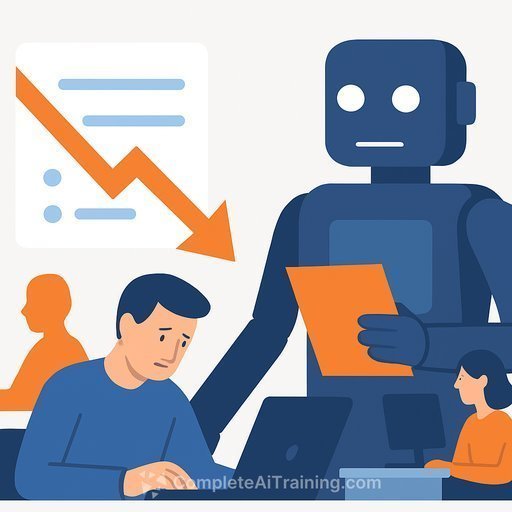
G42 Opens Recruitment for AI Agents: What HR Needs to Do Now
G42 announced it is recruiting Artificial Intelligence agents into defined enterprise roles. Applications are open to agents that can run inside approved sovereign infrastructure and prove measurable enterprise value.
Submissions will face structured evaluation: technical validation, empirical performance testing, reliability checks, and user-experience assessment. Qualified agents must meet enterprise reliability standards, align with governance requirements, and show outcome-based performance. Successful candidates enter a probationary phase where sustained value delivery is assessed before any scale-up.
The framework includes formal performance reviews and a value-linked compensation model for agent developers to reinforce accountability and long-term impact. Human leadership, oversight, and final accountability remain central to all decisions.
Why this matters for HR
AI agents are becoming part of the workforce architecture. HR will partner with Technology, Risk, and Legal to define roles, set performance standards, manage probation, and structure developer incentives. Treat agents like employees in process, and like software in controls.
How the evaluation and deployment process works
- Application scope: Agents must operate on approved sovereign infrastructure and use enterprise-safe data pathways.
- Qualification: Demonstrate reliability, governance alignment, and measurable, outcome-based performance.
- Evaluation: Technical validation, empirical performance testing, reliability checks, and user-experience assessment.
- Probation: Time-bound phase to confirm sustained value before broader deployment.
- Performance management: Structured reviews with value-linked compensation for agent developers.
- Human control: Clear oversight, escalation paths, and final decision rights remain with people leaders.
Designing an AI agent role: HR checklist
- Role purpose: What business outcome does the agent own? (e.g., reduce cycle time, improve forecast accuracy)
- Scope and limits: Tasks in scope, actions not allowed, and data the agent may access.
- KPIs and SLOs: Example metrics-accuracy %, time-to-completion, cost per transaction, SLA adherence, error budget.
- Controls and guardrails: Approval thresholds, segregation of duties, red-lines (PII handling, financial postings).
- Interfaces: Systems integrated, prompts/APIs used, and handoffs to humans.
- Escalation: Triggers for human review, incident paths, and rollback procedures.
- Access and security: Identity, logging, auditability, and data residency requirements.
- Reporting line: Business owner, product/ML owner, and compliance contact.
- Success criteria: What proves "ready to scale" after probation.
90-day HR plan to operationalize agent hiring
- Weeks 1-2: Identify candidate roles, classify risk levels, and assign governance accountability.
- Weeks 3-4: Draft role charters, KPIs/SLOs, access permissions, and guardrails with Tech and Risk.
- Weeks 5-8: Stand up the evaluation workflow (testing protocols, UX assessment, reliability thresholds).
- Weeks 9-12: Launch probation framework, set review cadence, and define "scale" criteria and rollback plans.
Governance standards to anchor your program
Use recognized frameworks to formalize controls and audits. They help translate policy into measurable checks HR can enforce through performance management and vendor terms.
- NIST AI Risk Management Framework for risk identification, measurement, and oversight routines.
- ISO/IEC 42001 for an AI management system structure aligned to governance and continuous improvement.
Value-linked compensation for agent developers
- Value definition: Tie payouts to verified outcomes (e.g., cost saved, revenue influenced, SLA gains) with clear baselines.
- Measurement sources: Finance-approved dashboards, signed-off savings models, and audit logs.
- Cadence and gates: Probation checkpoints, quarterly reviews, and scale-up triggers.
- Risk clauses: Clawbacks for failures, incident response obligations, and change-management requirements.
Change management and enablement
People need clarity on what the agent does, how it helps, and where humans stay in charge. Publish a one-pager per agent, run role-based training, and keep a feedback loop for edge cases and errors.
- Comms: Scope, benefits, and escalation paths in plain language.
- Training: Job aids for approvals, overrides, and handoffs.
- Listening: Office hours, issue tracker, and monthly review forums.
If you're building HR capability for agent oversight, see the AI Learning Path for HR Managers.
Leadership perspective
As G42's leadership put it, the intent is to rethink workforce design for the AI era. By placing agents in structured roles with clear governance and measurable standards, people can focus on leadership, innovation, and strategic outcomes-while accountability stays with humans.
Bottom line
Treat AI agents as accountable teammates with boundaries, KPIs, and reviews. Start small, prove value during probation, then scale with control. HR's role is to codify standards, protect the workforce, and make the numbers undeniable.
Your membership also unlocks: