
AI news ·
Generative AI feedback boosts student achievement but works best as learning support, meta-analysis finds
A meta-analysis of 36 studies found AI feedback produces an effect size of 0.61 - meaningful, but only when students actively question and revise responses. When used as a shortcut, it weakens independent thinking.
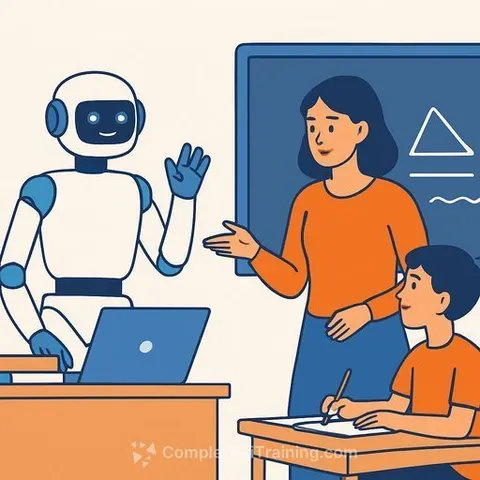
GenAI Feedback Boosts Learning, But Only When Used Right
Generative AI feedback produces moderate gains in student achievement, but the payoff depends entirely on how teachers deploy it, according to a meta-analysis of 36 experimental studies published in Education Sciences. The research, which examined studies from 2023 to 2025, found an overall effect size of 0.61 - placing AI feedback in the meaningful support category rather than as a replacement for teaching.
The critical finding: GenAI works best as scaffolding, not as a shortcut. When students use AI to obtain easy answers without evaluating or revising them, the technology weakens independent thinking. When used to guide reflection and help students improve their own work, it becomes useful.
Where GenAI Feedback Works
The strongest results came in collaborative and self-directed learning settings. Collaborative learning produced an effect size of 0.71, while self-directed learning showed 0.68. Both require students to question, revise, discuss and take responsibility for their learning - roles where AI feedback acts as a responsive partner.
Inquiry-based learning showed weaker results at 0.34. Direct instruction showed no clear benefit. The pattern is straightforward: GenAI feedback adds value when students actively use it to build understanding, not when they passively receive information.
For cognitive outcomes like knowledge mastery and academic performance, the effect was solid at 0.60. For non-cognitive outcomes - motivation, self-efficacy, engagement - the effect was much smaller and statistically uncertain at 0.29. GenAI alone does not reliably improve how students feel about learning.
The Role Matters
When GenAI acted as a peer or assistant, students showed stronger gains than when it acted as a tutor. Assistant roles produced an effect size of 0.68; peer roles 0.77; tutor roles 0.24. The difference suggests that when AI acts as an authority figure, students defer to it rather than think through problems themselves.
The research did not find statistically significant differences by subject, educational level or intervention length, though secondary students appeared to benefit more than university students. GenAI feedback works across language learning, STEM and professional fields when instructional design gives students a meaningful role in processing feedback.
What Teachers Must Do
Teachers remain central as classrooms adopt AI. They must design feedback cycles that keep students active. GenAI can provide instant responses, examples and revision prompts, but students should be required to question the feedback, compare it with learning goals, explain their revisions and make final judgments.
Teachers also preserve roles that AI cannot fill: emotional support, motivation and social development. The study found only modest effects on non-cognitive outcomes, meaning GenAI cannot replace the human connection that builds classroom trust and encourages learning.
Students need AI literacy training. They should learn to verify accuracy, detect misleading responses, avoid over-reliance and treat AI output as input for judgment rather than final authority. Without oversight, GenAI can produce errors and create academic integrity risks.
Research Gaps Remain
The 36 studies analyzed represent a narrow base, concentrated in Asia. Researchers need more evidence across regions, age groups and learning settings. Long-term sustainability is unknown - whether gains from AI scaffolding persist after AI support is reduced or removed.
Feedback design itself needs deeper testing. Which types of GenAI feedback work best - corrective, explanatory, reflective prompts, model answers? The level, timing and tone of feedback may determine whether students use AI productively or passively.
For educators implementing GenAI in classrooms, the takeaway is clear: the technology's value depends on how it fits into learning design. AI for Education works when it supports student thinking. Teachers designing these systems should consult resources like the AI Learning Path for Teachers to understand how to integrate AI feedback effectively while preserving their core role in student development.