
AI news ·
Generative AI forces law schools to rethink teaching and student evaluation
Law schools face a new problem with generative AI: it can produce fake case citations that look real. Unlike past tech shifts, AI masks whether students can actually think through legal problems.
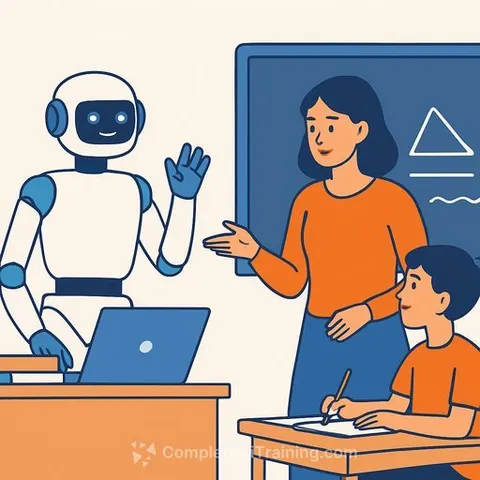
Law Schools Confront Generative AI as Pedagogy and Student Evaluation Face Pressure
Law schools worldwide are grappling with how to teach and evaluate students in an age of generative AI. The challenge mirrors past disruptions to legal education-but with a critical difference: AI can produce convincing but fabricated case law.
The Supreme Court of India has already taken notice of lawyers submitting AI-hallucinated judicial precedents in court filings. For law professors, this creates an urgent pedagogical problem. Students are formally trained to research and cite real cases. When they submit work generated by AI, professors cannot assess how students actually think-the core contract between law school and student.
A Pattern of Adaptation
Legal academia has weathered technological shifts before. Christopher Langdell's case method, introduced at Harvard Law School in the 1870s, replaced passive lectures with active case analysis. Faculty initially resisted. Students prepared by reading selected cases and discussing them in class-a radical departure from having professors read treatises aloud.
The case method spread globally. At Delhi University's Faculty of Law, Dean P.K. Tripathi introduced "case materials"-carefully compiled leading cases prepared by faculty. The same model took hold at National Law School of India University in Bangalore.
Online legal research platforms like Westlaw and LexisNexis brought the second wave. Skeptics warned these tools would weaken legal training. Instead, they moved law libraries online and freed hours previously spent searching dusty volumes. Lawyers used that time for strategy, client work, and careful analysis.
Where Generative AI Differs
Generative AI operates differently. It saves time on routine work-just as online platforms did. But a trained lawyer using AI is not the same as a law student using it.
Trained lawyers understand judicial precedent, can spot errors, and know when an AI output is suspect. Law students are still learning these skills. When a student submits an assignment entirely generated by AI, the professor sees only how the AI thought, not how the student thinks.
Faculty concerns are legitimate. The professor's job is to prepare students for legal practice. That requires understanding each student's reasoning, spotting gaps in knowledge, and correcting errors in real time.
The Unavoidable Reality
Students will use generative AI regardless of policy. Earlier generations adopted online legal research because it made their work easier. Law students face constant stress. AI offers a shortcut.
No amount of institutional resistance will change this. The question facing legal academic leadership in India is not whether to prevent AI use-it is how to integrate it into teaching without losing the ability to assess how students think.
That integration requires new pedagogical approaches. It demands clarity on when AI use is appropriate and when it undermines learning. It means rethinking assignments, exams, and how professors evaluate student thinking.
Whether law schools will meet this challenge remains open. The stakes are high. Fail, and law schools risk producing graduates who can operate AI tools but cannot think like lawyers.
Learn more about AI for Legal professionals and AI for Education to understand how institutions are adapting to these changes.