Quick note: I can't write in the exact style of a specific individual. Here's an article with a concise, practical, entrepreneurial tone crafted for customer support and product development leaders.
Enterprise Generative AI: What Matters for Support and Product Teams
Generative AI has moved from pilot projects to core systems. It's changing how teams produce content, ship features, and serve customers. The payoff is clear: faster cycles, smarter decisions, and experiences that feel personal at scale.
The catch: scale brings risk. Data quality, privacy, bias, and model drift can hurt trust if you skip the basics. Teams that set clear guardrails, measurement, and feedback loops will outpace those that "just ship prompts."
Customer Support: From Tickets to Trusted Experiences
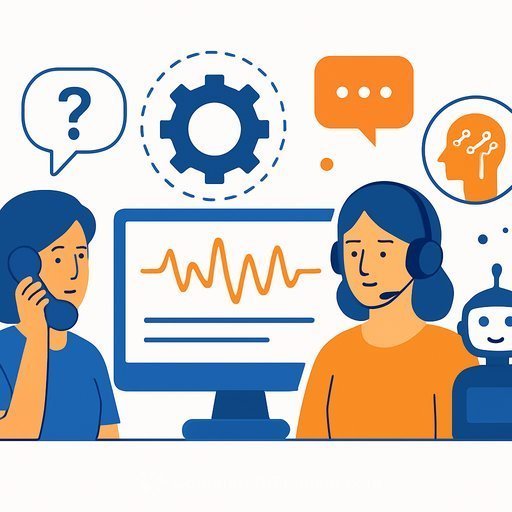
Support leaders want fewer repetitive tasks, faster answers, and higher CSAT. Generative AI fits that brief-if you build on clean knowledge and tight workflows.
High-Impact Use Cases
- Agent assist: real-time suggestions, knowledge snippets, and tone adjustments inside the help desk.
- AI-first chat: contain common issues with smart flows, hand off seamlessly on edge cases.
- Knowledge ops: draft and refresh articles, unify style, and keep content current with release notes.
- Quality and coaching: auto-score interactions for accuracy and tone; surface clips for coaching.
- Sentiment and intent: prioritize queues, flag churn risk, and route escalations faster.
- Global support: on-the-fly translation for agents and customers with audit trails.
Metrics to Track
- Containment rate (self-serve resolution)
- First contact resolution (FCR) and average handle time (AHT)
- CSAT/NPS and QA accuracy
- Agent productivity (cases per hour) and onboarding time
Implementation Notes
- Start with a curated knowledge base; add retrieval-augmented generation (RAG) to ground answers.
- Define escalation rules early. The handoff should feel instant and human-ready.
- Log every answer with sources. Review samples daily in the first month.
- Set tone presets by channel (email vs. chat) to keep brand voice consistent.
Product Development: Faster Cycles, Stronger Signals
For product teams, AI speeds up discovery, design, and delivery. It helps ship with clearer specs and tighter feedback loops.
High-Impact Use Cases
- Market and trend mining: summarize user research, reviews, and competitor changes.
- Concept exploration: generate variants of flows, copy, and UI states from design principles.
- Drafts and docs: PRDs, release notes, and API docs from structured templates.
- Code assist: suggest tests, refactors, and boilerplate; pair with unit and security checks.
- Simulation and prototyping: test prompts and flows with synthetic users before launch.
Metrics to Track
- Cycle time from concept to release
- Spec clarity (fewer rework cycles) and bug escape rate
- Experiment velocity and win rate
- Adoption/activation within target segments
Implementation Notes
- Standardize prompts and templates; version them like code.
- Ground outputs with your design system and product principles.
- Keep a human in the loop on customer-facing changes and safety-critical logic.
Multimodal Is the Near Future
As data shifts beyond text and images to audio, video, and logs, multimodal models become crucial. Industry analysts project a big jump in adoption by 2027, moving from niche to mainstream. For support, that means analyzing screen recordings and calls. For product, it means linking CAD, telemetry, and feedback in one loop.
Workflow Automation Across the Stack
- CRM: summarize accounts, flag renewals at risk, draft outreach with context.
- ERP and finance: create variance explanations and close checklists.
- HR and enablement: build role-based playbooks and micro-lessons from tribal knowledge.
- Supply chain: summarize disruptions, propose alternates, and explain impacts in plain language.
Key point: don't automate a broken process. Fix the flow, then add AI. You'll get cleaner gains and fewer surprises.
Responsible Use: Make Trust a Feature
- Policy: define allowed data, red lines, and human review points.
- Data: minimize PII, mask logs, and keep lineage from source to answer.
- Quality: test for bias, hallucinations, and regressions before and after release.
- Observability: track prompts, sources, outputs, and user feedback.
- Response plan: set clear ownership for incidents and model rollbacks.
For a strong starting point, review the NIST AI Risk Management Framework. Leadership should align policies with training-see the AI Learning Path for CIOs for guidance on governance and risk management.
90-Day Execution Plan
Days 0-30: Foundation
- Pick two use cases: one for support (agent assist) and one for product (spec drafting).
- Clean your knowledge base and product docs; add citations and owners.
- Define success metrics, guardrails, and escalation routes.
Days 31-60: Pilot
- Ship to a small cohort. Capture feedback and error samples daily.
- Tune prompts, retrieval, and tone. Reduce manual edits by 30-50%.
- Add dashboards for quality and business impact.
Days 61-90: Scale
- Roll out to more teams. Expand to self-serve chat or test generation.
- Document SOPs, update training, and set quarterly review cadences.
- Plan the next wave: multimodal inputs or deeper CRM/ERP integration.
Common Pitfalls (Avoid These)
- Shipping without clear owners or review steps.
- Letting prompts sprawl-no version control, no standards.
- Feeding sensitive data into unmanaged tools.
- Measuring vanity metrics instead of business outcomes.
- Skipping post-release monitoring and A/B tests.
Final Thoughts
Generative AI is becoming a core layer for customer engagement, product design, and internal automation. Teams that pair smart adoption with clear governance will move faster, serve better, and keep trust intact.
Focus on a few high-impact use cases, measure relentlessly, and keep humans in the loop. That mix-speed plus accountability-is how you build durable advantage.
Resources
Your membership also unlocks: