AI in HR: The advantages of moving faster
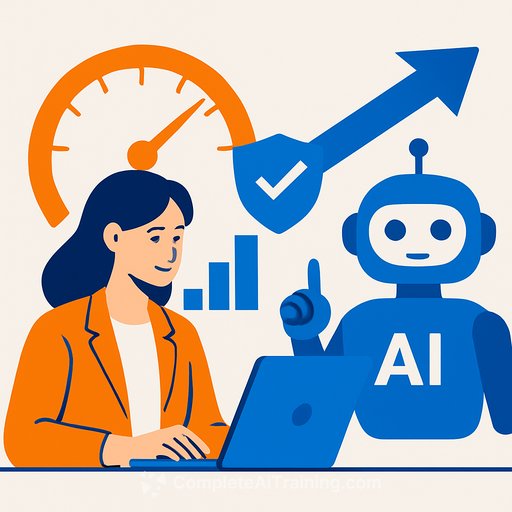
Speed in HR isn't about chasing shiny tools. It's about removing drag from hiring, development, and operations so your team can make better decisions, faster. Early movers learn sooner, compound value, and set the bar everyone else has to follow.
If you're waiting for a perfect playbook, you'll never ship. The path is to start small, measure hard, and scale what works.
Where AI pays off now
Recruiting: Automate repetitive sourcing and screening so recruiters can spend time on selling and closing. Models can parse resumes, match skills to roles, and surface candidates at scale without flooding your team.
- Shorten time-to-hire and reduce cost-per-hire.
- Use structured, skill-based scoring to cut noise and improve fairness.
- Generate role-specific outreach and interview guides in minutes.
Employee growth: Recommend learning paths and projects based on skills, performance, and goals. Use internal mobility suggestions to keep high performers engaged.
- Proactive nudges for retention when engagement or sentiment dips.
- Career-path insights that align current skills with future roles.
People analytics: Go from lagging reports to predictive signals. Spot flight risk, skills gaps, and capacity constraints before they hit the business.
- Real-time dashboards that connect hiring, performance, and attrition.
- Scenario testing for headcount plans and budget trade-offs.
Operations: Offload routine HR queries to chatbots. Streamline payroll checks, benefits updates, and policy FAQs without adding headcount.
- Fewer tickets, faster resolutions, and cleaner data entry.
- More time for strategic work: workforce planning, org design, and leadership support.
Risks, guardrails, and policy
Speed without guardrails creates exposure. Aim for explainable models, clear audit trails, and human-in-the-loop review for high-stakes decisions.
- Bias mitigation: test for disparate impact before and after launch; re-test on schedule.
- Privacy: minimize PII, apply role-based access, and encrypt data at rest and in transit.
- Compliance: align with internal policy and external guidance such as the NIST AI Risk Management Framework and the EEOC's AI resources.
How to move fast (safely): a 90-day plan
- Weeks 1-2: Pick winners - Choose one high-impact, low-risk pilot (e.g., resume screening or an HR chatbot). Define success with 2-3 KPIs. Map data sources and owners.
- Weeks 3-6: Build and guard - Configure the tool, create feedback loops, and add human review. Write a short AI use policy (purpose, data, review steps, escalation).
- Weeks 7-10: Prove it - Run the pilot with a subset of roles or one business unit. Track outcomes weekly. Capture edge cases and add rules or retraining.
- Weeks 11-12: Scale - Document workflow changes, train users, and extend to the next function. Stand up a cross-functional council (HR, IT, Legal, DEI) to oversee expansion.
KPIs that matter
- Time-to-hire, cost-per-hire, and offer-accept rate.
- Hiring funnel quality: qualified candidates per role and interview-to-offer ratio.
- Retention: 90-day and 12-month attrition, voluntary vs. involuntary split.
- Employee experience: CSAT for HR services, chatbot resolution rate, first-response time.
- Productivity: tickets deflected, hours saved, and recruiter req load.
Data and integration checklist
- Connect ATS, HRIS, LMS, and performance systems with consistent IDs.
- Clean up titles, skills, and location fields; standardize taxonomies.
- Segment and mask sensitive fields; log every automated decision.
- Version models and prompts; store examples for audits and training.
Common traps (and fixes)
- Boiling the ocean: Start with one pilot. Prove value, then expand.
- Weak data: Invest in labels and standards; otherwise you amplify noise.
- Shadow AI: Publish a simple approved-tool list and usage policy.
- Set-and-forget: Schedule bias tests, accuracy checks, and prompt reviews.
- No change plan: Train recruiters and HRBPs on new workflows before launch.
Practical starting points
- Resume screening with skill-based scoring and recruiter review for top matches.
- HR helpdesk chatbot for benefits, leave, and policy FAQs with live-agent handoff.
- Learning recommendations tied to role, skills, and promotion criteria.
- Attrition watchlist with transparent factors and HRBP oversight.
Upskill your team
Your team doesn't need to code. They need to scope use cases, write clear prompts, read dashboards, and know when to pull the plug. A short, focused curriculum beats a stack of certifications you'll never use.
For structured, role-based training, see the AI Learning Path for HR Managers and the broader hub on AI for Human Resources (tag).
Bottom line
Move fast, but measure faster. Start with work that's repetitive, data-rich, and easy to review. Build trust with clear policy, visible wins, and honest reporting. Then scale what proves value-one workflow at a time.
Your membership also unlocks: