
AI news ·
Google Cloud and Allianz SE introduce AI agents for security operations at Next '26
Google Cloud and Allianz SE unveiled an AI agent system for security operations centers that handles threat analysis through natural language queries. It cuts response times by connecting intelligence, analysis, and decisions in one interface.
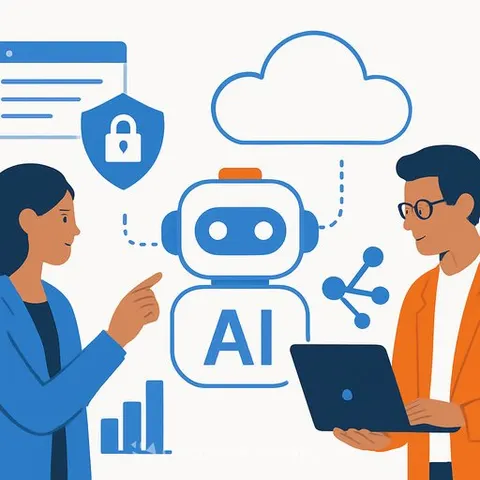
Google Cloud Introduces AI Agents to Speed Up Security Operations
Google Cloud and Allianz SE presented a model at Google Cloud Next '26 that embeds AI agents directly into security operations centers. Called "Agentic Threat Intelligence," the system lets analysts interact with threat data through natural language queries instead of switching between separate tools.
The core problem it addresses is straightforward: security teams waste time gathering and interpreting data before they can act. Response times stretch. Exposure windows widen. Agentic AI collapses that cycle by connecting threat intelligence, analysis, and decision-making in one interface.
How It Works in Practice
Each agent handles a specific role-investigating threats, analyzing malware, parsing indicators. Within that scope, agents execute detailed tasks and return structured outputs ready for immediate use.
Analysts ask questions in natural language and follow up within the same conversation thread. The system retrieves relevant intelligence from a large threat repository without forcing manual cross-referencing across multiple sources.
Investigations progress through enrichment and correlation without restarting in different tools. An analyst can move from initial threat assessment through analysis to findings without losing context or switching platforms.
What Changes for Operations Teams
Agentic systems handle repetitive analysis and data processing. This frees analysts to focus on validation and response-the work that actually requires human judgment.
Teams take on more investigations without adding headcount. The agents manage the underlying data tasks that would otherwise create bottlenecks, leaving staff capacity for decisions instead of preparation.
Outputs follow consistent formats. Summaries and reports integrate directly into existing workflows without additional formatting, making findings easier to review and share across teams.
Building Operational Advantage
Faster threat investigation reduces exposure during active incidents. Unified workflows preserve investigation context, reducing the chance of missing relevant information as cases develop.
Standardized output formats support repeatable analysis and help teams document findings consistently across investigations. This consistency compounds over time, making threat patterns easier to spot and response decisions more reliable.
Learn more about AI Agents & Automation or explore the AI Learning Path for Cybersecurity Analysts to understand how these systems fit into broader security operations strategy.