Google DeepMind and Futurehouse Release AI Research Assistants to Speed Hypothesis Generation
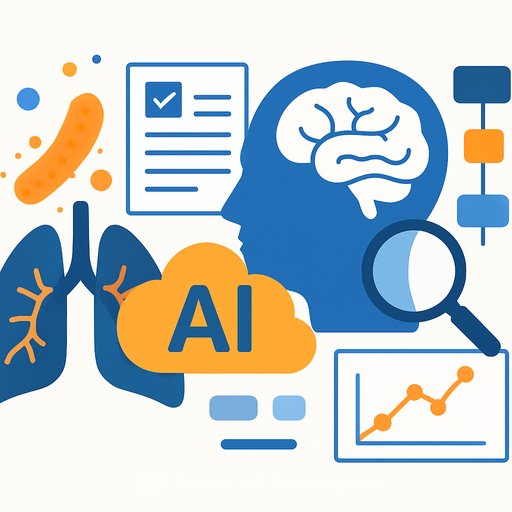
Google DeepMind and nonprofit Futurehouse have released AI research assistants that generate scientific hypotheses, design experiments, and analyze data. Both companies published their findings in Nature this week, positioning these tools as potential accelerators for scientific discovery.
The systems work by processing a research goal and using multiple AI agents to generate initial ideas, search existing literature, and refine hypotheses through iteration. Scientists then test the suggested experiments in the lab and feed results back to the AI for further refinement.
How These Tools Differ From Existing AI Assistants
Current interactive AI tools like ChatGPT produce quick responses. Science requires slower, more deliberate and structured thinking that unfolds over time, said Vivek Natarajan at Google DeepMind.
DeepMind's Co-Scientist, built on the Gemini AI assistant, uses this iterative approach. It mirrors how AlphaGo decides moves in board games - by evaluating options and selecting the most promising path forward.
Futurehouse's Robin operates similarly but uses only three AI agents rather than more. Michaela Hinks, who helped develop Robin, said the system prioritizes simplicity: "Systems should be as simple as possible to do the job."
Early Results From Real-World Testing
DeepMind tested Co-Scientist with microbiologists at Imperial College London studying how genes transfer antimicrobial resistance between bacteria. Running the system for a few days produced predictions matching the researchers' years of experimental work.
Tiago Dias da Costa, who led that research, said Co-Scientist "independently generated hypotheses that closely matched the mechanism we had uncovered through years of experimental work." He emphasized that the tool did not replace the experimental process itself.
Futurehouse tested Robin on dry age-related macular degeneration, a sight loss condition affecting millions of Americans with no current cure. Robin proposed enhancing the destruction of certain eye cells and suggested an experiment to measure this effect. Testing revealed two possibilities, including Ripasudil - a clinically approved glaucoma drug - and a circadian clock modulator.
Limitations and Remaining Challenges
Derek Lowe, a drug discovery chemist, noted that these systems depend entirely on high-quality data. "If you feed them bad data, they'll spit out bad results," he said. "But join the club - humans do that too."
The scientific literature itself presents a problem. Lowe said the flood of papers - increasingly including AI-generated results and text - makes it harder for these tools to work effectively. They cannot answer fundamental questions that don't already exist in published research.
Natarajan acknowledged that significant work remains. "There's still a few leaps needed before we have a system that can do what some of the great scientists of the past did - coming up with a true original breakthrough or paradigm-shifting theory."
Lowe compared current tools to laboratory instruments still held together with duct tape. "These are not ready for regular end users yet," he said. Most drug discovery scientists won't adopt them immediately.
What Comes Next
Co-Scientist will integrate into Google's broader Gemini for Science program, available to researchers within weeks to months. Both tools remain research projects rather than production systems for widespread use.
Learn more about how AI is being applied in research settings with AI Research Courses and explore the underlying technology behind these systems through Generative AI and LLM Courses.
Your membership also unlocks: