
AI news ·
Harvard student builds browser tool that adds typos to AI writing to make it seem more human
A browser plugin called Sinceerly deliberately adds typos to AI-generated text so emails read as human. Flawless writing now signals machine authorship, making small errors a trust signal.
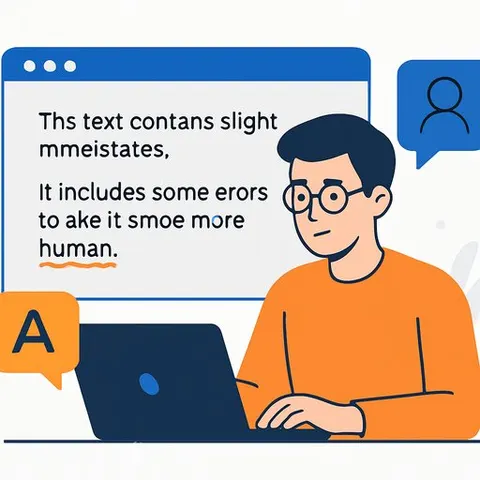
A Browser Tool Adds Typos on Purpose to Make AI Writing Feel Human
A new browser plugin called Sinceerly does something counterintuitive: it makes AI-generated text worse. The tool sprinkles in small typos and quirks to make polished emails feel more authentic in a world where flawless writing increasingly signals a machine wrote it.
The name itself demonstrates the concept-it swaps an 'e' for an 'i.' That misspelling is the entire point.
Why Perfect Writing Now Reads as Suspicious
AI writing tools produce grammatically flawless text in seconds. That perfection has become a liability. Readers now associate pristine prose with machine generation, making genuinely human writing feel less trustworthy when it's too clean.
AI-generated text often follows predictable rhythms-balanced, measured, never rough around the edges. The polish itself becomes a tell.
Sinceerly addresses this by introducing intentional imperfections. A missed letter. A slightly awkward phrase. The kinds of quirks that appear in actual human communication, especially in work emails dashed off between meetings.
How the Tool Works
Sinceerly offers different modes for different contexts. One mode keeps writing mostly polished while adding a mistake or two. Another shifts toward casual tone-the speed of someone typing quickly. A third adopts blunt, short-form style with "sent from my phone" energy.
The tool doesn't randomly scatter errors. It mimics patterns of actual human writing, where imperfection is the norm, not the exception.
The Broader Shift in Professional Communication
People have already been manually adding typos to AI-generated content to make it seem more human. Sinceerly simply automates what writers were doing by hand.
This reflects a real change in how authenticity reads. Slightly flawed writing now feels more relatable and trustworthy than flawless prose. The goal has shifted from eliminating mistakes to strategically including them.
For writers working with AI, this presents a new consideration: how to balance the efficiency of AI generation with the human touch that builds credibility. Understanding prompt engineering helps writers get better initial output, but tools like this address a separate problem-the perception of authenticity itself.
The Irony Is Complete
Decades of spellcheck, autocorrect, and grammar tools trained people to eliminate mistakes. Now a tool reintroduces them deliberately.
It's a full circle: using AI to write, then using another tool to make that AI writing look less like AI. In a world where machines write nearly perfectly, imperfection has become the marker of something real.