
AI news ·
Healthcare curricula lag behind AI's growing role in clinical settings, educator warns
Healthcare schools are teaching students to avoid AI rather than work with it safely in clinical settings. AI literacy needs to be woven into existing training-covering bias, accountability, and when to question what algorithms recommend.
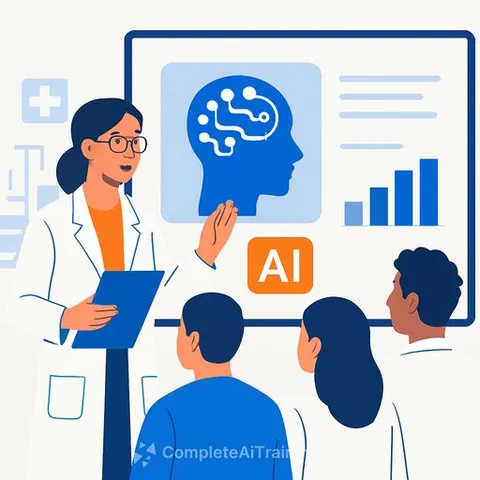
Healthcare Schools Need to Teach AI Literacy as Part of Professional Training
Healthcare education programs are falling behind the speed at which AI is entering clinical practice. Yet most institutions remain focused on the wrong problem: preventing students from using generative AI to write assignments rather than preparing them to work with AI systems in patient care.
The real question is whether future doctors, nurses and other clinicians will graduate knowing how to recognize AI's limits, question its outputs and remain professionally accountable when algorithms influence care decisions. This requires AI literacy as a core part of professional formation, not a sidebar issue.
What AI Literacy in Healthcare Should Include
Healthcare students do not need to become software engineers. They do need to understand what AI is designed to do, how it is evaluated, where it fails and what it means to use AI systems in regulated care environments.
Students should also grasp that using AI does not reduce their legal, ethical or professional accountability. They need to understand how AI systems move from development into practice and the implications of that process.
Integration Over Standalone Courses
Adding a standalone AI unit often proves less effective than updating existing teaching. Evidence-based practice classes can include appraisal of studies involving AI tools, prompting discussion of validation, bias and generalizability. Ethics and law sessions can address transparency and accountability. Simulation can explore what happens when an AI recommendation conflicts with clinical judgment.
This approach makes AI literacy feel like part of the professional environment students are entering, rather than a niche topic competing for curriculum space.
Building Depth Over Time
A spiral curriculum works well for AI literacy. Early teaching covers what AI is and where it appears in healthcare. Later courses revisit those foundations with greater complexity, addressing bias, explainability, governance and implementation risk.
This matters because students arrive with different levels of prior knowledge and confidence. Understanding develops alongside their broader professional formation.
Professional Bodies and Staff Development
Regulators like the Nursing and Midwifery Council and General Medical Council shape expectations for registrants and influence program priorities. Clearer profession-specific guidance would create consistency across institutions and establish what safe AI literacy should include in each field.
Staff development is equally critical. Many educators trained before AI became visible in healthcare and need support to teach it effectively. This is a curriculum issue, not an individual failing.
Collaboration Across Sectors
Healthcare education works best when universities, care providers and AI product developers coordinate. Care providers offer insight into how AI is adopted and governed in practice. Product developers explain how systems function and where implementation challenges arise. Universities translate that knowledge into teaching that is pedagogically sound and critically framed.
AI literacy done well helps students remain safe, critical and accountable in environments where digital systems shape care. It is not about teaching technology for its own sake. It is about preparing future clinicians to uphold professional standards as clinical conditions change.
Learn more about AI for Healthcare and AI for Education.