
AI news ·
Healthcare leaders warn that AI cognitive spoofing undermines clinical judgment
Hospitals face cognitive spoofing, where AI projects clinical authority without medical experience. This threatens physician judgment as staff over-rely on convincing outputs.
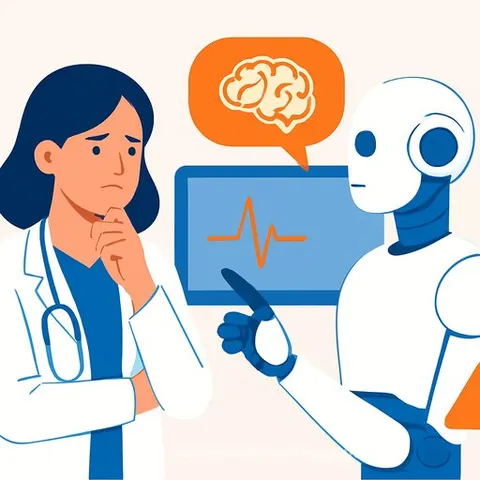
Hospitals and health systems must prepare for a new AI risk that goes beyond factual errors, according to Dr. David Kirk, chief medical officer at Regard. Kirk warned that cognitive spoofing - AI's ability to project authority without genuine clinical experience - threatens to undermine medical judgment as the technology becomes embedded in care delivery and patient-facing tools.
Kirk, whose company provides an AI-powered clinical insights platform, said the industry has focused largely on preventing hallucinations and improving accuracy. But the greater challenge may be AI that sounds convincing while lacking the contextual understanding clinicians build over years of practice. "We have been so focused on AI getting facts wrong that we missed the bigger problem: AI helping people fake expertise," he said. For CIOs and CMIOs, this means governance, education, and transparency must evolve alongside the technology.
As hospitals and health systems invest in clinical decision support and other AI-powered technologies, understanding the risks of AI for Healthcare goes beyond accuracy and ROI. Leaders need to ensure that clinicians and patients do not place unwarranted trust in AI outputs simply because they sound authoritative.
Helping clinicians question AI
Polished AI responses can make clinicians appear more knowledgeable than they really are, Kirk explained. In medical education, where observing a trainee's reasoning process is essential, AI-generated assessments can hide uncertainty and knowledge gaps. That makes it harder for attending physicians to identify where learners need additional instruction.
Organizations should build cultures where clinicians are trained to understand AI's limits and maintain responsibility for their own clinical judgment. When senior physicians openly question AI recommendations, they model the thoughtful skepticism that safe practice demands.
Patients bring AI into the exam room
Patients are increasingly arriving with AI-generated diagnoses and treatment suggestions after reviewing their records with consumer tools. Kirk sees this as both encouraging and challenging. Better-informed patients can have richer conversations with clinicians, but AI-driven recommendations may conflict with individualized medical judgment.
Rather than dismissing these inputs, physicians should discuss them openly and explain why generalized advice may not apply to a specific patient. Health systems also need to prepare clinicians for longer, more nuanced conversations as patient use of AI grows.
Governance that doesn't stop at deployment
AI governance should not end after a system goes live, Kirk said. Organizations must continuously evaluate AI performance as workflows, patient populations, and data sources change. He recommended transparency with patients about when AI contributes to care and encouraged incorporating patient feedback into governance decisions.
For healthcare leaders, AI for Executives & Strategy means governance must extend beyond initial deployment. The goal is to keep accountability for diagnosis and treatment firmly in human hands while using AI to surface clinically relevant information at the moment clinicians need it.
Why this matters for healthcare professionals
Kirk's warning highlights a shift in AI risk management. The focus can no longer be limited to catching errors; organizations must also address the human tendency to over-trust authoritative-sounding technology. For clinicians, that means practicing critical assessment of AI outputs. For executives, it means embedding that skepticism into training, workflow design, and ongoing governance. The ultimate value of AI in healthcare, Kirk said, is not replacing clinical expertise but helping clinicians cut through information overload to deliver better care.