
AI news ·
Healthcare professionals report moderate anxiety about AI, systematic review finds
A review of 926 clinicians found a mean AI anxiety score of 59.26. Health systems must offer targeted training to address these workflow and job loss concerns.
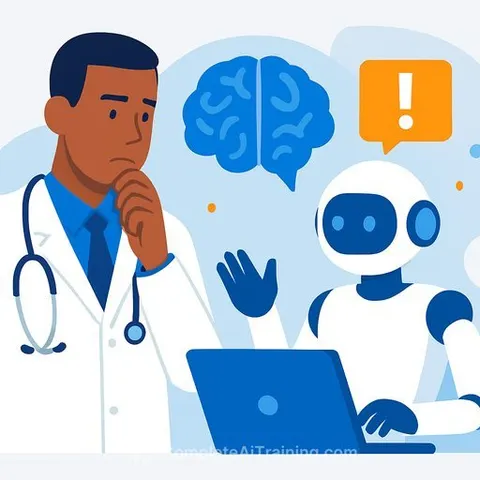
A recent systematic review and meta-analysis published in the Journal of Nursing Management reveals that healthcare professionals report moderate anxiety regarding artificial intelligence integration. The findings highlight a critical operational challenge for health systems: widespread unease among clinicians could hinder the adoption of new technologies if organizations fail to address knowledge gaps and workflow concerns.
Moderate anxiety across clinical roles
The review analyzed nine studies involving 1,877 participants. A pooled subset of 926 healthcare professionals met the criteria for the meta-analysis. Researchers found an overall mean AI anxiety scale (AIAS) score of 59.26, indicating moderate anxiety. This unease spans physicians, nurses, pharmacists, and allied health professionals.
Four key drivers of clinician concern
The AIAS measures four specific subdimensions of anxiety. The learning subdimension captures anxiety about using AI for professional development. The job loss subdimension reflects fears that AI will eliminate clinical roles. Sociotechnical blindness refers to a perceived lack of knowledge about AI applications, while the AI configuration subdimension measures an individual's belief that AI systems are inherently frightening.
Targeted training and organizational support
Limited familiarity with AI systems drives much of this concern. Health systems can address this by implementing structured AI for Healthcare education programs that cover clinical use cases, limitations, and governance practices. However, knowledge-building alone may not reduce anxiety; increased exposure sometimes highlights existing skill gaps. Organizations should adopt tiered training models tailored to experience levels and roles, combining technical instruction with scenario-based learning.
Transparent communication around roles, accountability, and oversight is associated with improved acceptance, making effective AI for Management practices essential for successful integration. Involving clinicians in procurement, design, and evaluation processes helps address perceived risks related to professional autonomy. Demographic factors such as age and years of experience also influence attitudes, indicating that targeted engagement strategies are necessary.
Why this matters for healthcare professionals
Clinicians should request clear documentation on how new AI tools will alter their daily workflows before adoption. Participating in procurement and design committees allows practitioners to safeguard their clinical autonomy and professional value. Health systems must pair these governance changes with tiered training that addresses specific skill gaps rather than offering generic software overviews.