Holiday 2025 Customer Service: AI handled the rush. Humans won the moments that mattered.
AI was everywhere this holiday season, but trust still leaned human. According to the Liveops 2025 Holiday AI & Customer Service Report, 78% of shoppers used AI or automation, and 73% used it more than last year. Yet only 29% said AI improved their experience, while 54% said humans delivered better service.
For support leaders, the message is simple: speed is table stakes. Resolution, empathy, and transparency decide loyalty.
Quick stats you can use
- Adoption: 78% used AI; usage up for 73% vs. 2024.
- Channels: Automation grew in online chat and site help (61%), phone lines (39%), and automated emails/texts (36%).
- Speed vs. satisfaction: 85% said AI sped up service, but only 29% saw a better overall experience. 14% said it got worse.
- Human edge: 54% rated humans better; 55% escalated an AI-handled issue to a person; 45% said AI didn't understand their problem.
- Transparency gap: Only 22% said companies clearly disclosed AI use. 69% think brands should always reveal it.
- Generational split: 89% of Gen Z used AI; 60% of Boomers did.
- Future appetite: Only 17% want more AI next year; 32% want less.
What this means for support leaders
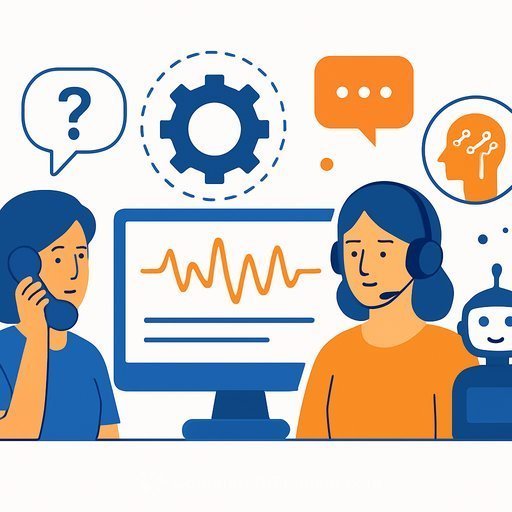
AI is great at access and speed. It still struggles with context, edge cases, and emotional stakes. The winning move is a hybrid model where automation removes friction and humans handle trust-heavy moments.
Your job isn't to add more bots. It's to make sure the ones you keep actually resolve issues and make it easy to reach a person.
A practical hybrid model that works
- Route: Use AI for identity, intent, and triage. Detect complexity early and route to an expert fast.
- Resolve: Let automation handle status checks, password resets, basic billing, straightforward returns, and policy Q&A.
- Reveal: Clearly disclose when AI is in use and how to reach a human at any time. Set this expectation up front.
- Rescue: One-tap "talk to a person" in every channel. No loops. No dead ends.
- Learn: Log every failed intent, escalation reason, and workaround. Train the model with real cases weekly.
Operational checklist (next 90 days)
- Map your top 20 intents by volume and difficulty. Mark each as AI-first or human-first.
- Add a visible "agent option" within 2 clicks or 30 seconds in chat, email, and IVR.
- Script a simple AI disclosure: "You're chatting with an automated assistant. Ask anytime for a human."
- Connect your AI to real data: CRM, order systems, knowledge base, policy docs. No context = no resolution.
- Stand up an escalation desk during peak hours. Target under 60 seconds to human for complex cases.
- Run a weekly error review: top 10 misunderstood intents, top 10 escalations, fixes shipped.
Metrics that matter (beyond deflection)
- AI First-Contact Resolution (FCR): % of AI-only sessions with verified resolution. Not just "conversation ended."
- AI Escalation Rate: How often AI hands off to humans. Track by intent and by channel.
- Time-to-Human: Seconds from escalation request to live agent. Keep it under 60 seconds during peak.
- Customer Effort Score (CES): Ask after AI flows. If effort is high, speed doesn't matter.
- Trust Signals: % of sessions where AI disclosure is seen; complaint rate about "bot loops."
- Quality Audit: Monthly review of 100 AI transcripts against policy, accuracy, and tone.
Design by generation
Gen Z is comfortable with automation. Boomers want clarity and a fast path to a person. Build both into your flow.
- For Gen Z: Fast chat, rich self-serve, proactive status updates, and smart links to account actions.
- For Boomers: Clear IVR, fewer menu layers, "press 0 for agent," and simple language in emails and texts.
Make AI better, not bigger
- Context: Pull order history, prior contacts, and policy rules into the prompt. No blind answers.
- Guardrails: Refuse risky actions, cite sources for policy answers, log every decision.
- Tone: Train for short, plain language. No corporate speak.
- Containment: Pilot on 3-5 intents, expand after hitting 80%+ FCR and low complaint rates.
- Agent Assist first: Use AI to draft replies, summarize threads, and surface next-best actions before you use it to handle customers directly.
Transparency is non-negotiable
Customers want to know when they're talking to AI and how to reach a person. Disclose early and often, and make it effortless to switch. This isn't just good practice; it reduces frustration and legal risk. See the FTC's guidance on AI marketing and disclosures for context
FTC: Keep your AI claims in check
Level up your team
AI doesn't replace great agents. It frees them to handle the work only humans can do-exception handling, empathy, and judgment. Invest in agent coaching, prompt fluency, and co-pilot workflows.
If you're building skills for a support org, explore role-based training paths here: AI courses by job
Bottom line
Holiday 2025 showed AI can handle volume, but trust still lives with people. Use automation to remove friction. Put humans on the moments where context, stakes, and emotion are high. Be clear, be fast, be honest-and customers will notice.
Your membership also unlocks: