
AI news ·
Hospitality tech companies raise $1 billion as AI pushes hotels to reconsider what service means
Hospitality tech companies raised over $1 billion across 40 businesses in the past year, with Mews leading at $300 million. Property management systems captured the largest share at $408 million.
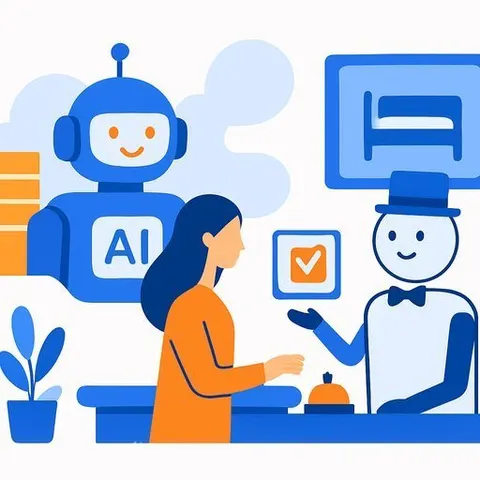
Hospitality Tech Investment Tops $1 Billion as Industry Confronts What AI Actually Changes
Hospitality technology companies raised more than $1 billion across 40 businesses in the past year, with property management systems capturing the largest share. The milestone arrived without fanfare, but that absence says something important: capital is concentrating in the platforms hotels depend on daily, not in experimental pilots or showcase features.
Mews led the funding surge with a $300 million round, followed by Kindred and Limehome in a concentrated burst between December and February. The Abode Worldwide Hospitality Tech Investment Index 2026 found that PMS businesses captured $408 million of the total, more than any other category.
Abode CEO Jessica Gillingham said investors are backing platforms that sit close to essential operator workflows and become more valuable over time. Unified systems generate more data, enable better automation, and create higher switching costs - a compounding dynamic that favors consolidation. Mews' acquisitions of Flexkeeping and DataChat in late 2025 reflect this pattern: the best-funded PMS businesses are building platforms through acquisition rather than relying on integration partnerships.
Two Questions Redefining Service
Two substantial analyses this weekend pushed the industry's AI conversation beyond implementation tactics toward a harder question: if digital transformation mostly optimized the old model without changing how a stay actually feels, what does genuine transformation look like?
The first argument is direct. A decade of digital investment did not change the guest experience - it optimized existing processes without questioning whether those processes still made sense. AI forces hotels to confront assumptions that have quietly shaped operations for decades. Why does a returning guest repeat preferences the hotel already knows? Why does feedback arrive after checkout rather than while the stay can still be improved?
Hotels like Hilton, Marriott, and Wynn Las Vegas are moving from reactive to anticipatory service, where needs are predicted before guests express them and friction is removed before it is experienced. The shift is not technical. It is strategic. Every AI decision a hotel makes encodes priorities that shape guest perception, often subconsciously. Hotels with the most AI will not win the next decade. The ones that ask the hardest questions about how they want guests to feel will.
The Selective Human Service Model
A companion framework this weekend formalizes the operational shift into what researchers call the Selective Human Service Hotel model. The proposal concentrates human staff in four high-value domains: service recovery, revenue generation, memory creation, and complex decision-making. AI handles repetitive inquiries, transactional processes, and predictable workflows.
The framework challenges a misconception that persists in the industry: AI does not free up time for staff to engage more with guests. In practice, recovered time is reallocated into productivity expectations, expanded role scope, or workforce optimization.
Three emerging roles are identified: Guest Experience Curator, Service Recovery Specialist, and AI Operations Controller. The strategic risk is clear. Over-automation leads to loss of emotional connection and reduced brand differentiation. Under-automation produces cost escalation and competitive disadvantage. The optimal balance requires efficiency without eroding experiential value - a leadership decision, not a technical one.
AI-Led Guest Experience Platforms Gain Traction
AI-led guest experience platforms were the second standout funding category. Duve, Chatlyn, Conduit, and Canary Technologies raised a combined $152.6 million, targeting the pressure to deliver fast, personalized service with leaner teams. Tech-enabled operators including Limehome, Kasa, and HolaCamp added another $151.9 million.
The early-stage picture is also notable. Nineteen of the 40 rounds were raised at pre-seed, seed, or Series A. Companies founded in 2023 alone account for ten of the cohort, indicating that investor interest in hospitality tech remains focused on emerging platforms rather than mature players.
Industry Signals
Bleisure Travel Exposes Website Design Gap
Hotel websites are still separating business and leisure frames, missing bookings from guests combining both. AI-driven personalization and flexible amenity presentation are practical fixes, but the underlying issue is structural: sites built around stay purpose rather than room type convert better in the bleisure segment.
Heritage Collections Drive Soft-Brand Growth
WorldHotels added 25 Norwegian properties through a partnership with De Historiske, expanding its Scandinavian portfolio to 37 hotels. The deal includes historic manor houses, mountain lodges, and coastal properties. Soft-brand growth through heritage collections reflects a wider trend of using character-driven accommodation as a differentiator against standardized inventory.
Design Premiums in Limited-Service Segment
Sleep Inn properties built to the new Scenic Dreams prototype are achieving RevPAR premiums of +1.71 alongside improved guest satisfaction scores. Four new-construction properties opened across Tennessee, Nevada, and Pennsylvania. For the limited-service segment, design-led differentiation is increasingly the lever available to franchisees who cannot compete on location or brand name.
Leadership Skills That Remain Human
At EHL's Women in Leadership 2026 event, students and executives explored which leadership qualities must remain human as AI advances. The consensus: strategic ambiguity, team trust-building, and ethical judgment cannot be delegated to systems. Hospitality education needs to shift training emphasis from task execution toward the cognitive and emotional capabilities that remain distinctively human.
World Cup Strategy Beyond Volume
Hotels near World Cup venues are approaching the tournament as a volume exercise. A supplier perspective argued the more important question is demand composition: who is actually coming, for how long, and what they are willing to spend beyond the room rate.
People and Properties
Noelia Magnusson was appointed Chief Commercial Officer at Ultima Collection.
Gateway Kandla Gandhidham opened in India. IHG signed Holiday Inn Goa Kadamba, strengthening its presence in a leading leisure destination. Ascott signed Citadines Westview Nairobi as the brand expands its East Africa footprint.
Adina Apartment Hotel Perth unveiled a contemporary West Australian design refresh. Three Little Bears Retreat in the Great Smoky Mountains reopens this summer as a reimagined safari-style mountain escape.
For hospitality leaders navigating AI for Hospitality & Events and AI for Customer Support, the conversation is shifting from implementation tactics to fundamental questions about service design and guest experience.