
AI news ·
Hospitals deploy AI in revenue cycle as payer denials rise 25% in net revenue leakage
Hospitals are deploying AI in their coding and billing operations as claim denials surged in 2025, driving a 25% rise in net revenue leakage. Payers now use AI to audit full datasets in real time, outpacing many providers' ability to respond.
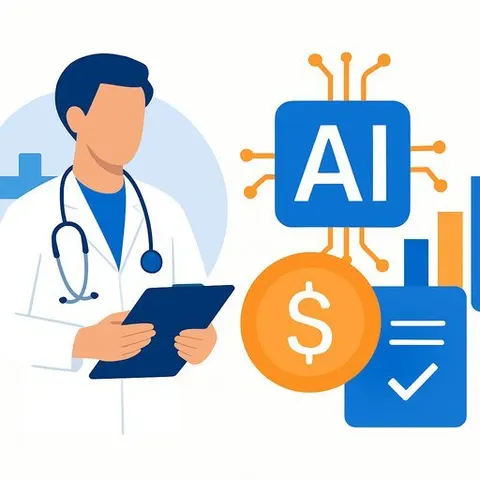
Hospitals Deploy AI to Fight Payer Denials as Claims Rejections Surge
Hospital revenue cycle teams are turning to artificial intelligence to combat a sharp rise in claim denials, as payers use their own AI systems to reject more requests and scrutinize submissions faster than ever.
Payers denied more claims on clinical grounds in 2025 than in 2024, driving a 25% increase in net revenue leakage at hospitals, according to a report by Kodiak Solutions. The American Medical Association has flagged that payer use of AI algorithms in claims processing has led to more prior authorization denials.
Payers are increasingly using AI and advanced analytics to review full datasets rather than small samples, accelerating audit timelines and creating a real-time adjudication process that replaces the traditional pay-and-chase model. "The smaller provider is not going to be able to catch this stuff fast enough," said Valerie Rock, managing principal of PYA's revenue integrity services team.
The Speed Problem
Hospitals are fighting back by deploying AI in their own revenue cycle operations, focusing on coding and documentation. But providers struggle to keep pace with payer speed.
Candice Powers, chief revenue officer for USA Health, a three-hospital system in Mobile, Alabama, said smaller health systems face a disadvantage. "We do have some shenanigans in this space," Powers said. "And the target moves too."
Denials often come down to documentation gaps. When a physician bills an emergency room service at Level 3 and it gets downgraded to Level 2 because the care isn't tied to the medical record, providers must resubmit documentation. When Powers and staff argue for medical necessity, they succeed 80% of the time.
Some denials hinge on technical issues. USA Health encountered a case where a hysterectomy code is based on patient weight-information providers don't have until after surgery, yet must authorize the CPT code before the procedure begins.
AI in the Middle
USA Health recently deployed AI tools in its coding operations to stem denials. The system runs in the background, pointing out where in the medical record documentation exists to support diagnoses.
Rock said payers limit payments because they worry providers have incentives to increase coding volume. "Payers are going to have to address overpayments. They do that by limiting what they're going to cover, whether it's medically necessary or not," Rock said.
Payer Perspective: Human Oversight
Nathan Frank, chief digital and technology officer at Aetna, said the insurer never uses AI alone to deny prior authorizations. "Any prior auth comes to a physician," Frank said. CVS Health and Aetna are investing $20 billion over the next 10 years on AI.
Aetna has bundled prior authorizations using technology. A patient needing a hip replacement once required separate prior authorizations for a CT scan and subsequent treatments. Now a single authorization covers the full care pathway.
The insurer launched an Adjustment Claim Enhancement (ACE) product using machine learning with human review. ACE identifies missing information and inconsistencies in claims, allowing faster processing without the delays of pending status.
Eighty percent of Aetna's prior authorizations are now handled in real time, Frank said.
Interoperability as a Solution
Frank sees interoperability as the best answer to provider-payer friction. The Centers for Medicare and Medicaid Services has mandated standards through an Interoperability and Prior Authorization Final Rule.
Aetna is already interoperable with some large health systems, allowing staff to access their electronic health records. Faster data exchange removes the slower back-and-forth of file-based information processing.
"If we can get into the digitally connected environment, claims will be faster," Frank said. "We'll be able to help them understand where they might have an issue with their claims submission."
Powers cautioned that unfettered EHR access could create friction. Rock agreed interoperability will help but noted the industry remains far from adoption. "We're so afraid to have data go outside of our walls," Rock said.
Powers summed up the core tension: "Medicine is still an art form. This is broken. AI won't fix this before we fix the foundational stuff."
Learn more about AI for Finance and AI Data Analysis to understand how these technologies apply to healthcare financial operations.