
AI news ·
Hospitals roll out AI chatbots for patient queries as doctors raise monitoring concerns
Major U.S. hospitals are deploying AI chatbots to book appointments and answer patient questions as wait times hit a monthly average-up 19% since 2022. The tools link to medical records and fall under HIPAA, but doctors remain split on the risks.
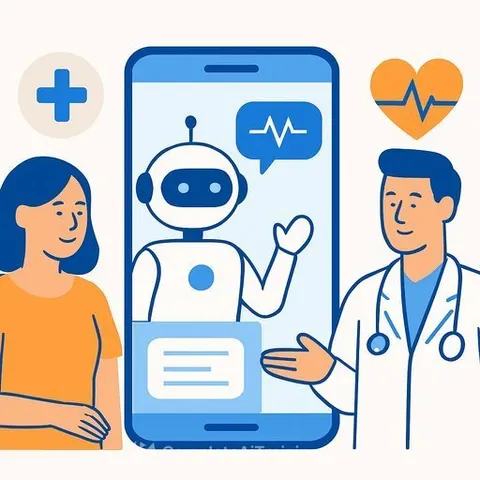
Hospitals Deploy AI Chatbots to Speed Patient Care as Wait Times Climb
Major U.S. healthcare systems are launching AI chatbots designed to answer patient questions and book appointments faster, responding to worsening wait times and growing demand for accessible health guidance. Hartford HealthCare, Sutter Health, and Reid Health have rolled out patient-facing chatbots built by clinical AI companies, while OpenAI prepares its own health-focused tool.
The push comes as patients now wait an average of one month to see a doctor-a 19 percent increase from 2022, according to a 2025 AMN Healthcare report. Around 25 percent of Americans have already used an AI tool or chatbot for health information, mainly as a supplement to their care.
How Clinical AI Differs From Consumer Chatbots
Hospital-built chatbots like Emmie (Epic) and Patient GPT (K Health) integrate directly with patients' medical records, allowing the systems to account for individual health histories, medications, and test results. This differs sharply from consumer AI tools that lack clinical context.
Because these tools operate within hospital systems, patient information receives protection under HIPAA, the federal law governing medical privacy. Data shared with hospital chatbots faces the same security standards as traditional medical records.
Emmie handles lab result questions, post-visit follow-ups, and general health inquiries. Patient GPT lets patients book appointments as quickly as 15 minutes and builds profiles with their full medical history. Both platforms aim to reduce the administrative burden on doctors by organizing patient information before appointments.
K Health's CEO said the chatbots prepare doctors for visits by gathering patient questions in advance. "A doctor might take 20 minutes just to read through a medical record," he said. "Now it's all there and ready for the doctor."
Early Feedback and Clinical Support
Hartford HealthCare's chief clinical officer said he personally tested Patient GPT and recommended it to family members. He emphasized that the tool could "add significant value for patients if privacy and HIPAA standards are fully upheld."
Patients in early rollouts report valuing the increased accessibility and simplified navigation of healthcare systems, according to hospital officials. One Hartford HealthCare executive said the platform uses "structured clinical pathways" to route patients toward appropriate care or physician appointments when needed.
Doctors Divided on Risks and Benefits
Physicians split on whether these tools help or create problems. Stanford's Nigam Shah called the move "net positive," noting that care needs don't pause when clinics close. "These tools bridge the gap between when urgent care closes and when the clinic opens the next day," he said.
But safeguards matter enormously. Johns Hopkins professor Suchi Saria warned that the same technology can either improve care or introduce risk depending on how rigorously it's built and monitored. She said patient-facing AI should meet the same standards as any clinical tool, which today isn't always the case.
Concerns about AI accuracy persist. More than half of Americans worry about AI spreading misleading information. In healthcare, errors could have serious consequences, particularly if patients rely on chatbot advice instead of consulting doctors.
Epic's research director said the company tests thousands of permutations daily to catch accuracy issues and prevent "model drift." K Health's CEO acknowledged that doctors make mistakes too, and that long wait times may pose greater risks than imperfect AI assistance.
The Governance Question
Whether these tools ultimately ease pressure on stretched healthcare systems depends less on the technology itself than on how hospitals monitor and integrate them into clinical care. Hartford HealthCare established a multidisciplinary AI governance structure with rigorous oversight protocols.
Saria emphasized that detection and correction matter more than perfection. "The question isn't whether errors happen but rather how quickly were these detected and corrected before harm could occur," she said.
For more on AI for Healthcare, see our coverage of clinical AI applications and governance frameworks.