
AI news ·
Hoteliers use AI in half their daily tasks but want humans to lead check-in, Mews research finds
98% of hotels now use AI in daily operations, but 59% say front desk check-ins should stay human. Properties with the most AI experience show the strongest conviction about where it falls short.
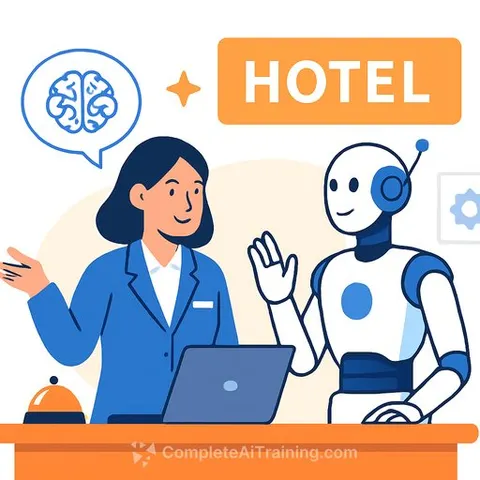
Hoteliers Embrace AI Daily, but Draw the Line at Guest Welcomes
Nearly all hoteliers are using AI in their operations, but they're being selective about where it replaces human workers. A survey of more than 500 properties found that 98% of hoteliers have deployed AI across their operations in the last six months, with the technology handling more than half the workload in 11 of the 19 most common hotel tasks.
Yet 59% of hoteliers say the front desk welcome and check-in should remain human-led. The preference is strongest among properties already using AI extensively, suggesting that hands-on experience clarifies where automation falls short.
Experience Breeds Conviction
The pattern is clear: more AI use leads to stronger conviction that certain guest moments need a human. This isn't resistance to the technology. It's a practical assessment of what AI does well and what it doesn't.
Optimism about AI remains high across the industry. Ninety-two percent of hoteliers are optimistic about AI in hospitality, and 83% trust AI tools to support decision-making. But governance hasn't kept pace. Forty-one percent of hoteliers have no formal AI policy, relying instead on verbal guidelines or nothing at all.
Properties with a formal AI policy report 92% strong trust in AI, compared to 49% among those without guidelines. The gap suggests that clear rules actually build confidence rather than restrict it.
Revenue Becomes the Focus
Among the most AI-proficient properties, 52% now identify revenue growth as their primary goal for AI, ahead of efficiency or cost reduction. This marks a shift from early adoption, when most hotels used AI to cut costs or streamline operations.
Properties with strong AI capabilities report higher revenue outcomes: increased overall revenue, higher spend per guest, and improved upsell performance. This success is pushing hoteliers to demand more sophisticated tools.
Generic AI responses no longer suffice. Hoteliers need pricing decisions based on their property's data, not industry averages. Upsell recommendations should reflect how their specific guests behave, not how guests behave elsewhere.
Context Matters More Than Data
To meet this demand, hotel tech companies are building what's called a semantic layer-a foundation that gives AI tools access to the institutional knowledge that currently lives in spreadsheets, in staff heads, and across disconnected systems.
The goal is AI that understands how a specific property operates, not just what its data shows. A pricing algorithm that knows a hotel's seasonal patterns, competitor set, and booking curves will outperform one that only sees aggregated numbers.
For hospitality professionals, this shift has practical implications. AI adoption will continue to accelerate, but the jobs most at risk are those involving routine decisions based on generic rules. Roles requiring judgment about specific properties and guests-and those involving direct guest interaction-remain firmly in human hands.
Learn more about AI for Hospitality & Events and how to prepare for this changing landscape.