
AI news ·
Hotels use artificial intelligence for routine tasks but retain human staff for personal service
AI now handles many hotel check-ins and requests. But West Virginia University research finds guests still demand human empathy when travel plans go wrong.
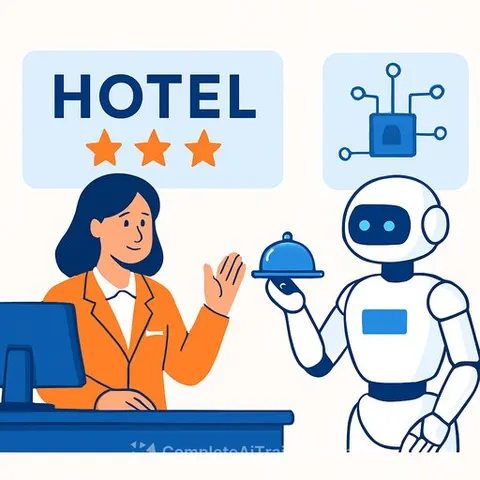
As millions of Americans set out on summer vacations, the first interaction many will have at their hotel won't be with a person. Instead, travelers increasingly encounter AI-powered chatbots and apps that handle check-in, request housekeeping, and answer questions about amenities. Yet new research from West Virginia University shows that while artificial intelligence is streamlining routine tasks, guests still expect the empathy and personal attention that only human staff can deliver.
AI is becoming part of everyday travel
Artificial intelligence is no longer an experiment in the hotel industry. Many hotel websites now use conversational chatbots for common queries, and mobile apps let guests check in, receive digital room keys, and message staff without the front desk. Once on property, AI-powered systems handle housekeeping requests, restaurant bookings, and local recommendations at any hour-reducing wait times and freeing employees for more complex tasks. Many hotels now field common inquiries through AI for Customer Support chatbots, from room availability to pet policies, giving travelers instant answers around the clock.
"Research shows that when hospitality and tourism consumers use conversational AI, they appreciate its multilingual capabilities and helpfulness with repetitive tasks," said Ajay Aluri, associate professor in the John Chambers College of Business and Economics at West Virginia University. "Guests find AI most useful for quick answers about the hotel stay and experiences."
Aluri's research, published in the Journal of Hospitality and Tourism Cases and Journal of Hospitality and Tourism Technology, suggests that the future of lodging will depend on both advanced technology and personal service. That balancing act is a key focus for anyone working in AI for Hospitality & Events, where understanding how to integrate tech without losing the human touch is essential.
When plans go wrong, guests still want a person
Despite AI's usefulness for routine tasks, travelers remain cautious about relying on it entirely. Aluri's research found that many guests question whether AI-generated information is always accurate and worry about how voice recordings and personal data are collected. More important, when travel disruptions occur-delayed flights, overbooked reservations, a maintenance emergency-people almost always seek a staff member who can understand their situation and make judgment calls.
"Human intervention and intuition are foundational in the hotel industry, but hospitality technology is evolving at a rapid pace," Aluri said. "Existing jobs are changing, and new jobs are being created. The hotel of the future will offer guests services and experiences that are both high-touch and high-tech."
AI reshapes what hotel employees do
Rather than eliminating jobs, AI is refocusing them. Routine requests that once tied up front-desk staff-answering common questions, scheduling housekeeping, making restaurant reservations-can now be handled automatically. This shift gives employees more time for situations that require empathy, creativity, and problem-solving, like helping a family whose luggage was lost or arranging a special celebration.
"AI can handle most routine jobs - housekeeping requests, restaurant reservations and concierge support services, allowing employees to focus on solving problems and delivering guest experiences," Aluri said. As hotels adopt these tools, staff roles increasingly center on judgment and personal connection rather than transaction processing.
Adoption varies by hotel segment
AI is spreading unevenly across the industry. Luxury and five-star hotels continue to emphasize personalized, high-touch service, with staff learning guest preferences to create memorable experiences. Upscale and midscale properties increasingly blend traditional service with technology, offering mobile check-in, digital keys, and automated messaging while keeping human interaction available. Budget and economy lodging, however, may see the biggest transformation: "Budget and economy lodging, on the other hand, can soon be fully automated with limited staffing," Aluri said.
A tool, not a replacement
Hotels have long integrated new technologies-from computerized reservation systems to mobile apps-and AI represents the latest step. Rather than eliminating hospitality, it serves as a tool to improve efficiency. The most important moments, Aluri said, will still be shaped by human intuition. Whether greeting a couple celebrating an anniversary or helping a traveler whose flight was cancelled, employees remain central to what makes a stay memorable.
Aluri summed up the balance: "As a people-centric industry, hospitality should be centered on humans and high-touch service to them. However, travelers' use of generative AI and technology has evolved, and many hotel guests now want both the flexibility and efficiency provided by high-tech, fully automated AI solutions and the authenticity, empathy, and focused engagement of human service."
Why this matters for hospitality and events professionals
For those managing hotels, resorts, or event venues, the research reinforces that guest satisfaction increasingly depends on a thoughtful blend of technology and personal care. AI can handle repetitive requests and smooth the logistics, but the human ability to solve unexpected problems and build rapport remains irreplaceable. Training teams to work alongside AI-not fear it-and designing workflows that give staff time for genuine guest connection will separate leaders from those who chase automation for its own sake.