Training AI to See More Like Humans
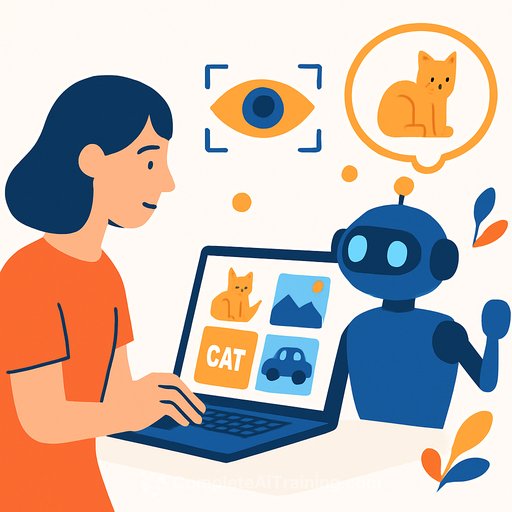
Brown University researchers, supported in part by the U.S. National Science Foundation, are advancing AI vision by teaching systems to perceive images more like humans do. This approach promises to reduce common AI errors and improve the accuracy of AI applications across various fields.
Bridging the Gap Between Human and AI Vision
AI has made significant progress in image recognition, identifying animals, objects, and even medical conditions. Yet, AI still struggles with errors that humans rarely make—such as mislabeling a dog in sunglasses or failing to detect obscured stop signs. These mistakes reveal a fundamental difference in how AI and humans interpret visual data, a gap that tends to widen as AI models grow larger and more complex.
To address this, the research team combines insights from psychology and neuroscience with machine learning. Their goal is to replicate the ways humans process visual information within AI algorithms, fostering systems that interpret images more naturally and reliably.
The Role of the Click Me Game
Central to this research is an online game called Click Me. Participants click on parts of an image they believe provide the most useful information for AI recognition. The AI only "sees" the clicked areas, encouraging players to focus on the most informative visual cues rather than random clicks.
Following data collection, the researchers perform a “neural harmonization” step. This process trains AI models to focus on the same image features identified by human players, aligning AI decision-making strategies with human visual attention patterns.
Large-Scale Public Participation and Data Collection
The project has successfully engaged thousands of participants, generating tens of millions of interactions through platforms like Reddit and Instagram. This scale of public involvement allows rapid collection of behavioral data on how people perceive images.
Researchers developed a computational framework that trains AI models not just to match human choices but also to mimic human response times. This leads to AI decisions that are more natural and easier to interpret, reflecting human cognitive processes more closely.
Practical Implications Across Industries
- Healthcare: AI that explains conclusions in ways aligned with human reasoning can build trust among doctors and improve diagnostic reliability.
- Autonomous Vehicles: Understanding human visual decision-making helps AI predict driver behavior and enhances safety.
- Accessibility and Education: Human-aligned AI can improve tools for learning and support for people with disabilities.
- Decision Support: More interpretable AI systems aid professionals across multiple sectors in making better-informed choices.
Advancing Knowledge of Human Vision
By modeling human vision within AI systems, the researchers have also created improved models of how the human brain processes visual information. This dual benefit highlights the importance of foundational research supported by federal funding.
Efforts like this contribute to safer, more reliable AI technologies that better integrate with human users and support a variety of real-world applications.
For professionals interested in deepening their AI expertise, exploring targeted courses on Complete AI Training can provide valuable insights into current AI methodologies and applications.
Your membership also unlocks: