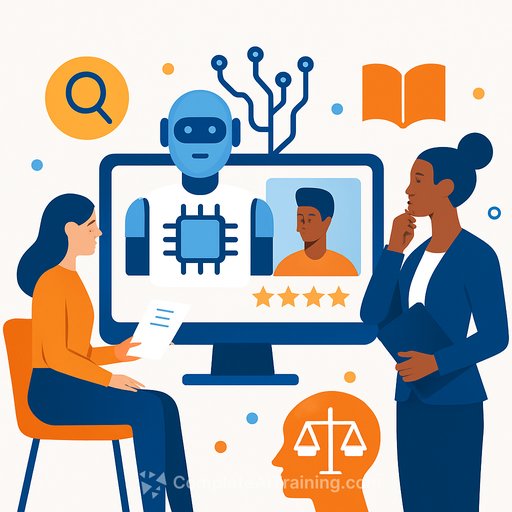
How AI is Changing Talent Management: Smarter Hiring, Sharper Learning, and Fewer Biases
Artificial Intelligence is quietly reshaping how companies manage talent. From speeding up hiring processes to improving career pathing, AI tools are making the experience more efficient and, in many cases, more thoughtful. Yet, this shift comes with cultural and ethical challenges that organizations must address carefully.
AI in Internal Mobility: A Closer Look at Schneider Electric
Schneider Electric’s Open Talent Market (OTM) is an AI-driven platform connecting employees with roles across the company worldwide. Instead of losing talent to external opportunities, the platform helps identify internal matches based on skills—even across different functions.
For example, an employee in HR with strategic skills might find a role in marketing. This approach broadens career options and retains talent. However, introducing this system triggered emotional reactions. Managers worried about losing recent hires, but the company emphasized the principle of open talent movement without restrictions or locking periods.
Adani Enterprises: Capturing Aspirations and Cultural Fit
Adani’s internal system, Sarcham, profiles 45,000 employees and focuses on helping individuals take control of their careers. It goes beyond current roles to capture employee aspirations, supporting moves into new business areas.
On the external hiring side, Adani is developing AI tools specific to the Indian market, recognizing that many global products don’t fit local scale and challenges. Their AI analyzes resumes and interview data to identify candidates likely to succeed long-term, including cultural fit.
For instance, algorithms review interview feedback to detect if all job criteria were evaluated, recommending next steps accordingly. This data-driven precision helps weed out candidates who might not align with company culture or job requirements.
KPMG’s Approach: Holistic Evaluation and Personalized Learning
KPMG India uses generative AI to move beyond traditional cutoff-based campus hiring tests. Their AI assesses candidates on multiple dimensions like stability, aptitude, and technical skills, providing a 360-degree view of fit.
Once hired, AI supports personalized learning programs based on individual profiles. It also enables flexible resource deployment across consulting domains, improving efficiency and team agility.
Proceeding with Caution: Healthcare’s Take on AI
In sectors like healthcare, adoption of AI in talent management is more cautious. UnitedHealth Group is raising awareness among teams to address concerns about privacy and job security before scaling AI tools for recruitment.
Addressing Bias and Ethical Concerns
AI's promise in reducing bias is complicated by the fact that training data and human decision-makers can both introduce prejudice. Some leaders believe human biases embedded in hiring panels are harder to overcome than algorithmic errors.
AI can help uncover blind spots by highlighting factors that hiring managers may overlook, improving decision quality and speed. However, organizations must remain vigilant to ensure AI systems don’t reinforce outdated or unfair criteria.
Balancing AI Use: Practical Insights from Industry Leaders
- Bayer’s HR head stresses avoiding hype and validating AI outputs against human judgments. For example, after using AI to screen candidates, they compared results with managers’ opinions to build trust in the technology.
- KPMG limits AI use to certain stages, avoiding invasive practices like scanning social media profiles, maintaining clear ethical boundaries.
- Long-term talent management must combine AI insights with human experience, especially in learning and career development, which often lag behind evolving roles.
Behavioral Change Over Digital Tools
The real shift AI brings isn’t just technological—it’s behavioral. Companies must manage human emotions and psychological factors as AI reshapes how talent moves within and outside organizations. This ongoing process requires patience and openness to change.
For management professionals, understanding these practical AI applications and their limitations is key to leveraging the technology effectively without compromising ethics or culture.
For those interested in expanding their knowledge on AI applications in talent management and beyond, exploring specialized training courses can provide valuable skills to lead this change confidently. Visit Complete AI Training to explore relevant programs.
Your membership also unlocks: