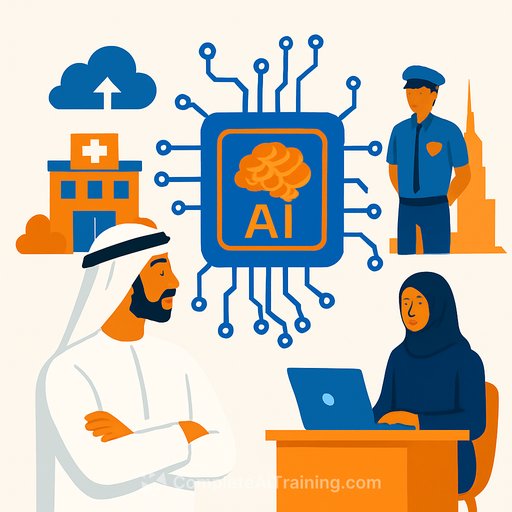
The UAE government is making significant strides in using artificial intelligence (AI) to enhance public services, aiming to create a smarter, more efficient, and citizen-focused administration. With AI projected to contribute nearly 14% of the country’s GDP by 2030, the UAE has integrated AI deeply across various government sectors to improve service delivery and operational efficiency.
24/7 Virtual Assistants for Public Queries
AI-powered virtual assistants are now a common feature on many government platforms. These bots use natural language processing and machine learning to provide instant answers, guide users through forms, and offer real-time updates. By handling routine queries, they reduce wait times and free up human agents to focus on more complex issues. This technology is active across multiple ministries, improving both user experience and workflow efficiency.
Metaverse Government Offices
The Ministry of Economy has created a virtual replica of its Abu Dhabi headquarters within the metaverse. Visitors can attend meetings, network via avatars, and even sign legally binding documents remotely. With audio-enabled support agents, this virtual office provides accessibility and convenience around the clock, supporting businesses and citizens regardless of location. This approach positions the UAE ahead in delivering borderless, modern government services.
AI in Urban Planning and Infrastructure
Dubai Municipality leverages AI-enhanced Building Information Modelling (BIM) and geographic data analytics to optimize urban development. These tools help design eco-friendly buildings and improve resource efficiency, aligning with the UAE’s sustainability goals. AI reduces design time by around 40% and boosts resource efficiency by 35%, supporting sustainable growth while maintaining quality and aesthetics.
Smart Service Delivery via Predictive Analytics
The Digital Dubai Authority uses AI to analyze large datasets for forecasting service demands and detecting patterns. This enables proactive resource allocation and personalized citizen services. From anticipating traffic congestion to identifying public health needs, AI helps government bodies shift from reactive responses to anticipatory actions, improving reliability and citizen satisfaction.
Automating Licensing and Legal Services
The Legislative Intelligence Office employs AI to map legislation, integrate economic data and court rulings, and suggest updates. This can reduce legislative drafting time by up to 70%. Additionally, AI legal advisors assist citizens with family law and other legal processes, making justice more accessible. The UAE also aligns its legal AI tools with international policy research, ensuring up-to-date and consistent legislation.
AI-Powered Virtual Employees Supporting Citizens
‘Aisha’ is an AI assistant launched by the Ministry of Justice that provides legal advice, drafts applications, and answers court-related questions. Using a vast legal database, Aisha supports both the public and legal professionals with case-specific insights. Beyond legal services, AI-powered virtual employees handle repetitive tasks such as data entry and reporting, increasing productivity by up to 40% and improving employee satisfaction.
By embedding AI into core government functions, the UAE demonstrates a commitment to efficient, innovative public services that prioritize citizen needs. This approach offers practical lessons for governments worldwide seeking to modernize operations and improve outcomes for their communities.
Your membership also unlocks: