AI Can Help You Make the Most of Your ESG Data – When Excel Is Not Enough
Many companies still manage sustainability data using traditional tools like emails and Excel spreadsheets. These tools work, but handling large volumes of Environmental, Social, and Governance (ESG) data this way is time-consuming and labor-intensive.
How AI Supports ESG Work: Less Manual Effort, Greater Impact
AI can significantly reduce the time spent on collecting and processing ESG data. It harmonizes information from different sources and formats, making data accessible across various departments. This helps companies respond faster and more accurately to stakeholder inquiries related to emissions, certifications, and responsibility standards.
For example, companies often receive hundreds or thousands of ESG-related questions via email or online forms. These requests are usually forwarded manually to different teams without any follow-up or automation, which slows down responses and wastes resources.
Manual data gathering is also a challenge during certification processes such as EcoVadis, which can take several days just to collect the necessary information.
Start Small: Simple AI Solutions That Deliver Real Value
Introducing AI doesn't have to be complex or expensive. The best approach is to identify use cases that offer solid business value with manageable effort. Many companies, especially in manufacturing, have untapped opportunities to improve ESG data management through AI.
Using frameworks that speed up AI deployment, like those with reusable components, can help companies see results quickly and build confidence in AI’s benefits.
Practical AI Applications Enhancing ESG Processes
- Contract Management: One client with thousands of properties struggled to identify responsible parties for utilities. An AI-powered system now instantly retrieves this information from contracts, saving hours of manual work and supporting emissions tracking.
- Product Information Updates: Another client automated the generation of product descriptions in multiple languages by pulling data from various sources. Experts only need to review and approve the output, drastically reducing manual effort.
- ESG Inquiry Handling: A dedicated AI-driven mailbox can collect ESG questions, update FAQs, route messages to relevant teams with suggested replies, and save responses for future reference.
- Materiality Analysis: AI can track stakeholder expectations, analyze survey data, and benchmark sustainability performance against competitors and suppliers.
Turning ESG Data into a Strategic Asset with AI
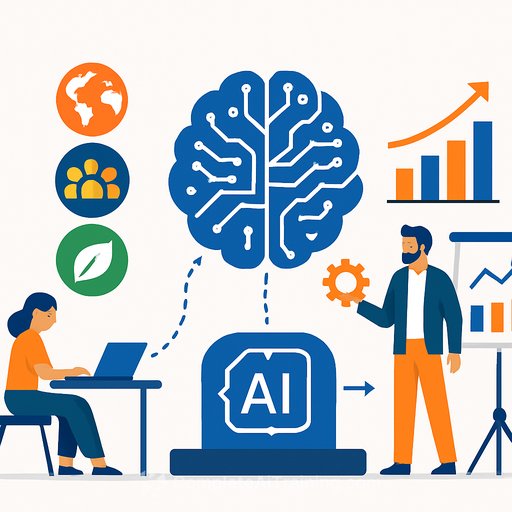
AI is more than a tool for efficiency; it can transform ESG data into a competitive advantage. By integrating ESG information into strategic decision-making and continuous improvement, companies can unlock value from data that often remains unused.
Starting with AI solutions that reduce manual data gathering frees experts to focus on analysis and innovation. This approach helps teams understand AI’s potential and identify more advanced applications that provide unique benefits.
For professionals interested in expanding AI skills to boost ESG data management and other business functions, exploring courses on Complete AI Training can be a helpful next step.
Your membership also unlocks: