How AWS is Rewriting Its Marketing Playbook with Generative AI
Amazon Web Services (AWS) is transforming its marketing approach by integrating generative AI to deliver data-driven storytelling and personalized targeting at scale. This evolution raises a key challenge: how to innovate marketing strategies while staying true to core values like customer obsession and operational excellence.
Julia White, vice president of worldwide AWS marketing, highlights how AI is enabling AWS to achieve one-to-one targeted marketing at a scale that was previously impossible. “Using AI to help with content development has been a long-held dream in marketing,” White says. “Now, with generative AI, the success depends heavily on the quality of your data and how well you understand your customer.”
AI Marketing Enables Precise Scaling in a Vast Market
Personalized engagement has been the ideal for marketers, but scaling it effectively was a challenge—until generative AI came along. For AWS, AI means marketing messages can be delivered when they matter most, with relevance and value for every stage of the customer journey.
White explains that AI helps AWS meet diverse customer needs, from beginners to advanced users, with content and experiences that fit their unique paths. “The only limit is how well you execute to meet those needs first,” she adds. “AI is helping us scale rapidly to match the market opportunity.”
There’s also a cultural shift in B2B marketing toward trust and peer influence. White points out that real-world connections, whether through informal peer groups or casual meetups, serve as authentic channels of influence. In a saturated content environment, genuine human voices become powerful amplifiers of brand trust.
“With AI’s advancement, there is potential for misuse,” White notes. “People tend to lean into the human side of interactions. The most influential decision-makers are peers you trust and see face to face.”
Rethinking the Marketing Tech Stack with AI
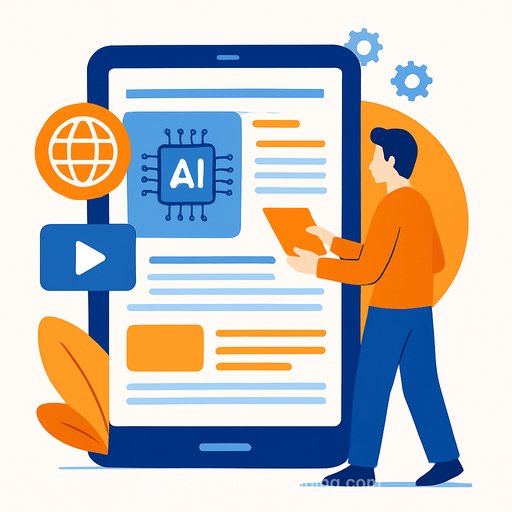
AWS is overhauling its marketing technology stack with AI at the core. This includes migrating 75,000 web pages using AI and generating real-time content snippets from major events like re:Invent keynotes. The changes are significant and ongoing.
“Yes, the marketing tech stack must evolve,” White says. “I don’t know exactly what it will look like in the future, but it’s definitely changing. AI is making processes faster and more seamless than ever.”
Practical Takeaways for Marketing Professionals
- Leverage data quality: AI’s effectiveness depends on rich, accurate customer data. Investing in data management pays off.
- Focus on personalization at scale: Generative AI can bring one-to-one marketing into everyday practice, not just as an experiment.
- Maintain authenticity and trust: Human connections and peer influence remain key; AI content should support, not replace, genuine engagement.
- Embrace technology upgrades: Prepare your marketing stack for AI integration to speed up content creation and response times.
For marketers looking to deepen their AI skills, exploring specialized courses can be a valuable step. Resources such as Complete AI Training's latest AI courses offer practical insights tailored to marketing professionals.
Your membership also unlocks: