China’s DeepSeek AI Chatbot Forces Meta to Rethink Its AI Strategy
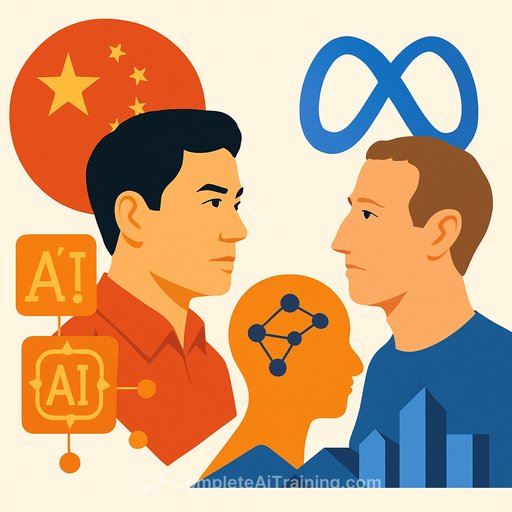
The emergence of China’s DeepSeek AI chatbot has prompted significant shifts in Meta’s approach to artificial intelligence. Meta CEO Mark Zuckerberg reassessed the company’s AI roadmap after DeepSeek’s latest model, DeepSeek-V2, demonstrated impressive performance, surpassing several U.S.-backed AI models in key benchmarks.
Developed as an open-weight language model, DeepSeek-V2 surprised Meta’s leadership with its efficiency and effectiveness. This prompted Zuckerberg to urge his AI team to revisit the methods used to train and deploy foundation models, with a particular focus on cost-effective scaling and localization—areas where Chinese firms currently hold an edge.
Meta’s Leadership Shakeup and New AI Initiatives
Following the wake-up call from DeepSeek’s advancements, Meta is undertaking a leadership restructure and launching a new superintelligence lab. These moves reflect a strategic pivot to accelerate progress toward artificial general intelligence (AGI), ensuring the company remains competitive in a rapidly intensifying field.
Escalation of the AI Talent War
Meta has stepped up hiring efforts, aggressively recruiting top AI talent from competitors like Google DeepMind and Microsoft. The urgency to secure experts in model training, optimization, and AI safety has grown as DeepSeek’s open-weight model earned international recognition for balancing top-tier performance with compute efficiency.
This increased competition for AI talent is not limited to Meta and the U.S. alone. Leading companies across China and Europe are also intensifying recruitment, driving a global war for AI expertise.
DeepSeek’s Open-Source Approach Shakes the Industry
Unlike many U.S. tech giants that keep their advanced AI models proprietary, DeepSeek chose to release its DeepSeek-V2 model as open-weight. This transparency boosted its credibility among developers and researchers, accelerating adoption and innovation around the model.
Experts note that Meta underestimated how quickly open-source alternatives could reach competitive levels. This realization has sparked internal debates at Meta about balancing openness with competitive advantages. Other players like OpenAI and Anthropic are now paying close attention to China’s open research ecosystem.
Looking Ahead: Meta’s Next Steps
Meta is fast-tracking development on its next generation of foundation models, keeping AGI as the core objective. Meanwhile, Chinese labs such as DeepSeek and Zhipu continue to build momentum by prioritizing transparency and efficiency in their AI research.
For executives focused on strategy, the rise of DeepSeek highlights the importance of flexibility in AI development strategies, the value of open collaboration, and the need to attract and retain top AI talent globally.
- Consider revisiting AI model training and deployment methods, emphasizing cost and localization.
- Prepare for intensified competition in AI talent acquisition.
- Evaluate the role of open-source models in maintaining innovation and market relevance.
To stay updated on AI talent trends and training, explore relevant courses and certifications at Complete AI Training.
Your membership also unlocks: