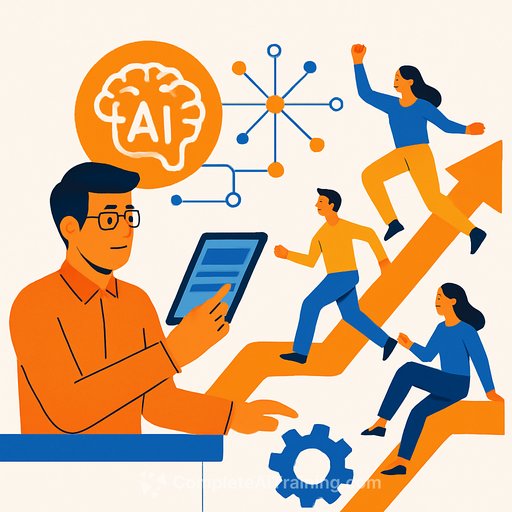
How CIOs are Driving AI Adoption Through Effective Change Management
Generative AI is transforming business operations, but its success depends heavily on how companies manage change. At Principal Financial Group, a dedicated AI literacy campaign is helping employees and leadership embrace this technology and reshape work processes for better productivity and innovation.
Every Monday morning, over 300 Principal employees participate in a study group led by the chief digital and artificial intelligence officer. This group explores the technical, cultural, and ethical aspects of generative AI, sharing insights on emerging use cases and best practices. Originating soon after ChatGPT’s launch in late 2022, it has evolved into a formal program aimed at broad, company-wide AI understanding.
“You’re doing a disservice if you don’t teach everyone how to leverage the technology because it’s going to be table stakes in the future,” says Kathy Kay, Executive Vice President and CIO at Principal.
Challenges in Aligning Workforce and AI Goals
Despite widespread AI investments, many organizations struggle to align their workforce, technology, and growth objectives. A survey by Kyndryl reveals that while 95% of senior executives invest in AI, only 14% have successfully aligned these key areas. Resistance among employees is common, with 45% of CEOs reporting hostility or reluctance toward AI adoption.
The main obstacles? Organizational change management, lack of trust in AI, and skill gaps. Companies that lead in AI adoption tend to have strong change management strategies, resulting in less employee fear and better engagement.
However, many organizations expect employees to learn and adapt to AI independently without formal support. Research from The Adecco Group shows that 60% of companies expect proactive skill development from workers, but 34% provide no guidance on AI usage.
CIOs as Champions of Change
Effective AI adoption requires culture shifts and new workflows, not just technology rollout. CIOs are well-positioned to lead this transformation. According to research, 81% of CIOs are viewed as key change agents for both business and technology initiatives.
Kathy Kay emphasizes that continuing to work the same way while adding AI won’t deliver true benefits. Instead, organizations must rethink how work gets done to unlock AI’s full potential.
Building AI Literacy and Promoting Collaboration
Principal’s approach includes a comprehensive AI training program tailored for different roles. Senior leaders receive specialized training aligned with their responsibilities, such as product development or software engineering. Additionally, coaches guide teams on integrating generative AI into collaborative workflows, which is essential for widespread adoption.
“Before, the focus was on individual productivity. Now it’s all about collaborative workflows,” notes Kay. This shift helps teams realize collective benefits from AI.
Liberty Mutual takes a similar route by encouraging experimentation and providing controlled access to a private large language model, Liberty GPT. Employees complete introductory training before using the tool, fostering confidence and skill development.
The company promotes collaboration among IT, process teams, and domain experts, focusing on improving workflows rather than just individual AI use cases. This flexible “team of teams” structure supports iterative learning without pressure for immediate results.
Adapting to Change as a Core Capability
Kenneth Spangler, former CIO at FedEx, highlights adaptability as essential in AI-driven transformation. His AdaptiveION framework helps organizations build a foundation aligned on shared goals, enabling teams to execute effectively amid constant change.
Spangler explains that enterprise processes often resist change like hardened concrete. To move at AI’s pace, organizations need a strong adaptive foundation that supports agility and innovation.
CIOs must lead by breaking free from outdated systems and processes, ensuring real-time data availability, educating relentlessly, and having candid conversations about AI’s challenges and opportunities.
Empowering Influencers Across the Organization
Beyond executive efforts, companies like Osh Kosh Corp. engage employees as influencers within their functions—sales, supply chain, manufacturing—to identify AI opportunities and promote adoption. These influencers bridge the gap between IT and business units, making AI more relatable and acceptable.
“If IT says something, it’s interpreted one way. If business users say the same thing, it carries a different meaning,” says Anupam Khare, CIO at Osh Kosh.
At Kimberly Clark, the focus is on continuous engagement with business teams, creating open dialogue rather than one-way communication. Zach Hicks, Chief Digital and Technology Officer, stresses the importance of making business leaders part of the AI journey to foster collaboration and trust.
Final Thoughts
Successful generative AI adoption hinges on more than technology—it requires well-planned change management that aligns leadership, builds skills, and reshapes culture. CIOs have a pivotal role in driving this transformation through education, empowerment, and ongoing engagement.
For management professionals looking to deepen AI knowledge and support digital transformation, exploring focused training programs can provide practical skills and insights. Resources like Complete AI Training’s latest courses offer tailored learning paths to help teams become AI-ready.
Your membership also unlocks: