
AI news ·
How civil litigators can defend against and leverage AI in court
AI tools are now common in litigation, but gaps in court rules leave lawyers exposed to disclosure requirements, discovery abuse, and data security risks. Attorneys who use AI carelessly risk sanctions, malpractice claims, or ethics violations.
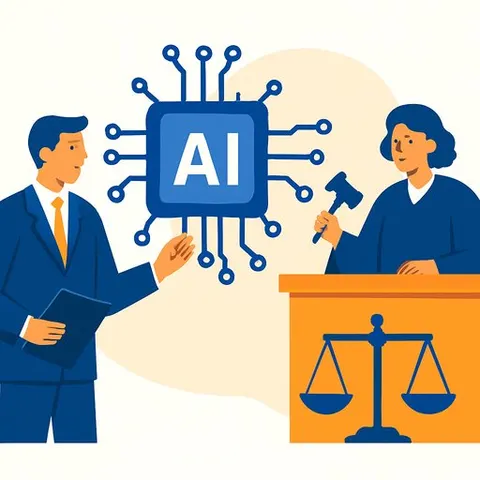
Litigators Face New Risks as AI Tools Enter Civil Cases
Artificial intelligence is now standard in law offices, used by litigants across all experience levels. But the technology creates procedural and ethical problems that existing rules don't address.
Opposing counsel may use AI-assisted drafting tools without telling you. Pro se litigants might generate thousands of discovery requests unconnected to the actual claims. Worse: litigants upload confidential client materials into third-party AI platforms without knowing how that data gets reused or stored.
These scenarios demand practical defenses and strategic responses.
Disclosure and Transparency
Courts have not yet settled whether lawyers must disclose AI use in drafting motions, briefs, or discovery responses. Some jurisdictions are moving toward mandatory disclosure; others remain silent.
The safest approach: assume disclosure will be required. Document when and how you use AI tools. Know your jurisdiction's rules on this point-they're evolving monthly.
Vetting Discovery Requests
AI can generate discovery at scale. A pro se opponent armed with a generative AI tool can send hundreds of requests that have nothing to do with the case.
Challenge overbroad requests under Rule 26(b)(1). Require specificity. Make opposing counsel explain how each request relates to a claim or defense. This filters out AI-generated noise.
Data Security and Third-Party Platforms
Never upload client documents, case strategy, or confidential information into public AI platforms like ChatGPT or Claude without a data processing agreement. Your firm may have no control over how that data is used, stored, or retained.
Use enterprise AI tools with data protection guarantees. Consult your IT and compliance teams before adopting new platforms.
Using AI Strategically
AI can accelerate legitimate work: document review, deposition preparation, research organization, and initial draft generation. The key is human review at every stage.
Understand how to get the best results from AI tools. Learn how to structure requests and refine outputs. This is where prompt engineering matters for litigation work.
Ethical Obligations
You remain responsible for work product, whether you drafted it yourself or AI assisted. If AI generates a factual error, hallucination, or misquote, you own it.
Review all AI output as if you wrote it. Verify citations. Check facts. This is non-delegable.
For broader context on AI applications in legal practice, see AI for Legal.
The Bottom Line
AI is a tool. It accelerates work and creates risks. The litigators who adapt will be those who use it strategically while protecting client confidentiality and maintaining accuracy. Those who ignore it or use it carelessly will face sanctions, malpractice claims, or ethical violations.
The procedural and ethical rules will catch up. Until they do, disciplined practice is your best defense.