
AI news ·
How ecommerce teams can use generative AI across marketing, support, and operations
Generative AI can cut response times and ticket volume in customer support - but only with strict guardrails. Here are five practical uses, from drafting agent replies to onsite shopping assistants.
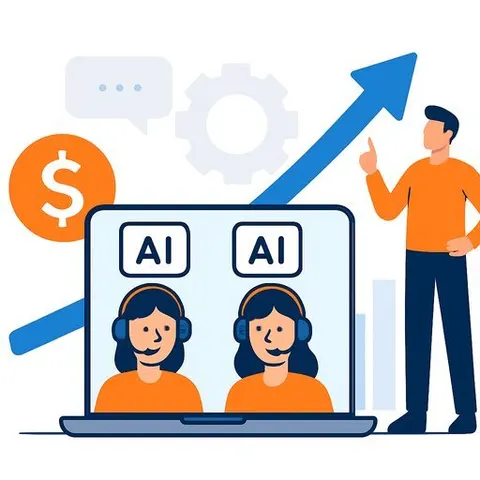
Five Ways to Use Generative AI in Customer Support
Customer support teams face a bottleneck. High ticket volumes, repetitive inquiries, and the need to respond quickly create pressure that grows with every new product launch. Generative AI can handle some of this load-but only if you set it up correctly.
The technology works best when it stays within clear boundaries. Restrict outputs to verified product data and documented policies. Use it to draft replies, not auto-send them. Require human review before any message reaches a customer.
Agent Assist: Draft Replies From Order Data
Support agents spend time composing routine replies. Generative AI can draft responses using order details and your documented support policies, then let the agent edit and approve before sending.
This approach cuts average handle time and first-response time. The guardrail: never auto-send. The agent must review every draft. Track error rate alongside speed metrics to ensure quality doesn't slip.
Self-Serve Help Center Generation
Your support tickets contain patterns. Customers ask the same questions repeatedly. Generative AI can analyze those recurring themes and draft new FAQ entries and support macros.
The benefit is maintenance speed. The constraint is governance. Require policy approval and compliance review before publishing, especially for regulated products. Measure success by ticket deflection rate-how many customers solve their problem without contacting support.
Intent Routing and Summarization
Not all tickets need the same handler. Generative AI can classify incoming messages by intent and summarize context for the agent who receives it. A customer asking about shipping gets routed differently than one disputing a charge.
This triage layer reduces time to resolution. The risk: misclassification. Always allow human override. Track routing accuracy and time to resolution to catch problems early.
Returns and Exchange Guidance
Returns create friction. Customers don't know if they're eligible. Generative AI can guide them through a decision tree bound by your actual return policies, reducing tickets before they arrive.
Structure this carefully. Use decision rules tied to eligibility criteria-order date, product category, condition. Never give the AI authority to issue refunds. Measure success by return portal completion rate and average return processing time.
Onsite Shopping Assistant
A conversational assistant on your product pages can answer questions before checkout. Customers ask about materials, sizing, shipping, and stock. Generative AI retrieves answers from your FAQ and product catalog, citing where the information comes from.
This reduces bounce rate and friction at the moment of purchase. Restrict it to catalog facts and policy information. Avoid medical claims and performance claims that require disclaimers. Track conversion rate and engagement to measure impact.
The Hallucination Problem
Generative AI sometimes invents facts. It might claim a product has a feature it doesn't have. It might misinterpret a policy. This is called hallucination, and it damages customer trust.
Prevent it by restricting outputs to structured data. Use retrieval-augmented generation (RAG), which pulls answers from approved documents rather than generating them from scratch. Flag edge cases for human review. Audit outputs regularly to catch problems before customers see them.
The Cost of Tokens
Large language models charge by tokens-units of text processed. Every customer message fed to the model, every context window, every output costs money. High-volume support teams see this add up.
Two approaches exist. Ready-to-use tools like those embedded in commerce platforms handle simple tasks with predictable costs. Custom workflows give more control but require higher investment in setup and governance. Choose based on your data complexity and budget constraints.
What Actually Matters
Support leaders often ask whether generative AI will replace their teams. The answer is no. It frees them from drafting and repetitive work, but humans remain essential at every step.
You need people to validate accuracy, ensure tone consistency, handle edge cases, and make judgment calls. Generative AI is a tool that accelerates your team's output-not a replacement for it.
Learn more about AI for Customer Support and how Generative AI and LLM technologies work in practice.