Are High School Counselors Encouraging AI for College Applications?
As more students turn to AI tools, school counselors are exploring how these technologies can support both underserved students and their own heavy workloads.
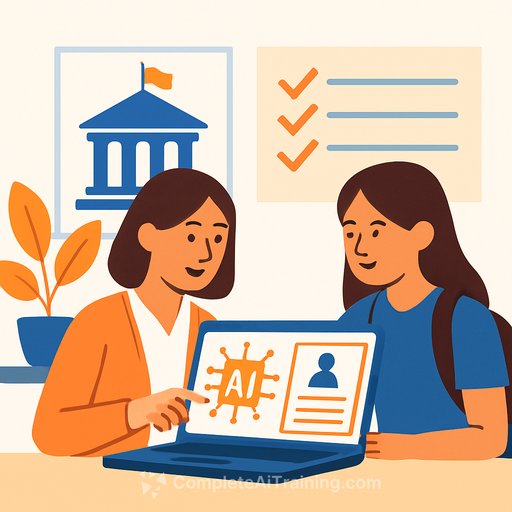
School counselors Stephanie Nelson from North Carolina and Richard Tench from West Virginia use a common method to write letters of recommendation: they ask rising seniors to complete a “brag” sheet listing challenges they've overcome or achievements they're proud of. This helps guide the letter’s content. What’s new is that both counselors now use generative AI to help craft these letters.
Nelson emphasizes that AI doesn’t replace the personal touch. “I’m still using my counseling skills and techniques, but AI helps enhance what I already have in mind,” she says. She even jokes with students, telling them, “ChatGPT helped.”
Given the growing gap between the number of students and available counselors, AI tools offer a way to lighten counselors’ workloads while helping students complete college applications more effectively.
Tench writes between 120 and 150 letters of recommendation annually. He shares, “I’ve used AI to strengthen letters when I’m pressed for time or stuck. It helps fine-tune resumes and our letters to highlight the best qualities of students while keeping our voice intact.”
How Widespread Is This Use?
While much attention has been given to students’ use of AI in education, the specific role of school counselors leveraging AI for college admissions remains largely unexamined. The American School Counselor Association does not currently track this usage.
With counselor-to-student ratios sometimes exceeding 275:1, AI can offer some relief. However, opinions vary. A focus group by foundry10, an education research organization, revealed a divide between educators who embrace AI and those surprised by its use in tasks like recommendation letters.
Riddhi Divanji from foundry10 notes, “Some teachers are already AI-forward, while others react with surprise to AI’s role in letters of recommendation.” A 2024 study from foundry10 found that about one in three students and teachers reported using generative AI for college essays or recommendation letters. The number has likely grown since then.
The study also revealed that students often look to parents first for help, then to teachers or counselors. For first-generation college applicants or students without access to costly admissions coaching, AI tools are a practical alternative.
Using AI Ethically in College Applications
Ethical use of AI is crucial. Hannah Quay-de la Vallee, senior technologist at the Center for Democracy & Technology, advises students to draft their own essays before using AI for targeted assistance, such as thesis development or refining introductions.
“More specific requests reduce errors and bias,” she explains. She stresses that a human should always review essays, not just rely on AI-generated content.
Quay-de la Vallee also warns about education technology companies repackaging AI tools like ChatGPT or Claude without proper research backing. “In many cases, just using ChatGPT directly is better,” she says.
Both Tench and Nelson are transparent about their AI use and expect honesty from students. They emphasize that AI should be a brainstorming or fine-tuning aid, not a replacement for original work.
It’s also vital for educators and students to check AI policies at their schools and prospective colleges. Some colleges encourage AI use, while others ban it outright. These policies are usually linked in admissions materials but may require some digging.
Tench notes, “Following both high school and college AI guidelines is part of responsible use. AI can be an easy shortcut, but with time, we can teach students the right way to use it.”
For educators interested in deepening their understanding of AI tools and ethical practices, exploring targeted AI courses can be valuable. Resources such as Complete AI Training’s latest courses offer practical guidance on AI applications in education.
Your membership also unlocks: