North Carolina Division of Employment Security Enhances Customer Services with Generative AI on AWS
Access to unemployment benefits can mean the difference between stability and hardship after job loss. Yet many government agencies still face challenges in delivering quick, high-quality customer service at scale. The North Carolina Department of Commerce’s Division of Employment Security (NCDES) is addressing this with Amazon Web Services (AWS), launching one of the state’s first public-facing generative AI solutions: an intelligent virtual assistant that supports individuals through the unemployment insurance claim process.
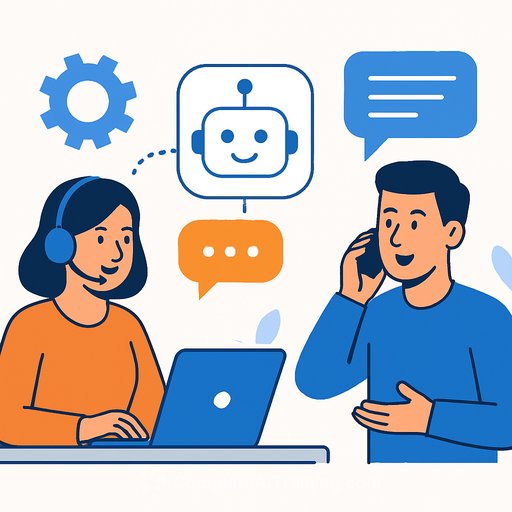
Developed with AWS and partner Ernst & Young, this AI-powered chatbot improves citizen services and operational efficiency by providing timely, accurate assistance.
Transforming Services with Cloud Modernization
NCDES manages North Carolina’s unemployment insurance system, serving individuals and employers statewide. Previously reliant on manual processes and outdated systems, the division started a cloud-first approach with AWS in 2018. Today, over 80% of their workloads run in the cloud, enabling faster adoption of new technologies to better serve customers.
This shift proved essential during the COVID-19 pandemic. NCDES quickly deployed remote desktop solutions, launched a cloud-based call center, introduced eight new unemployment programs in two months, and distributed $14 billion in benefits — all supported by cloud scalability. This foundation set the stage for integrating generative AI to further improve service delivery.
Choosing a Practical Use Case for Generative AI
While generative AI offers significant potential, NCDES approached adoption cautiously. Public-facing AI raises concerns around privacy and accuracy. To minimize risks, they selected a pilot project focused on improving customer service without handling personally identifiable information (PII) or making decisions.
The initial claim filing process was a clear target. Traditionally, claimants relied on a support center with long wait times and limited hours. The AI chatbot, powered by the agency’s centralized knowledge base, offers 24/7 consistent answers, reducing calls and improving accessibility. This approach centers on reducing friction for users and lowering call volumes.
Building a Secure and Scalable AI Chatbot on AWS
NCDES’s existing unemployment benefits system runs in AWS GovCloud (US), a secure cloud environment for government agencies. Leveraging familiar AWS services and Amazon Bedrock’s flexibility to experiment with multiple AI foundation models, the team developed the chatbot in just over four months, in partnership with AWS and Ernst & Young.
The solution architecture includes:
- Amazon Bedrock for AI foundation models
- Amazon Lex for conversational chatbot interfaces
- AWS Lambda to manage serverless backend functions
- Amazon OpenSearch Service and DynamoDB for information retrieval and storage
- Amazon Comprehend and Amazon Translate for language processing and multilingual support
- Security tools like AWS Security Hub, Amazon GuardDuty, AWS KMS, and AWS Certificate Manager for compliance and protection
Security and responsible AI use guided the project. The chatbot is aligned with North Carolina’s Principles for Responsible Use of AI and the NIST AI Risk Management Framework. Responses are grounded in a curated internal knowledge base, with guardrails to prevent misinformation and protect privacy by masking any accidental PII.
How the AI Chatbot Works
The chatbot combines traditional FAQ matching with AI-driven responses for accuracy:
- User input goes to the chatbot, which sends it to Amazon Lex for natural language processing.
- Amazon Lex calls AWS Lambda, which queries Amazon OpenSearch Service for matching FAQs.
- If FAQs match, answers are returned to the user.
- If no match is found, Lambda triggers Amazon Bedrock to process the request using context from vector embeddings stored in OpenSearch.
- The AI-generated response flows back through Lambda and Lex to the chatbot, delivering the final answer.
User interactions are tracked to identify trends and improve the system through analytics dashboards.
Early Results and Lessons Learned
Since going live in February 2025, the chatbot handled 2,700 inquiries in its first month that would otherwise require human support. Usage data reveals common questions and highlights potential system improvements, such as redesigning certain claim filing screens to reduce confusion.
The chatbot also benefits employees. Staff can review chatbot interactions, verify source documents, and update content, creating a continuous improvement cycle. With fewer routine calls, support center employees can focus on higher-value tasks.
Advice for Agencies Exploring Generative AI
NCDES leaders recommend starting with a small, well-defined use case that avoids PII and decision-making. Building a secure, responsible foundation sets the stage for future AI projects.
The agency is already planning to expand AI support to other public resources and assist support staff with knowledge management. These efforts aim to improve both customer and employee experiences, making services more efficient and responsive.
For customer support professionals interested in AI tools and skills, exploring focused training can help you stay ahead. Check out Complete AI Training’s courses by job role for targeted learning opportunities.
Your membership also unlocks: