
AI news ·
How organizations can use AI to improve employee engagement
Employee engagement has dropped steadily since 2020, with younger workers hit hardest. AI tools-from predictive analytics to HR chatbots-can help companies spot problems early and personalize development at scale.
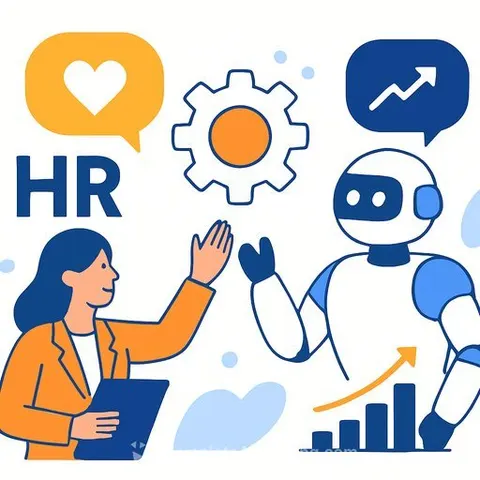
How to Use AI to Improve Employee Engagement
Employee engagement-the emotional commitment and job dedication workers bring to their roles-has declined steadily since 2020, according to Gallup. The problem is most acute among younger workers, who report feeling less cared for and less developed at work. For HR leaders, this trend arrives at a critical moment: the World Economic Forum estimates 22% of jobs will be disrupted in the next five years, and 39% of required skills will change by 2030.
AI offers a path forward. Machine learning, natural language processing, and predictive analytics can surface real-time insights into how employees feel and what they need-replacing periodic surveys and occasional manager check-ins with continuous feedback.
What AI Does for Employee Engagement
AI systems process engagement data continuously, allowing leaders to act before problems escalate. They identify at-risk employees before they leave, surface skill gaps, and recommend personalized learning paths. They also handle routine HR tasks at scale-benefits questions, leave requests, onboarding paperwork-freeing HR teams to focus on culture and development work where human judgment matters most.
IBM's experience illustrates the potential. The company deployed an AI agent called AskHR that now processes 2.1 million employee conversations annually and automates over 80 HR tasks. Between 2022 and 2024, AI-powered automation improved productivity in some areas by as much as 75%. The HR department achieved a 40% reduction in operational costs over four years while earning an NPS score of +74.
Key Applications
HR task automation: AI handles routine processes so HR professionals can focus on higher-value work.
Performance feedback and coaching: AI assists managers with real-time feedback between annual reviews, closing the gap between formal evaluations and the ongoing development conversations employees need.
Personalized learning paths: AI maps skill gaps against organizational needs and delivers curated learning programs that evolve as employees grow.
Predictive retention: By analyzing historical turnover data and engagement surveys, AI flags employees at risk of leaving so managers can intervene with new challenges or opportunities.
Real-time pulse surveys: Shorter, more frequent AI-driven surveys replace annual engagement checks, surfacing emerging issues and emotional patterns across teams immediately.
Personalized communication: AI tailors internal messages-recognition, check-ins, policy updates-to individual roles and preferences, making official communications feel genuine rather than generic.
Workforce analytics: Data-driven analysis benchmarks engagement across departments and functions, measuring results against industry standards.
Common Tools
Automated HR workflows: Robotic process automation handles onboarding, benefits administration, and compliance tracking, removing manual work from high-volume tasks.
AI chatbots and virtual agents: Conversational AI answers HR policy questions, guides employees through processes, and supports onboarding 24 hours a day. Advanced systems personalize responses based on past interactions and employee roles. Agentic AI goes further, automating multiple actions with minimal human oversight.
Predictive analytics platforms: Machine learning tools forecast attrition, monitor team health, and surface insights through dashboards so leaders can act on data rather than react to immediate problems.
Performance management systems: AI-enhanced platforms move beyond annual reviews to support continuous feedback, goal tracking, and skills gap identification throughout the year.
Risks and Ethical Concerns
Data privacy is a fundamental concern. Monitoring communication patterns and behavioral data without clear boundaries and transparent disclosure can leave employees feeling watched and mistrusted. Organizations must define what data is collected, how it's used, and what decisions it influences-then communicate those boundaries openly.
Over-reliance on AI outputs is another risk. AI can identify patterns but cannot interpret nuance or build the interpersonal trust that drives genuine engagement. Automating sensitive interactions-grievances, disciplinary processes, health disclosures-leaves employees feeling unsupported.
Bias is a third concern. AI trained on historical workforce data can entrench or amplify existing biases in how employees are assessed or recommended for development. Regular bias audits and diverse training data are essential.
How to Implement AI Responsibly
Start with problems, not technology: Identify specific engagement challenges-high attrition, new hire drop-off, skill gaps-before selecting tools. Define success metrics and build feedback mechanisms to measure effectiveness over time.
Build data governance and ethics frameworks: Before implementation, decide what data will be collected, how it will be stored, who can access it, and how long it will be retained. Establish an AI ethics review process for high-stakes decisions.
Communicate transparently: A recent survey found 76% of executives believed employees were enthusiastic about AI adoption, but only 31% of individual contributors agreed. Leaders must explain how AI will be deployed, what data it collects, and how it helps employees.
Focus on development, not just monitoring: The most effective implementations use data to fuel growth. When employees see that AI insights lead to better learning recommendations or more meaningful manager conversations, they trust the systems.
Keep humans in the loop: AI should inform and assist human decision-making, not replace it. Establish clear policies requiring human review for high-stakes decisions like performance management and promotions. Ensure employees always have access to a human contact for consequential issues.
Employees adopt new business structures 34% more often when engagement sits at the center of organizational change. AI makes engagement programs scalable, but only when they're designed around genuine employee needs and operated with transparency and human oversight.