
AI news ·
How Stanford Medicine is training AI-savvy healthcare leaders from clinic to classroom
Stanford Medicine is building stronger health leaders with applied AI-ambient notes, smarter EHRs, precision health. Eight-week cohorts keep it practical.
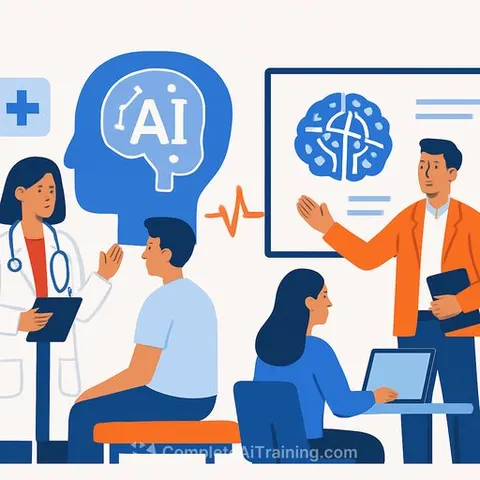
Stanford Medicine's Practical Playbook for Healthcare Leaders in the Age of AI
Priya Singh, Chief Strategy Officer and Senior Associate Dean at Stanford Medicine, lays out how the institution is building stronger healthcare leaders through executive education and applied AI. The focus is clear: help leaders perform better in their current roles across government, pharma, provider systems, and startups-without promising a shortcut into U.S. jobs.
Who these programmes serve-and the point of them
Stanford is developing two executive education tracks: one for C-suite leaders and one for high-potential, mid-career leaders. Participants come from policy, public health, pharma, delivery organisations, and health tech.
These are non-degree programmes built to make leaders more capable where they already work. If that boosts career mobility, great-but the goal is improved impact on the ground.
Format, time commitment, and on-campus time
The current programmes run eight weeks. Senior leaders typically have two in-person weeks; emerging leaders have one.
Expect two to three hours per day, with a blend of live sessions and self-paced work. A new mostly-online series is also in the pipeline, while keeping meaningful on-campus time for exposure to Stanford's ecosystem.
Scale and class size
Right now, there are two cohorts per year. It's early stage, with 30-60 participants per class by design.
The team could scale further, especially with AI-supported delivery, but is prioritising quality and iteration.
What makes the approach different
Location matters. Being in Silicon Valley plugs participants into active AI work, companies, and talent. Multidisciplinary access on one campus-engineering, medicine, business, design, sustainability, and law-creates cross-pollination you can feel in a one- or two-week visit.
If you want a snapshot of the broader institution, start here: Stanford Medicine.
AI that actually helps clinicians today
The stance is pragmatic: AI won't replace physicians. Physicians who ignore it may be replaced by those who use it well. Early pilots are already giving doctors more time with patients and less time in the EHR.
- Ambient clinical notes: Voice-based AI captures the visit and drafts the note. Physicians review for accuracy. Less typing, more conversation.
- ChatEHR for longitudinal context: Query a patient's full record across specialists to build a precise plan, fast-especially helpful for multimorbidity, post-surgical care, diabetes, and cardiac issues.
Bottom line: better documentation, faster synthesis, and more attention where it counts-at the bedside.
Precision Health: genomics plus behaviour change
Stanford's Precision Health work began by making genomic data collection affordable and scalable for patients. The next phase moves deeper into personalisation.
Pharmacogenomics helps clinicians choose drugs that fit a patient's genetic profile. Layered with behaviour change interventions, outcomes improve-seen even in independent studies on GLP-1 weight-loss drugs where behavioural support amplified results.
A realistic note on U.S. jobs
For physicians, U.S. training and licensing make entry difficult without accredited residency and licensing completed stateside. Nursing roles can be complex as well due to licensing and unionisation.
Research roles are generally more accessible, though requirements vary by institution and funding source.
What leaders can do now
- Build AI literacy across clinical, operational, and quality teams-set shared language and responsible-use guardrails.
- Pilot ambient documentation in one primary care clinic; measure note quality, patient satisfaction, and time saved.
- Stand up an EHR query assistant for complex patients; track turnaround time and care-plan accuracy.
- Create a cross-functional review group (clinicians, data science, compliance, IT, patient reps) for AI evaluation and rollouts.
- Invest in your high-potential leaders with structured executive programmes to speed adoption and reduce stalled initiatives.
- If you need a starting point for AI upskilling across roles, see curated options here: Complete AI Training: Courses by Job.
The takeaway for healthcare professionals
AI in care delivery is moving from theory to workflow. Leaders who combine disciplined adoption, clinician partnership, and measurable outcomes will see gains in access, safety, and patient experience.
The skill set is managerial and clinical, not just technical. That's the gap Stanford Medicine is working to close-by developing leaders who can put AI to work, responsibly and at scale.