New Research on Decision-Making Strategies
Recent research reveals that small neural networks can uncover overlooked decision-making strategies by mimicking how brains actually learn. This offers fresh insight into why we often make imperfect choices.
Scientists have long investigated how humans and animals decide, focusing on recent experiences and trial-and-error learning. Traditional models, however, often assume that individuals always pick the most logical or beneficial option based on past outcomes, potentially missing key elements of real-world decision-making.
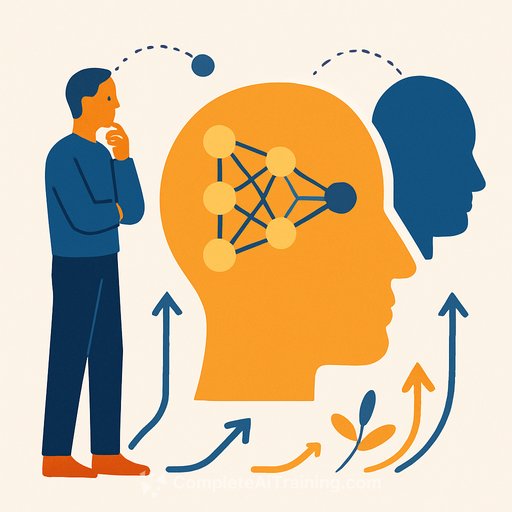
This new study takes a different path by using artificial intelligence to explore decision-making more realistically. Researchers built small artificial neural networks to examine what truly influences choices, whether those decisions are optimal or not.
“Instead of assuming how brains should learn in optimizing our decisions, we developed an alternative approach to discover how individual brains actually learn to make decisions,” says Marcelo Mattar, assistant professor at New York University’s Department of Psychology and co-author of the study published in Nature. “By using tiny neural networks—small enough to be understood but powerful enough to capture complex behavior—we’ve discovered decision-making strategies that scientists have overlooked for decades.”
Small Neural Networks, Big Insights
The authors highlight that small neural networks—simplified compared to the large networks common in commercial AI—predict animal choices better than classical cognitive models. These traditional models expect optimal behavior, whereas the small networks reveal suboptimal patterns that reflect real behavior more accurately.
In controlled laboratory tasks, the predictions from these small networks match the accuracy of much larger AI models.
Ji-An Li, a doctoral student at UC San Diego, points out, “Small networks let us apply mathematical tools to interpret the mechanisms behind individual choices. This is much harder with large neural networks used in most AI applications.”
Marcus Benna, assistant professor of neurobiology at UC San Diego, adds, “Large AI models are excellent at predictions, like guessing which movie you’ll watch next. But it’s challenging to explain why they make those predictions. By training the simplest AI models to predict animal choices and analyzing their dynamics with physics methods, we can describe their strategies in more understandable terms.”
Beyond the Lab: Real-World Applications
Understanding how humans and animals learn from experience to make decisions is crucial beyond science. It can inform business, technology, and government. Yet, existing models focused on optimal decision-making often fail to capture realistic behavior.
The model developed by NYU and UC San Diego researchers fits decision-making processes in humans, non-human primates, and rats. Importantly, it predicts suboptimal decisions, reflecting the imperfect nature of real-world choices. Unlike traditional models, it also captures individual differences in decision strategies.
“Studying individual differences in decision-making strategies could transform approaches to mental health and cognitive function,” concludes Mattar.
Reference: “Discovering cognitive strategies with tiny recurrent neural networks” by Li Ji-An, Marcus K. Benna, and Marcelo G. Mattar, 2 July 2025, Nature. DOI: 10.1038/s41586-025-09142-4
The research was supported by grants from the National Science Foundation and other institutions.
Your membership also unlocks: