
AI news ·
HSB warns SMEs face growing 'silent' AI liability gaps as adoption outpaces insurance coverage
Most SME insurance policies don't explicitly cover AI-related risks, even as 74% of small businesses already use AI tools. New exclusions taking effect in 2026 will widen that gap further.
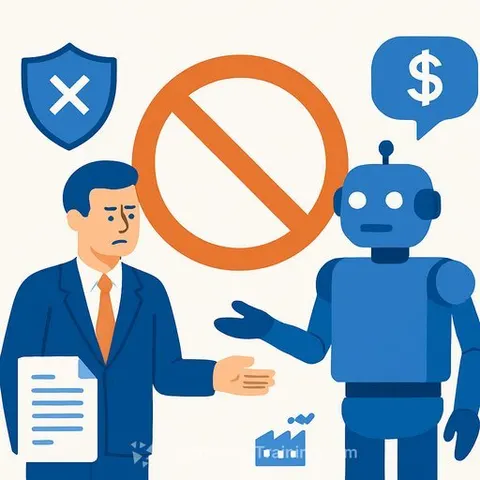
AI liability emerges as major gap in SME insurance coverage
Small and mid-sized businesses are adopting artificial intelligence faster than the insurance industry can define coverage for it. Seventy-four percent of SMEs already use AI tools, with 91% planning to adopt them soon, according to data from HSB, part of Munich Re. Yet most policies don't explicitly address AI-related risks.
The gap mirrors what happened with cyber risk two decades ago. Timothy Zeilman, global head of product ownership at HSB, said insurers and policyholders are caught in a period of ambiguity where coverage may exist unintentionally and pricing doesn't reflect actual risk.
"We're seeing the same pattern we saw with cyber 15 or 20 years ago," Zeilman said. "Adoption is happening very quickly, but the understanding of how that translates into insured risk is still catching up."
Coverage gaps widening as exclusions take effect
AI-related exposures are embedded in existing policies covering professional liability, directors and officers (D&O), and general liability. But they're rarely addressed explicitly in policy language. The Insurance Services Office introduced new AI exclusions at the start of 2026, forcing carriers to define coverage more clearly.
As insurers adopt these exclusions, coverage gaps will open. Zeilman said HSB launched an AI liability insurance product to fill those gaps with affirmative coverage for bodily injury, property damage, and personal or advertising injury tied to AI incidents.
Early claims will focus on content risks, not physical harm
SMEs using generative AI and LLM tools like chatbots and content generators for marketing face immediate exposure. These systems can produce outputs that infringe copyright, include defamatory statements, or misuse personal data without the business realizing it.
"It's very easy for a business to publish something generated by AI without realizing it contains infringing or problematic content, which creates a clear pathway to liability," Zeilman said.
Reputational damage compounds the risk. AI systems can generate inaccurate information or "hallucinate" details, leading to public-facing errors that harm brand value.
Physical risks-such as delivery robots causing pedestrian injuries or AI-driven equipment malfunctions-are developing more slowly. These typically require a bridge between digital decision-making and real-world action, like robotics or smart building systems. But Zeilman said scenarios where AI-driven systems cause real-world losses are not hard to imagine.
Liability may spread beyond AI developers
Current litigation has focused on AI model developers, particularly over copyright infringement. But businesses deploying these tools could increasingly share liability for problems.
"If a company is deploying an AI-powered chatbot or using AI-generated content, they may share liability if something goes wrong," Zeilman said. "It's not just the developers who could be exposed."
Emerging concerns also include claims related to harmful or manipulative AI behavior, such as allegations of addictive or misleading systems.
Underwriting uncertainty remains high
Insurers can model potential severity for large reputational or intellectual property claims. But loss frequency remains highly uncertain. "We're still in the early stages of understanding how often these events will occur," Zeilman said.
For insurance professionals, the takeaway is straightforward: AI liability is no longer theoretical. Policies need explicit coverage language, and clients need guidance on the gap between what their existing insurance covers and the actual risks their AI use creates.
Learn more about AI for insurance to understand how the industry is adapting to these emerging risks.