Huawei's 2026 Ascend 950 Push in South Korea: A Sales Brief
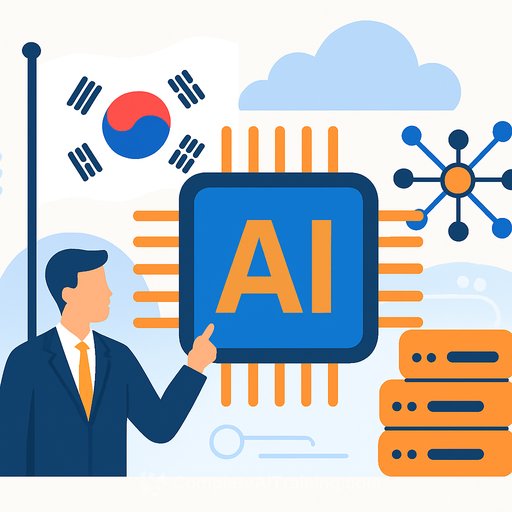
Huawei is lining up its Ascend 950 AI accelerator for a South Korea launch in 2026 with a cluster-first strategy-aiming to position as an alternative to NVIDIA. This article cites reporting from Yonhap News, Edaily, and MTN.
Instead of shipping standalone chips, Huawei plans to sell complete AI data-center solutions: computing cards plus tightly integrated networking, storage, and software. The company is already in talks with Korean firms and plans to supply its Harmony operating system locally in 2026. No smartphone launch is planned in Korea for 2026, per reports.
The Offer: Cluster-Level AI With Ascend 950
- Product: Ascend 950-based AI computing cards packaged as full-stack data-center solutions.
- Positioning: A direct alternative for customers facing NVIDIA constraints or seeking vendor diversification.
- Go-to-market: End-to-end delivery (hardware + software), less reliance on third-party integrators.
- Availability: South Korea in 2026; Malaysia also on the roadmap per Edaily.
Why This Matters for Sales Teams
- Single-vendor stack: One contract, one support motion, one upgrade path. Easier to pitch to execs who value accountability and speed.
- Supply stability angle: Edaily reports Huawei has brought HBM in-house ("HiBL 1.0" for inference, "HiZQ 2.0" for training), a strong talking point for customers burned by supply shocks.
- Budget narrative: Cluster-level bundles can be pitched on TCO, throughput per rack, and time-to-deploy vs. piecemeal builds.
- Ecosystem play: Harmony OS supply in Korea suggests a broader stack story: OS + accelerators + DC infrastructure.
Objections You'll Hear (And How to Frame Them)
- "Is this export-ready and sustainable?" Cite reports of in-house HBM and expansion plans beyond China (Korea, Malaysia). Encourage a phased pilot to validate supply and support quality.
- "What about software compatibility?" Position a proof-of-concept to test priority models and frameworks. Focus on outcomes: training time, inference latency, and utilization, not just headline specs.
- "Will we need new partners to integrate?" The strategy is direct integration and service delivery. Push the single-vendor advantage for deployment speed and support.
- "Smartphones in Korea?" Reports indicate no smartphone plans in 2026-keep the conversation on data-center solutions.
Ideal Targets in South Korea
- Telco and 5G edge: SK Telecom, KT, LG Uplus, and partners building AI services on top of network data.
- Internet platforms and gaming: Inference-heavy workloads with fluctuating demand where delivery timelines matter.
- Financial services and manufacturing: On-prem training, compliance-sensitive workloads, and predictive systems.
- Public sector and research: Projects needing predictable supply and local support.
Talk Tracks You Can Use
- Risk diversification: "Add a second AI vendor to de-risk capacity and support SLAs next year."
- TCO and speed: "All-in-one clusters reduce integration steps and get you to production faster."
- Supply confidence: "In-house HBM plus direct service delivery helps stabilize lead times."
- Pilot-first: "Let's validate your top workloads on a small cluster, then scale with confidence."
Discovery Questions
- Which workloads are blocked by capacity or long lead times today?
- What's your target time-to-production for new AI services in 2026?
- How critical is a single-vendor stack for procurement and support?
- Which models/frameworks must run on day one? Can we scope a pilot?
Key Facts to Keep Handy
- Launch window: 2026 in South Korea; Malaysia expansion also reported.
- Model: Cluster-level deployments, not standalone chips.
- HBM: Reported in-house solutions: HiBL 1.0 (inference) and HiZQ 2.0 (training).
- OS: Harmony slated for Korean companies in 2026.
Action Plan
- Build a target list by workload urgency and NVIDIA dependency.
- Offer pilot proposals with clear success metrics: throughput, latency, cost per training hour, and energy per inference.
- Coordinate early with procurement and compliance to preempt concerns about export and support.
- Prepare a comparison brief that focuses on delivery timelines and operational outcomes.
For product background, see Huawei's Ascend materials: Huawei Ascend (official).
Want to upskill your sales team on AI basics that drive better conversations?
Browse concise training by role: Complete AI Training - Courses by Job. For further reading on AI training and sector studies, see Research.
Your membership also unlocks: