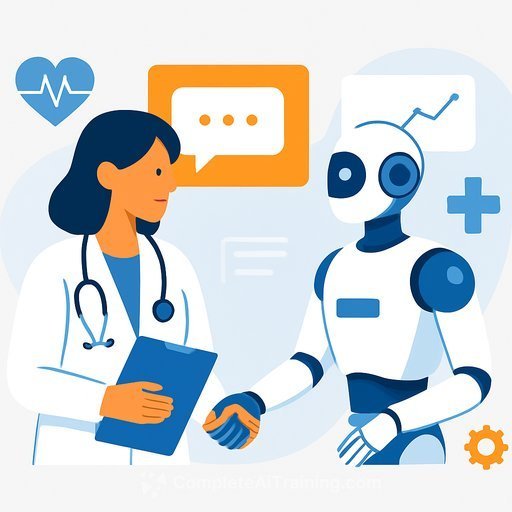
Human-Centric AI for Customer Support: What's Working Now
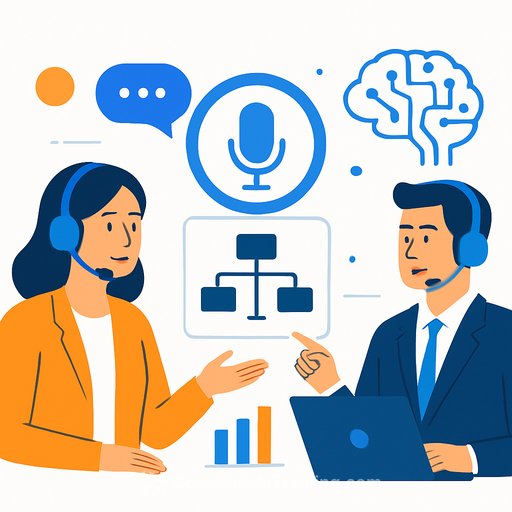
AI in support (AI for Customer Support) is shifting from replacement to partnership. Companies are funding systems that explain their decisions, loop agents into key moments, and automate the busywork without hiding the "why."
Data from Precedence Research points to steady investment in collaborative human-AI workflows across IT, HR, and customer service. The goal is simple: augment agent judgment, cut repetitive tasks, and lift customer experience without creating black boxes.
Why This Matters for Support Leaders
- Agent assist that actually helps: suggested replies, contextual knowledge, real-time sentiment checks.
- Explainability you can trust: "why" behind a bot route, a priority score, or a QA flag.
- Fewer repeat contacts: smarter routing, better deflection, and cleaner knowledge retrieval.
- Happier teams: lower cognitive load and faster handle times without losing human empathy.
What It Costs to Build and Buy
Budgets vary by complexity, compliance, and integration depth. Simple automations cost far less than enterprise-grade, human-in-the-loop systems that touch multiple tools and channels.
Manufacturing/Development Cost Range (Software + Integration)
- 2020 - Low Range (USD): $10,000; High Range (USD): $150,000
- 2021 - Low Range (USD): $10,500; High Range (USD): $160,000
- 2022 - Low Range (USD): $11,000; High Range (USD): $170,000
- 2023 - Low Range (USD): $11,500; High Range (USD): $185,000
- 2024 - Low Range (USD): $12,000; High Range (USD): $200,000
- 2025 - Low Range (USD): $12,500; High Range (USD): $220,000
- 2026 - Low Range (USD): $13,500; High Range (USD): $240,000
- 2027 - Low Range (USD): $14,500; High Range (USD): $260,000
- 2028 - Low Range (USD): $15,500; High Range (USD): $285,000
- 2029 - Low Range (USD): $17,000; High Range (USD): $310,000
- 2030 - Low Range (USD): $18,500; High Range (USD): $340,000
- 2031 - Low Range (USD): $20,000; High Range (USD): $370,000
- 2032 - Low Range (USD): $21,500; High Range (USD): $405,000
- 2033 - Low Range (USD): $23,500; High Range (USD): $445,000
- 2034 - Low Range (USD): $25,500; High Range (USD): $490,000
- 2035 - Low Range (USD): $28,000; High Range (USD): $540,000
Key insight: Low-end costs cover simpler automations for smaller teams. High-end costs reflect large models, advanced integrations, and explainable AI for complex, multi-system environments.
Yearly Selling Prices (License + Subscription + Services)
- 2020 - $20,000 - $250,000
- 2021 - $22,000 - $270,000
- 2022 - $24,000 - $295,000
- 2023 - $26,000 - $320,000
- 2024 - $28,000 - $350,000
- 2025 - $30,000 - $380,000
- 2026 - $33,000 - $420,000
- 2027 - $36,000 - $465,000
- 2028 - $40,000 - $515,000
- 2029 - $45,000 - $570,000
- 2030 - $50,000 - $630,000
- 2031 - $56,000 - $695,000
- 2032 - $62,000 - $770,000
- 2033 - $69,000 - $860,000
- 2034 - $77,000 - $960,000
- 2035 - $86,000 - $1,070,000
Key insight: Lower price tiers fit smaller or edge deployments. Higher tiers map to large enterprise rollouts with custom work, deeper integrations, and ongoing services.
Who's Leading - And Where They Fit in Support
- Verint Systems - Operating income $106M (2025); ~3,800 employees. Customer experience automation with conversational AI, bots, and analytics for contact centers.
- Kore.ai - Revenue not public; hundreds of employees. Enterprise AI agents for workflow and service automation; recognized in conversational AI platforms.
- Nexthink - $294.9M (2024) revenue; ~1,200 employees. Digital Employee Experience and IT workflow automation; useful for agent devices and performance visibility.
- Leena AI - ~250 employees. Conversational AI for HR, IT, and finance workflows; helpful for internal support operations.
- Synerise - $9.2M revenue (2023); ~160 employees (2022). AI analytics and automation for data-driven workflows.
- Tungsten Automation - ~$500M revenue (2020); ~2,200 employees (2024). RPA and cognitive capture for process automation across industries.
Takeaway for support: Verint and Kore.ai map directly to contact centers. Nexthink improves the agent's tech environment. Leena AI can streamline internal service desks. RPA and capture from Tungsten slot into back-office workflows.
Adoption: Where Companies Stand
- 92% of companies plan to increase AI investments in the next three years (McKinsey).
- Only ~1% consider themselves mature in AI deployment (McKinsey).
- 87% of executives use AI at work vs. 27% of employees - a clear adoption gap (Business Insider).
- 79% report some level of AI agent adoption; 19% deployed at scale.
- 62% expect over 100% ROI from agentic AI investments.
- Human-in-the-loop is central, supported by explainable AI and collaborative systems often discussed under Industry 5.0 ideas (EU Industry 5.0).
What this means for support: Budgets are opening up, but most orgs are still early. The exec-employee gap shows the need for thoughtful change management, clear policies, and hands-on training for frontline teams.
Practical Playbook for Support Teams
Start Where AI Helps Agents the Most
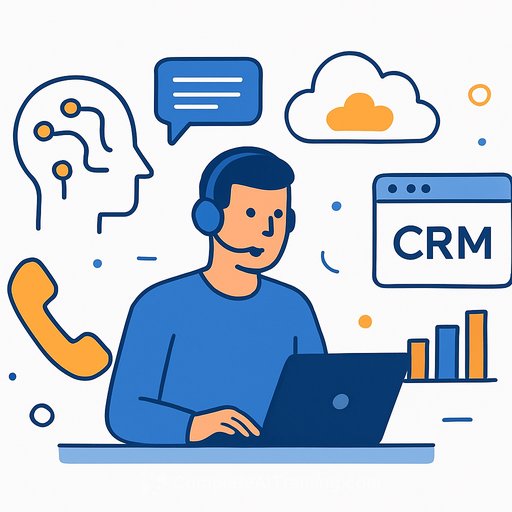
- Agent copilot: real-time suggestions, tone coaching, and next-best actions at message level.
- Knowledge orchestration: retrieve, cite, and explain answers from approved sources.
- Smart routing: route by intent, skills, and sentiment with reason codes agents can see.
- Post-contact automation: summarize, tag, and log notes with human review.
Build Trust With Guardrails
- Explainability: require visible rationales for routes, risk flags, and suggested replies.
- Human-in-the-loop: agents approve high-impact actions and escalations.
- Data governance: limit PII exposure, define retention, and monitor model drift.
- Change management: train, collect feedback, and iterate weekly.
Measure What Matters
- Operational: AHT, FCR, deflection rate, backlog, and staffing flexibility.
- Quality: CSAT, QA pass rate, audit findings, and explainability coverage.
- Financial: cost per contact, saved labor hours, and time-to-value vs. plan.
Budget Notes for Leaders
Small deployments can start in the tens of thousands annually. Full enterprise rollouts with deep integrations will sit higher due to compliance, custom models, and support.
Map spend to one or two priority outcomes first (e.g., 15% AHT reduction, 20% faster onboarding). Expand scope as you validate ROI and agent adoption.
Skills and Training
Upskill agents and leads on prompts, verification, and exception handling. Train managers on setting guardrails, reviewing model outputs, and reading the right metrics.
If you need structured upskilling paths by role, explore curated options here: Courses by Job - Complete AI Training. For hands-on credentials in automation, see: AI Automation Certification.
The Next 3-5 Years
AI will keep pushing toward smarter collaboration with agents: clearer explanations, better workflow fit, and more predictive insights. Adoption will rise, but the real gains come from clean processes, steady training, and measured rollouts.
The teams that win won't rush to full automation. They'll design systems that make people better at their jobs - and prove it with numbers.
Your membership also unlocks: